world · 2026-03-24
6 Indians Dead in Iran-Saudi Conflict
bfe9a8e8-5a0f-4739-9607-aedad642b20b
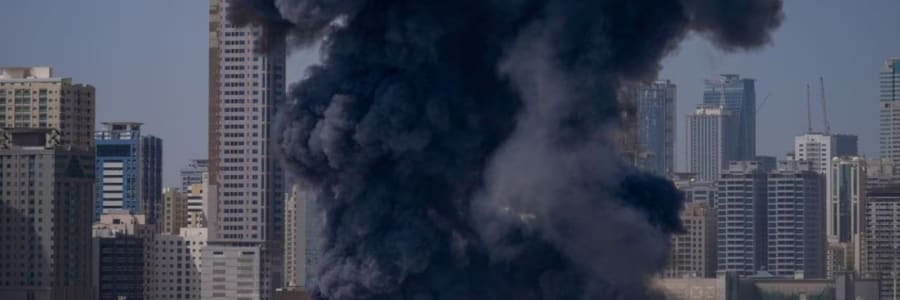
Sixth Indian national confirmed killed in an Iranian missile attack on Riyadh on March 18, per India's embassy.Saudi Arabia said it shot down a drone approaching Riyadh's diplomatic quarter during the same wave of attacks.India's embassy offered condolences but has not yet shared details about the victim's identity or evacuation plans.
How many Indians live in Saudi Arabia right now?
Roughly 2.6 million Indian nationals live in Saudi Arabia, making it one of the largest Indian diaspora clusters globally. Many work in construction, healthcare, and retail. [Riyadh, Jeddah, and Dammam] host the biggest concentrations. Six deaths so far remain a small fraction, but risk is rising.
What jobs do most Indians in Saudi hold?
Most Indians in Saudi Arabia work in [construction, retail, and domestic services]. A smaller but growing segment works in healthcare and IT. Blue-collar workers often live in labor camps on city outskirts, which may lack adequate shelter from missile debris.
How vulnerable are Indian workers in Riyadh?
Many Indian workers live in densely populated neighborhoods [like Batha in Riyadh] with limited access to bomb shelters. Unlike diplomatic zones, these areas may not have the same air defense coverage. Their employers are not always equipped to provide emergency protocols.
Why is 6 deaths significant at this scale?
Six fatalities out of [2.6 million Indians in Saudi Arabia] is statistically small. But each death signals rising risk for a vulnerable population with limited mobility. Workers on employer-sponsored visas cannot simply leave, making evacuation logistics far more complex than for tourists.
What is India's diplomatic stance on this war?
India has called for restraint from both sides without directly condemning Iran. It has strategic ties with both nations. [India imports oil from Saudi Arabia and historically maintained ties with Iran]. New Delhi is balancing energy security, diaspora safety, and its non-alignment tradition simultaneously.
Has India criticized Iran publicly at all?
India has not directly named Iran in any condemnation. Official statements reference ["recent events" in Riyadh] without assigning blame. This mirrors India's approach during [the 2019 Aramco drone attacks], where it called for dialogue without singling out Tehran.
How does India's oil trade shape its response?
India imports roughly [4 million barrels per day total], with Saudi Arabia among the top 3 suppliers. Any disruption raises fuel costs domestically. India also historically imported Iranian crude until [U.S. sanctions forced a halt in 2019]. Energy dependence constrains diplomatic options.
What diplomatic tools does India have here?
India can use bilateral channels with both Riyadh and Tehran. [External Affairs Minister-level calls] have reportedly occurred. India also has a seat on the UN Human Rights Council and can push for ceasefire resolutions. But without Security Council leverage, direct mediation power remains limited.
How does this compare to past Gulf evacuations?
India's largest Gulf evacuation was [Operation Raahat in 2015], airlifting nearly 4,700 citizens from war-torn Yemen. In [1990, Air India evacuated over 170,000 from Kuwait] during the Gulf War. No comparable evacuation order has been issued for Saudi Arabia yet.
How did India handle the 2015 Yemen crisis?
During [Operation Raahat in 2015], India deployed naval ships and Air India flights to evacuate 4,700 nationals from Yemen. The operation took about two weeks. It was praised for speed but also criticized for initially slow response as fighting escalated around [Aden and Sanaa].
What triggers a formal evacuation order?
India typically issues evacuation advisories when [airport operations face sustained disruption] or when a conflict zone expands to civilian areas. No formal order exists for Saudi Arabia yet. The threshold involves assessing whether commercial flights remain viable and embassy operations sustainable.
What logistical barriers complicate evacuation?
Saudi Arabia hosts [2.6 million Indian workers], many on employer-sponsored kafala visas. Workers cannot leave without employer consent. Coordinating flights, documentation, and employer permissions at scale is far harder than evacuating tourists. [Air India's fleet capacity] would also be tested in a mass airlift.
Source: indianexpress.com