world · 2026-06-22
6 Shiv Sena UBT MPs Defect to Shinde
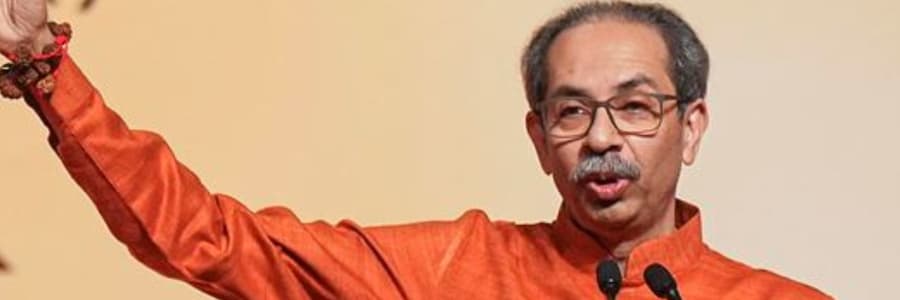
54752abc-a87e-4201-b005-3a45e7bdac0b
Six Lok Sabha MPs from Uddhav Thackeray's Shiv Sena (UBT) announced backing for Eknath Shinde's faction, prompting an emergency party meeting.This is the largest single-day defection from UBT since the 2022 split, threatening the party's national party status and Lok Sabha relevance.Uddhav's weakened bloc impacts the broader INDIA alliance's seat-sharing math in Maharashtra, while BJP gains leverage to reshape opposition dynamics.
Who are the six MPs that switched sides?
The six are Sanjay Dina Patil, Sanjay Deshmukh, Sanjay Jadhav, Bhausaheb Wakchaure, Nagesh Ashtikar, and Omprakash Raje Nimbalkar. All are Lok Sabha MPs who won on UBT tickets. They plan to appear with Deputy CM Eknath Shinde on Monday to formally announce support for his faction.
Were these MPs signaling discontent earlier?
Several of these MPs had publicly expressed frustration with UBT's organizational direction. Sanjay Dina Patil, for instance, had skipped key party meetings in recent months. In Indian politics, such absences are a reliable early signal. The defection was coordinated, not spontaneous, suggesting backroom negotiations preceded Monday's announcement.
Did Shinde's faction offer them anything?
Defecting MPs typically gain access to ministerial berths, committee positions, or constituency development funds controlled by the ruling alliance. In the 2022 Shinde revolt, MLAs who switched received cabinet posts within months. While no specific offers have been confirmed publicly, the pattern suggests political incentives rather than purely ideological alignment drove the move.
Could UBT legally challenge the defection?
Under the anti-defection law (10th Schedule), MPs can be disqualified for defying their party whip. However, if two-thirds of a party's legislators merge with another group, they are exempt. With 6 out of 9 UBT MPs switching, they meet the two-thirds threshold. This legal loophole, used in the 2022 Maharashtra crisis, effectively shields the defectors from disqualification.
Could this cost UBT its national party status?
Shiv Sena (UBT) won 9 Lok Sabha seats in 2024. Losing 6 of 9 MPs, roughly two-thirds, threatens the party's ability to meet Election Commission thresholds for recognized party status. Under ECI rules, a party needs minimum vote share or seat count across states. UBT's shrinking footprint in Parliament weakens its bargaining power within the INDIA alliance.
What vote share does UBT need to survive?
ECI rules require a recognized national party to win at least 2% of total Lok Sabha seats across 3 states, or 6% vote share in 4 states plus 4 seats. UBT's strength is concentrated in Maharashtra. Losing 6 MPs does not automatically strip status, but reduces the parliamentary arithmetic that keeps allies interested in seat-sharing deals.
Has any party rebuilt after losing this many MPs?
The original Shiv Sena itself split in 2006 when Raj Thackeray left to form MNS. That faction never recovered Lok Sabha relevance. Conversely, YSR Congress rebuilt after Jagan's initial rebellion from Congress. The key variable is whether the leader retains a strong state-level cadre. Uddhav retains ~15 MLAs and Mumbai's municipal base, but momentum is clearly against him.
What happens to UBT's Rajya Sabha seats?
Rajya Sabha seats depend on MLA strength in state assemblies, not Lok Sabha numbers. UBT currently has ~15 MLAs in Maharashtra's 288-seat assembly. That is too few to independently elect even one Rajya Sabha member, who needs ~29 votes. UBT would need alliance partners to pool votes, a weaker negotiating position than before this defection wave.
How does this shift BJP's Maharashtra strategy?
BJP already governs Maharashtra in coalition with Shinde's Shiv Sena and Ajit Pawar's NCP. Absorbing 6 more MPs strengthens the ruling Mahayuti alliance's Lok Sabha numbers. BJP is also reportedly planning to table 4 years of CAG reports against TMC in Bengal, signaling a broader strategy to fragment and isolate opposition parties state by state.
Is BJP using this playbook in other states?
BJP has systematically absorbed regional party legislators in Goa, Meghalaya, and Arunachal Pradesh over the past 3 years. In Goa, 8 out of 11 Congress MLAs merged into BJP in 2023. The structural approach is consistent: target parties with weak internal discipline, offer ruling-coalition benefits, and use the two-thirds merger loophole to bypass anti-defection law.
Who in the INDIA bloc fills UBT's gap now?
Congress is the only INDIA alliance partner with pan-Maharashtra reach, holding 13 Lok Sabha seats. Sharad Pawar's NCP-SP has 8 seats. With UBT weakened, Congress likely demands a larger share of assembly seats in 2029. This intra-alliance rebalancing benefits Congress numerically but risks alienating Marathi-speaking voters loyal to the Thackeray brand.
Does Shinde now outrank Fadnavis in Delhi?
Shinde's faction now commands ~13 Lok Sabha MPs compared to Fadnavis's BJP with ~23 in Maharashtra. In coalition math, BJP remains senior partner. But Shinde's growing MP count strengthens his claim to more cabinet berths and policy influence in Delhi. The real test comes during ministry reshuffles, where seat contributions determine who gets which portfolio.
Source: indianexpress.com