world · 2026-03-21
6th Indian Killed in Riyadh Missile Strike
64b0fef2-b702-471a-b965-64464aae9b97
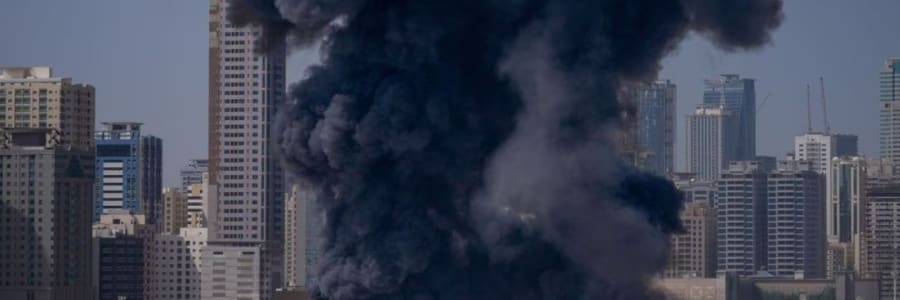
A sixth Indian national was killed in an Iranian missile attack on Riyadh on March 18.The Indian Embassy confirmed the death but shared no further details.Saudi Arabia's Defence Ministry reported shooting down a drone approaching Riyadh's diplomatic quarter.The deaths come amid the escalating Iran-Saudi conflict in West Asia.India has not publicly outlined any evacuation or contingency plan for its large diaspora in the Gulf region.
What makes India's Gulf diaspora uniquely exposed when conflicts like this escalate?
Roughly 2.6 million Indians live in Saudi Arabia alone, many in blue-collar jobs with limited mobility. Unlike embassy staff or corporate expats, they can't easily relocate. [Construction workers in Riyadh's expanding megaprojects] are concentrated in urban zones that are now missile targets.
What contingency infrastructure does India actually have to evacuate millions from the Gulf?
India's Vande Bharat Mission during COVID moved over 4 million people, but that took months with functioning airports. In a missile conflict, [Riyadh's King Khalid Airport] could be a target itself, making air evacuation far harder than peacetime logistics suggest.
How does the concentration of Indian workers in Saudi megaprojects increase their vulnerability?
Saudi Arabia's Vision 2030 projects concentrate workers in specific urban clusters. [NEOM's construction site] and Riyadh's expansion zones employ tens of thousands of Indian laborers in fixed locations, making rapid dispersal nearly impossible during attacks.
What precedent exists for India evacuating citizens from active conflict zones at this scale?
In 2015, India evacuated roughly 4,700 people from Yemen in [Operation Raahat], using naval ships and aircraft. But Yemen had thousands of Indians. Saudi Arabia has millions, a scale 500 times larger that current military logistics simply cannot handle quickly.
Why would Iran target Riyadh's diplomatic quarter, and what does that signal about escalation logic?
Hitting the diplomatic quarter signals Iran wants to raise political costs, not just military ones. By threatening embassies and foreign missions, Iran pressures countries with personnel in Riyadh to push Saudi Arabia toward de-escalation. [Targeting near foreign embassies] internationalizes the conflict deliberately.
What is Iran's strategic objective in sustaining attacks on Riyadh specifically?
Iran likely aims to demonstrate that Saudi Arabia's cities are not safe despite Western-supplied defenses. By repeatedly striking [Riyadh, the political capital], Iran undermines Saudi credibility as a regional power and pressures it to negotiate rather than escalate.
How effective is Saudi Arabia's missile defense against Iranian strikes?
Saudi Arabia uses [the Patriot missile defense system], which has a mixed interception record. Reports of drones being shot down near the diplomatic quarter suggest the system works partially, but even a few missiles getting through cause significant casualties and political damage.
What role do proxy forces play versus direct Iranian military strikes?
Iran has historically used [Houthi forces in Yemen] as a proxy layer for attacks on Saudi territory. Direct Iranian strikes, as now reported, represent a significant escalation, removing the plausible deniability that proxy warfare provided.
How does losing 6 nationals in a foreign conflict change India's diplomatic calculus with both Iran and Saudi Arabia?
India walks a tightrope. Saudi Arabia is its third-largest trade partner, while Iran supplies crude oil and shares strategic interests in Chabahar port. Six deaths create domestic pressure to act, but picking sides risks losing one relationship. [India's $42 billion annual Saudi trade] complicates any strong stance.
What leverage does India actually hold over either Iran or Saudi Arabia to protect its citizens?
India's oil purchases give it some leverage. [India buys roughly 12% of Saudi crude exports], making it a significant customer. Diplomatically, India could condition energy deals on security guarantees for its nationals, though it has historically avoided such transactional approaches.
How might these deaths shift Indian public opinion on Gulf migration policy?
Six deaths may not shift policy alone, but sustained casualties could trigger domestic demands for [regulated migration frameworks], similar to how the Philippines manages overseas worker protections with mandatory insurance and embassy-monitored employment contracts.
What economic fallout could India face if Gulf remittances are disrupted by prolonged conflict?
Gulf remittances to India totaled roughly [$35 billion annually as of 2024]. Prolonged conflict disrupting employment in Saudi Arabia could reduce this flow significantly, hitting states like [Kerala, which receives nearly 20% of all Gulf remittances] especially hard.
Source: indianexpress.com