world · 2026-06-22
~7K Indians Rescued From SE Asia Scams
e4b20d3b-e5e6-4efc-9fb7-28f297e07a9e
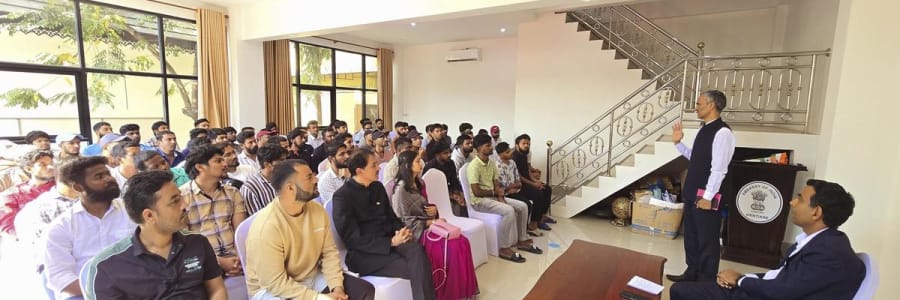
Since 2022, ~7K Indians have been rescued from cyber scam hubs in Cambodia, Myanmar and Lao PDR, where trafficked victims are enslaved.APG's 2025 report reveals these hubs generate tens of billions of dollars annually, exploiting weak law enforcement in border zones and SEZs.NIA, CBI and ED are probing trafficking networks across Indian states. Victims' families pay $3K to $20K for their release.
How were Indians lured to these scam hubs?
Recruiters pose as legitimate job agents offering $1K/month salaries at Chinese companies in Thailand or Myanmar. In one CBI case from Aug 2024, Abhishek Negi and two others were recruited by a former colleague. They flew from Delhi and were headed to Myawaddy, Myanmar, a known scam hub, before the Indian Embassy intervened at Yangon airport.
What happens to victims inside these compounds?
Victims are confined and forced to run online scams, defrauding people worldwide. The APG report documents physical violence including beatings with batons, electric shocks, food deprivation and forced drug use. Syndicates impose fake debt obligations, covering transport and accommodation costs, that victims must repay through scam work. Some are coerced into recruiting others to earn release.
How did 3 Indians escape at Yangon airport?
Abhishek Negi, Ashish Tyagi and Gaurav Bisht grew suspicious after a fellow passenger warned them Myawaddy was a "shady place." At Yangon airport, unknown individuals waited to escort them. Instead of going, they contacted the Indian Embassy directly. The embassy arranged deportation back to India. Most victims lack this awareness or contact access.
Are most victims recruited from specific states?
CBI and NIA cases reveal trafficking networks span several Indian states, though specific state breakdowns are not public. Recruitment typically targets young men seeking overseas employment. The govt told Rajya Sabha that ~2.5K rescues came from Cambodia, ~2.3K from Lao PDR and ~2.2K from Myanmar, suggesting geographically diverse Indian origin points.
Why do border SEZs keep enabling these hubs?
Border SEZs in Myanmar, Cambodia and Lao PDR have minimal regulatory oversight and weak policing. The APG report found syndicates exploit these zones to set up compounds shielded from national law enforcement. Shell companies and complex corporate structures conceal ownership. For example, Philippine Offshore Gaming Operations were used as fronts for laundering scam proceeds.
How do these hubs move billions undetected?
Syndicates use three layered channels. Mule accounts belonging to unsuspecting individuals handle initial fund transfers. Hawala networks move cash across borders without formal banking records. Cryptocurrencies add a third anonymization layer. The APG report cited Philippine Offshore Gaming Operations as a case study where all three methods converged to launder scam proceeds.
Could India shut recruitment pipelines at home?
Disrupting recruitment requires catching agents before victims leave India. CBI has registered cases, but agents operate through informal networks, former colleagues and social media. India's Emigration Check Required (ECR) system covers some destinations, but Myanmar and Lao PDR are not ECR-listed countries. Adding them could trigger mandatory pre-departure verification for vulnerable travelers.
What makes SEZs harder to police than cities?
SEZs are structurally designed to minimize govt intervention to attract investment. Tax exemptions, reduced customs checks and limited police jurisdiction create regulatory blind spots. In Myanmar's Myawaddy SEZ near the Thai border, armed ethnic militias control territory, making national law enforcement access nearly impossible. This governance vacuum is the core enabler, not technology.
Who in India profits from trafficking people?
Trafficking agents operate across multiple Indian states, recruiting victims through fake job offers. NIA, CBI and ED have arrested and charge-sheeted multiple accused. The syndicates also profit by re-targeting victims, posing as fund recovery agents. Families pay $3K to $20K ransoms. Since 2022, ~2.5K Indians were rescued from Cambodia alone.
Who beyond victims bears the financial cost?
Scam victims worldwide bear direct losses. The APG report estimates tens of billions annually in global fraud proceeds. Indian families pay $3K to $20K ransoms per person. Banks absorb costs from mule account fraud. Govts spend on rescue operations and diplomatic resources. India's embassy in Laos alone has handled thousands of rescue coordination cases since 2022.
Do rescued Indians get any rehabilitation?
India lacks a dedicated rehabilitation framework for cyber trafficking returnees. Rescued Indians are deported home but face psychological trauma, debt from ransom payments, and social stigma. Unlike sex trafficking survivors who can access Ujjwala scheme shelters, cyber slavery returnees have no specific govt program. Mental health support and legal aid remain ad hoc, dependent on NGOs.
How do syndicates recruit across borders?
Syndicates use professional intermediaries including lawyers, accountants and company service providers to build legitimate-looking corporate fronts. Recruitment ads appear on social media and job platforms offering $1K/month overseas salaries. Former victims are coerced into becoming recruiters themselves. The chain crosses borders through informal trust networks, making it resilient to single-country enforcement.
Source: thehindu.com