world · 2026-03-12
As expected, crude oil prices are up
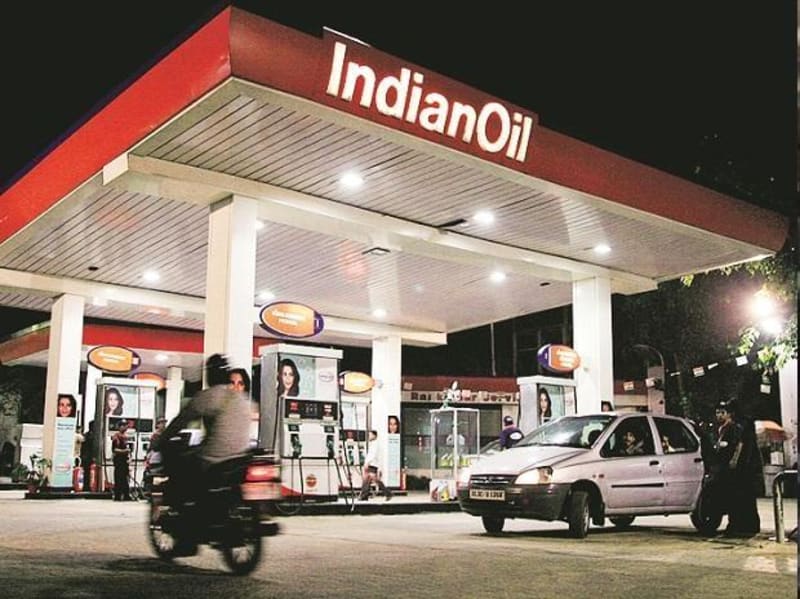
Oil prices jumped from $70 to over $110 per barrel within 10 days of the Iran war starting. In India, this translates directly to higher fuel costs.India imports 85% of its crude oil. About 60-65% of that normally comes through the Strait of Hormuz (from Saudi Arabia, UAE, Iraq, Kuwait). The Strait has been effectively closed since February 28.Government says India has 74 days of oil reserves total (9.5 days in strategic reserves, 64.5 days at refineries). Oil companies absorbed losses to keep pump prices stable so far.The US gave India a 30-day waiver (ending April 4) to buy Russian oil stranded at sea. India's caught between needing cheap oil and US pressure to avoid Russian supplies.
We recently agreed to stop buying Russian oil. Did we follow through?
No. Russia is still India's largest crude supplier in February 2026. Trump claimed India committed to stopping Russian oil in a February trade deal, but India never publicly confirmed this.Under US pressure and tariffs (which hit 50%), India cut Russian imports from 1.75 million barrels/day in August 2025 to 1.12 million in January 2026 (36% drop). But when the Strait of Hormuz closed, India had no choice.About 140 million barrels of Russian oil (worth $3 billion) were stranded at sea because Indian demand collapsed under US pressure. Now India needs those exact barrels.
If the US finds out, what will happen?
US already knows. The waiver itself is admission India is buying Russian oil. Treasury Secretary Bessent said "we may unsanction other Russian oil" to ease the oil shortage.Congressional Democrats are furious. They're demanding the waiver be reversed because Russia is reportedly helping Iran target US troops. But Energy Secretary Wright defended it as "pragmatic" to prevent oil prices from spiking further.The waiver expires April 4. If Hormuz stays closed beyond that, US will likely extend it or quietly look the other way. When your own war creates an oil crisis, punishing allies becomes harder.
Are there no other oil suppliers that don't go through the Strait?
Yes, but not enough. 40% of our imports don't go through Hormuz (Russia, West Africa, Americas). Russia alone can supply 1.1-1.75 million barrels/day.But Russia can't replace the 2.5-2.7 million barrels/day we normally get through Hormuz. And Russian tankers take longer to reach India than Gulf tankers.US offered to sell us more crude, but American oil is more expensive than Russian or Gulf oil. Venezuela is another option Trump mentioned, but volumes are limited.
What is the likely impact on our import bill?
Every $10/barrel increase widens our current account deficit by 0.4-0.5% of GDP. At $110/barrel (vs $70 before the war), that's a $40 increase.India's oil import bill was ₹22 lakh crore/year in 2025. A sustained $40/barrel increase could add ₹3-4 lakh crore annually. That's roughly $35-45 billion extra.The rupee weakens when oil prices spike (already under pressure). Higher fuel costs mean higher inflation across food, transport, manufacturing. Government may have to let pump prices rise if losses at oil companies become unsustainable.
Why does so much oil have to flow through the Strait of Hormuz?
Because that's where the oil is. The Persian Gulf holds massive oil reserves (Saudi Arabia, Iraq, UAE, Kuwait, Iran). Ships are the cheapest way to move it.The Strait is 21 nautical miles wide at its narrowest point. 20 million barrels/day pass through it (20% of global oil, 20% of global LNG).89% of oil through Hormuz goes to Asia. China and India combined get 44% of Hormuz exports. For Asian buyers, tankers through Hormuz are simply the most economical route from Gulf producers.
Compare the cost of a pipeline to ship-based transport
Building a pipeline from the Gulf to India would cost tens of billions of dollars and take years. The distance from Saudi Arabia to India is ~3,000 km, much of it underwater.Saudi Arabia's East-West pipeline (across their own country, 1,200 km) cost hundreds of millions and has 5-7 million barrels/day capacity. It bypasses Hormuz but only goes to the Red Sea, not Asia.Tankers are far cheaper per barrel. You don't need to build anything upfront, and routes are flexible. Even with insurance and crew costs, ships beat pipelines economically for long distances across water.
How long will the Strait likely be closed?
Analysts are split. Trump said "four weeks" on March 9. His Joint Chiefs said "not a single overnight operation." Some compare it to the 1990-91 Gulf War (disruption lasted ~6 months).The current closure isn't military blockade, it's insurance-driven. Major insurers (Gard, Skuld, NorthStandard, London P&I Club) cancelled war risk coverage from March 5. Without insurance, ships can't get financing or crews.Traffic could resume once: (1) US achieves military goals, or (2) insurance companies deem it safe, or (3) governments provide insurance guarantees (US DFC offered this March 8). Earliest realistic estimate: 2-4 weeks. Worst case: several months.
Has Iran blocked the Strait before?
Never fully closed, but Iran attacked ships during the Tanker War (1984-1988). Iraq started it by attacking Iranian oil tankers. Iran retaliated by attacking ships going to/from Iraq and its Gulf allies (Kuwait, Saudi).Between 1981-1988, Iraq launched 283 attacks; Iran launched 168. The strait never actually shut. Even at peak intensity, attacks disrupted less than 2% of ships. Iran needed the strait open for its own oil exports.US led international naval escorts in 1987-88 to protect tankers. The war ended in 1988. This time is different: not military attacks on tankers, but insurance companies refusing coverage.
Why can't we reduce our dependence on oil?
India imports 87% of its crude. Oil makes up 25% of our primary energy consumption and 25% of carbon emissions. We're the world's third-largest oil consumer.Coal we have plenty of (second-largest producer globally). Renewables are growing fast (253 GW installed, up 23% year-on-year). But oil is mainly used for transport, which can't run on coal or solar yet.EVs are only 5% of car sales. Most vehicles still need petrol/diesel. Aviation, shipping, trucking all run on oil. No technology can replace oil in these sectors at scale today.
Why don't Reliance and Nayara, who make so much money, store oil for situations like this?
They do store oil, but it's operational inventory, not strategic reserves. Refineries need crude flowing constantly to keep running. That working stock is the 64.5 days of reserves at OMCs and private refiners.Building massive extra storage costs billions. Reliance and Nayara are profit-driven companies, not charity. The government built strategic reserves (9.5 days) because companies won't do it themselves.Also, storing crude for months costs money (storage fees, opportunity cost of capital tied up). And if you store when prices are high, you lose money when they fall. Companies optimize for profit, not national insurance.
How long before solar or wind can replace our oil demand?
Solar and wind generate electricity, not liquid fuel for cars/trucks/planes. India added record renewable capacity (44.5 GW in 2025), but renewables now make up only 50% of electricity generation.Transport is the problem. 50% of India's oil demand comes from road transport. EVs are 5% of sales; it'll take 15-20 years to electrify transport at current pace.Aviation and shipping can't run on batteries. Green hydrogen could replace jet fuel/diesel eventually, but current production cost is $4-5/kg (still uneconomic). Realistically, oil demand won't peak for another 10-15 years minimum.
India has so much coal, can't we use that instead?
Coal generates electricity; oil powers transport. You can't put coal in a car's tank. Coal can be gasified into synthetic fuel, but it's expensive and emissions-intensive.India produces 893 million tons of coal/year (second-largest globally). 68% of our electricity still comes from coal (down from 74% in 2023). We'll keep using coal for power for the next 10-20 years minimum.But transport needs liquid fuel. Coal-to-liquid technology exists but costs more than just buying crude oil. Until EVs and green hydrogen scale up, India has no choice but to import