politics · 2026-06-22
Bengal's First BJP Budget: 1L Jobs, ₹550Cr
fd54bb58-e5de-4d0e-aac2-26f79014aac7
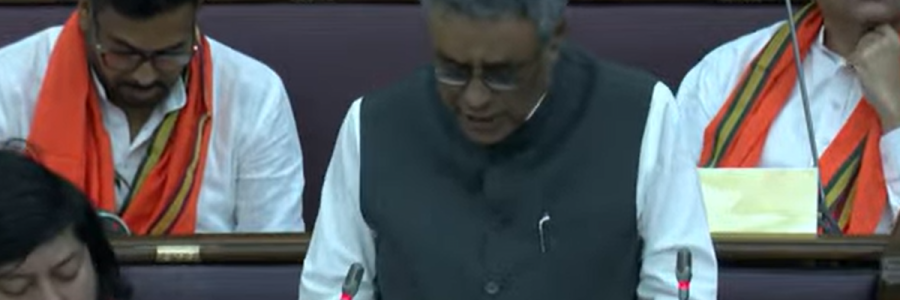
FM Swapan Dasgupta announced 1L govt job recruitments with 33% reserved for women, plus 20K police posts, in BJP's first full Bengal budget.State carries ~₹7.5L Cr debt at ~38% debt-to-GSDP ratio, one of the highest among major states. Interest alone eats ~₹49K Cr/year, severely limiting fiscal room.Women get a ₹550Cr free bus scheme and Pink Card. Girl students in govt schools get ₹50K scholarships. Govt employees get a 20% DA hike from Oct.
What exactly did the 1L job pledge cover?
FM Dasgupta committed to filling 1L vacant govt posts across departments, with 33% reserved for women. Of these, 20K seats go to the state police force. This marks BJP's pivot from TMC's cash-transfer welfare model toward direct employment generation. Bengal's govt vacancy backlog has been a long-standing grievance across recruitment boards.
Why did BJP pick jobs over cash transfers?
TMC's model relied heavily on direct cash transfers like Lakshmir Bhandar, which cost ~₹12K Cr/year. BJP's election campaign explicitly criticized this as fiscal drain without productive output. By routing spending through govt salaries instead, BJP aims to show measurable employment numbers while creating long-term tax-paying workers rather than transfer recipients.
How does 20K police recruitment compare?
Bengal's police force has roughly 85K sanctioned posts with chronic vacancies running at ~20%. The 20K new recruits would fill nearly all existing gaps. For context, UP recruited ~60K police personnel in 2023 for a population 2.5x Bengal's. The 20K figure is proportionally significant and addresses BJP's law-and-order campaign plank.
What depts get the remaining 80K posts?
The budget did not break down departmental allocation for the remaining ~80K posts. Historically, Bengal's largest vacancy clusters sit in education (~30K teacher posts), healthcare (~15K positions), and revenue administration. Two new Bills on public disorder and attacks on police suggest home affairs is a priority, but specific department-wise recruitment plans await detailed budget documents.
Can Bengal afford this with ₹7.5L Cr debt?
Bengal's debt is ~₹7.5L Cr, roughly 3x its annual revenue, with a debt-to-GSDP ratio of ~38%. Interest payments alone consume ~₹49K Cr/year. For comparison, Maharashtra's debt is ~₹7L Cr but with a much larger economy. The budget signals a shift toward revenue mobilisation and industrial growth to widen the tax base rather than relying on borrowing.
How does 38% debt-to-GSDP rank nationally?
Punjab leads at ~45% debt-to-GSDP, followed by Rajasthan at ~40%. Bengal's ~38% is among the top 5 most indebted large states. The RBI's recommended ceiling for states is 25%. Critically, Bengal's GSDP growth at ~8% nominally lags Gujarat's ~12%, meaning the denominator grows slowly, keeping the ratio stubbornly high even without new borrowing.
What revenue levers can Bengal actually pull?
Bengal collects only ~₹55K Cr in own tax revenue, primarily from property registration, excise, and motor vehicle taxes. Industrial growth is the main untapped lever. Bengal's factory output per capita is roughly half of Tamil Nadu's. Attracting manufacturing investment, as BJP promises, could widen the GST base. But new factories take 3 to 5 years to generate meaningful tax flows.
Could a credit downgrade raise borrowing cost?
ICRA and CRISIL assess state finances regularly. Bengal currently holds a stable rating, but the 38% ratio is already a red flag. Structurally, every 50 basis point increase in Bengal's borrowing cost on ₹7.5L Cr debt adds ~₹3.75K Cr in annual interest. States borrow through SDL auctions where spreads over central govt bonds reflect perceived credit risk.
How does this shift welfare for Bengal women?
Women are the budget's biggest beneficiary group through three distinct channels. The ₹550Cr free bus scheme and upcoming Pink Card reduce daily commute costs. Girl students in govt-aided schools receive ₹50K scholarships. The 33% reservation in 1L govt jobs translates to ~33K positions specifically earmarked for women candidates.
How does the Pink Card scheme work?
Details remain sparse. Based on similar state programs like Rajasthan's Chiranjeevi Card, a Pink Card likely bundles multiple women-focused benefits, such as subsidized transport, healthcare, and ration access, into a single identity document. This simplifies delivery and reduces leakage versus running parallel schemes. Implementation timelines were not specified in the budget speech.
Will ₹50K scholarships cover real costs?
Annual fees at Bengal govt-aided schools average ₹2K to ₹5K, so ₹50K covers tuition for several years. But the real dropout driver is opportunity cost, families pulling girls out to work or marry. In Bihar, a similar ₹25K scholarship scheme (Kanya Utthan) improved secondary enrollment by ~12% over 3 years. The ₹50K amount is competitively high among state schemes.
How do these compare to TMC's women schemes?
TMC's flagship Lakshmir Bhandar gave ₹500 to ₹1K/month cash directly to women heads of households, covering ~1.6Cr beneficiaries. BJP's approach replaces unconditional cash with conditional benefits: bus access, scholarships, and reserved jobs. The structural difference is targeting. Cash transfers reach all women equally. BJP's model channels more to women who commute, study, or seek govt employment.
Source: thehindu.com