politics · 2026-06-19
BEST Strike Hits Mumbai Bus Services
b1defc1f-6cb4-44e5-a764-1fa11766624c
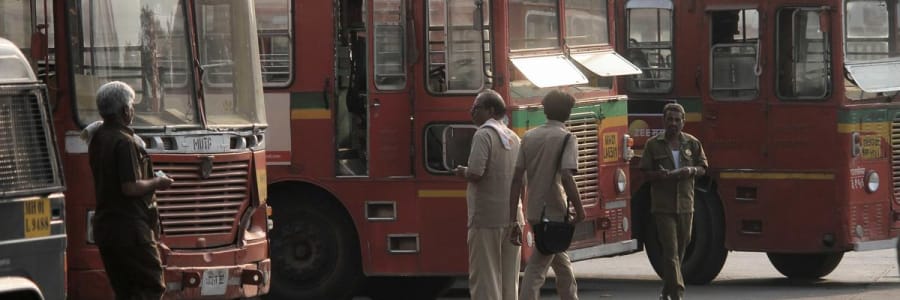
BEST employees continue indefinite strike despite a court order to resume workMumbai's public bus network, serving ~30L daily riders, faces severe disruption across routesThe strike raises questions about labor disputes in essential public services and legal enforcement
Why are BEST workers defying a court order?
BEST employees are pressing demands around wages, job security, and working conditions. Despite a court directive to resume services, workers believe continued disruption gives them stronger bargaining leverage. Similar defiance occurred during Mumbai's 2019 BEST strike, which lasted 9 days before a wage agreement was reached.
What are BEST workers' key demands?
BEST workers typically demand wage parity with BMC employees, permanent positions for contract staff, and better working conditions. In 2019, the union's central demand was a minimum salary of ₹25K/month. Current demands likely follow a similar pattern around pay revision and job regularization.
Has BEST faced strikes before?
BEST has seen multiple strikes. The most notable was the Jan 2019 strike involving ~32K workers that lasted 9 days. It ended after management agreed to revised pay scales. Before that, smaller work stoppages occurred in 2007 and 2012 over similar wage and privatization concerns.
Why do workers risk defying court orders?
Workers calculate that essential service disruption creates public pressure on management faster than legal proceedings resolve. Court penalties for strike defiance are often modest. The 2019 BEST strike showed that 9 days of disruption produced a wage deal, reinforcing the belief that strikes work despite legal risk.
How does this hit Mumbai's daily commuters?
BEST operates ~3,400 buses carrying ~30L passengers daily across Mumbai. With services halted, commuters are forced onto already overcrowded local trains and auto-rickshaws. Areas like Kurla and Andheri, where buses are the primary last-mile connector, face the worst impact. Fares on alternatives surge during disruptions.
Which Mumbai areas are worst affected?
Eastern suburbs like Kurla, Ghatkopar, and Mankhurd depend heavily on BEST buses for last-mile connectivity to railway stations. Western suburbs like Andheri and Malad also see heavy BEST ridership. South Mumbai routes connecting residential areas to business districts face significant overcrowding on alternatives.
Are private bus operators filling the gap?
Mumbai has limited private bus alternatives unlike Delhi's cluster bus model. App-based ride services like Uber and Ola see surge pricing during disruptions. Auto-rickshaws fill some gaps but cannot absorb ~30L daily riders. The absence of a parallel private bus network makes BEST strikes uniquely disruptive.
How does this affect Mumbai's economy?
Mumbai's estimated daily economic output exceeds ₹4,700 Cr. Transit disruptions cause productivity losses from delayed commutes, absenteeism, and supply chain slowdowns. During the 2019 strike, trade bodies estimated daily losses of ~₹100 Cr to small businesses and daily-wage workers who depend on affordable bus transit.
What can courts do when strikes defy orders?
Courts can declare strikes illegal under the Industrial Disputes Act and order workers back. If employees still refuse, management can invoke 'no work, no pay' and initiate disciplinary action. During the 2003 Mumbai textile mill strikes, courts imposed penalties on unions defying return-to-work orders, though enforcement remained slow.
What does the Industrial Disputes Act say?
The Industrial Disputes Act, 1947 requires workers in essential services to give 14 days' notice before striking. Section 22 makes strikes without notice illegal. Courts can order resumption, and violations can lead to fines or imprisonment of up to 6 months for organizers. Enforcement, however, remains inconsistent.
Can BEST fire striking workers?
Legally, BEST can terminate workers for unauthorized absence. Practically, firing ~26K employees is unviable. In the 2019 strike, no mass terminations occurred. Management typically uses 'no work, no pay' deductions and targets union leaders with show-cause notices rather than pursuing mass disciplinary action.
How do other cities handle transit strikes?
Delhi's DTC faced a similar strike in 2014, resolved within 3 days after the Delhi govt intervened with a pay commission. London's Tube strikes are managed through mandatory cooling-off periods and binding arbitration. India lacks a standardized rapid-resolution framework for public transit labor disputes across cities.
Source: thehindu.com