politics · 2026-06-18
Body Scanners Coming to Indian Airports
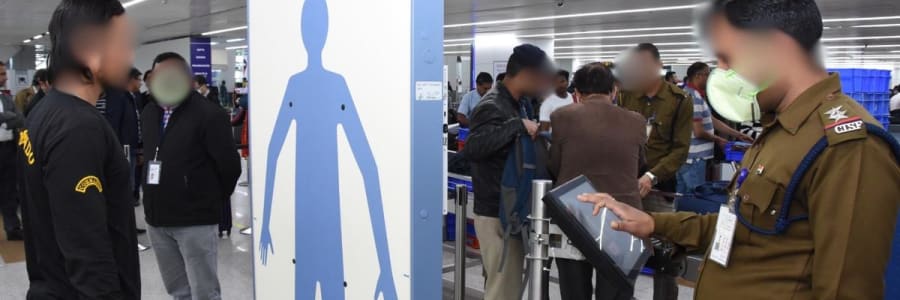
7b1bef4b-f9ef-4a00-831a-240b344b9f6f
BCAS is trialling full body scanners at four major metro airports in IndiaSrinagar, Jammu, and Ayodhya airports have also been asked to install the scannersThe move signals a shift toward tech-driven security screening at Indian airports
Why are these seven airports chosen first?
BCAS picked a mix of high-traffic metro airports for trials and security-sensitive locations for mandated installs. [Srinagar and Jammu] face elevated threat levels, while [Ayodhya] handles surging pilgrim traffic post-temple inauguration. Metro airports provide volume data to validate scanner accuracy.
Why mandate scanners at Ayodhya airport?
Ayodhya airport saw passenger traffic surge after the [Ram Mandir inauguration in Jan 2024]. High pilgrim volumes plus VIP visits create a security challenge. BCAS views automated screening as essential where crowd density and threat perception both run high.
What tech are these scanners based on?
Most modern airport body scanners use [millimeter-wave technology], which bounces radio waves off the body to create a 3D image. Unlike older [backscatter X-ray systems], millimeter-wave emits no ionizing radiation, making it safer for frequent flyers and staff.
Who manufactures scanners for India?
Globally, [Smiths Detection and L3Harris] dominate the market. India's defence procurement rules may require partial domestic manufacturing. [ECIL and BEL], Indian public sector firms, have explored security scanner production, but no confirmed Make-in-India body scanner is deployed yet.
What changes for flyers at these airports?
Passengers may skip manual pat-downs, cutting screening time. In airports using body scanners [like London Heathrow], average security wait dropped ~30%. For flyers at [Delhi or Mumbai], this could mean fewer physical checks, though random pat-downs will likely continue per BCAS protocol.
Will pat-downs be fully eliminated?
Unlikely in the near term. BCAS protocol retains random physical checks even at scanner-equipped airports. [The US TSA] still conducts secondary pat-downs for ~5% of scanned passengers. Full elimination would require regulatory amendment and proven scanner reliability over extended trials.
How do other countries handle privacy?
In the [EU], scanners must use generic body outlines instead of detailed images, and stored images are auto-deleted. [The US TSA] adopted Automated Target Recognition, showing only a stick figure with flagged zones. India's data protection law [DPDP Act 2023] could shape similar privacy safeguards.
Could this slow down boarding queues?
Body scanners typically process 1 passenger every 3-5 seconds, faster than manual frisking. At [London Heathrow], scanner deployment cut average queue times by ~20%. However, if scanners trigger frequent false alarms, secondary checks add delays. Calibration during the trial phase will be critical.
How do body scanners differ from pat-downs?
Body scanners use millimeter-wave or backscatter technology to detect concealed items without physical contact. [Traditional pat-downs catch ~60-70% of non-metallic threats in global audits]. Scanners raise that detection rate significantly. They screen a passenger in ~3-5 seconds versus ~30 seconds for a manual frisk.
How many airports does India operate?
India operates ~150 airports, of which [~35 handle international traffic]. Starting trials at 4 metro airports means less than 3 out of every 100 airports get scanners initially. Scaling nationwide would require significant capital and procurement cycles over several years.
What does BCAS actually regulate?
The Bureau of Civil Aviation Security [BCAS] sets security standards for all Indian airports and airlines. It mandates screening protocols, certifies security equipment, and trains personnel. Unlike [DGCA], which handles flight safety, BCAS focuses exclusively on anti-hijacking and anti-sabotage measures.
How much do body scanners cost per unit?
A single millimeter-wave body scanner costs [~$150K-$200K, or roughly ₹1.25-1.65 Cr]. Airports typically need multiple units per terminal. [Delhi's T3 terminal] alone could require 20+ scanners to cover all security lanes, implying a ₹25-33 Cr outlay for one terminal.
Source: thehindu.com