politics · 2026-11-10
CM's Delhi home gets Rs 6.5 crore upgrade
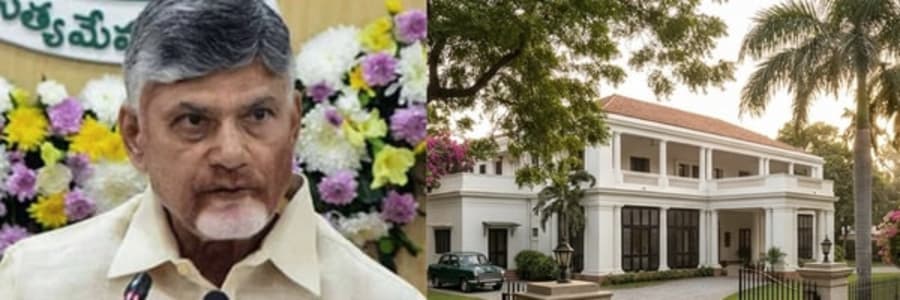
Photo: via mint
Andhra Pradesh Chief Minister Chandrababu Naidu's Delhi bungalow got a Rs 6.5 crore renovation. The amount is one small part of a national rise in upkeep costs for such official homes.
What exactly happened at Naidu's Delhi bungalow?
Andhra Pradesh Chief Minister Chandrababu Naidu's official Delhi residence at 1, Janpath Road, built in the 1930s, underwent structural retrofitting by NBCC, a central government agency. The nearly century-old bungalow needed reinforcement after years of deterioration. NBCC completed the work in three-and-a-half months and handed over the upgraded property to Naidu on October 22.
Why do these old official homes keep costing more to fix?
The stock is ageing. Officials put the rising bill down to bungalows that are 80 to 100 years old, with seepage, termite damage and worn-out electrical and plumbing systems. Spending on Union ministers' homes went from an average of Rs 26.78 crore a year in 2014-19 to Rs 92.35 crore in 2025-26, a record.
Who actually foots the bill for these upgrades?
In this case, NBCC, a central government agency under the Ministry of Housing and Urban Affairs, carried out the work, but the evidence does not state who paid for it. The pattern elsewhere is that the public purse funds these renovations, with CPWD spending Rs 547.68 crore on ministers' homes over 12 years. Our read: the Rs 6.5 crore came from state or central funds, a detail officials have not publicly disclosed.
Why is this renovation being questioned at all?
The scrutiny in this case comes from precedent. In a similar renovation of Delhi's chief minister's residence, the vigilance directorate found the new building was bigger than entitlement rules allowed, costs were split into work orders under Rs 9.99 crore to bypass approval, and the CM's directions caused deviations from the sanctioned amount. Those rules fall under the Ministry of Housing and Urban Affairs, the same ministry that oversees NBCC. Our read: the Janpath renovation avoided that trap by keeping its budget far below the limits that trigger checks, so it may face no inquiry at all.
What happens when a renovation crosses the approval line?
The Delhi chief minister's residence showed the consequence. The vigilance directorate found the building exceeded entitlement rules, costs were split into work orders under Rs 9.99 crore to bypass approval, and the CM's directions caused deviations from the sanctioned amount. It issued show-cause notices to seven PWD officials. No such step appears in this Janpath case because the Rs 6.5 crore budget stays far below the thresholds that triggered scrutiny there. Our read: the outcome of that earlier case now defines what officials consider an acceptable renovation, and the Janpath project was sized to match.
Does the money for such upkeep get accounted for anywhere public?
The record goes only as far as total spending, not itemised bills. An RTI query revealed that the Central Public Works Department, which maintains Union ministers' homes, spent Rs 547.68 crore on renovation and repair over 12 years, with spending climbing to Rs 92.35 crore in 2025-26. The same budget line in the Union budget covers 'construction and maintenance of government residential buildings.' For the Janpath project, no publicly available document states who paid or which entitlement rule allowed the Rs 6.5 crore. Our read: the absence of an itemised public ledger is how this spending stays under democratic scrutiny.
So who gets to decide what an acceptable renovation costs?
The scrutiny falls on the officials, not the politicians. In the Delhi chief minister's residence case, the vigilance directorate issued show-cause notices to seven PWD officials, questioning deviations from entitlement rules and cost splitting. The Janpath project avoided that by keeping its budget below the Rs 9.99 crore work-order threshold that triggered approval requirements. Our read: the real check is not a published rulebook but the threat of an inquiry, which is why the Rs 6.5 crore figure matters so much.
Why would a state pay for a home in Delhi?
The evidence does not state who paid for the Janpath renovation, but it does show how such work is typically funded. The Central Public Works Department, which maintains Union ministers' homes, spent Rs 547.68 crore over 12 years under a Union budget line for construction and maintenance of government residential buildings. NBCC, which did the Janpath work, operates under the same ministry that sets the funding rules. Our read: the money almost certainly came from central funds, since the bungalow is a central government asset allotted to a state chief minister, and the state would have no budget line for a property it does not own.
Who decides how much is too much to spend on an official residence?
No fixed cap shows up in the record; the trigger is scrutiny. Delhi's vigilance directorate issued notices to seven PWD officials over a Rs 52.71 crore chief minister's residence, questioning deviations from entitlement (the allowed spending limit) and tendering. Our read: the next test is whether anyone publishes who funded the Janpath retrofit and against which entitlement.
Why preserve these old buildings at all?
NBCC says it deliberately retained the architectural and heritage features while reinforcing the structure, describing the task as restoring strength without erasing soul. The bungalow dates to the 1930s and is nearly a century old, part of a stock that is ageing and costly to maintain. The choice to preserve rather than rebuild reflects official policy, even as upkeep costs for such residences have risen to a record Rs 92.35 crore in 2025-26.
Was it just paint and furniture, or more?
It was not decoration; the money went into the building's bones. The roughly 100-year-old bungalow at 1, Janpath Road had suffered structural deterioration, so NBCC, a central government agency, carried out retrofitting to reinforce the structure while preserving its heritage features. NBCC said the task was to restore its strength 'without erasing its soul.'
Does the rising upkeep bill face any political fallout?
Yes, it already has. Opposition parties Congress, AAP, and CJP have publicly criticised the record Rs 92.35 crore spent on Union ministers' residences in 2025-26, with Congress leader Supriya Shrinate calling the spending 'exorbitant' while the public faces inflation and unemployment. AAP's Somnath Bharti drew a contrast with criticism of the Delhi CM's residence spending. This shows the issue is politically charged, though no formal action like an inquiry has been mentioned yet.
Would such scrutiny stop the spending on these homes?
Past scrutiny did not stop it, and the comparison from the 2025-26 debate suggests it may even have encouraged it. The Rs 52.71 crore Delhi chief minister's residence drew notices over deviations from entitlement, but the record high Rs 92.35 crore on ministers' homes came the very next year after AAP used the BJP's criticism of that project as ammunition in a political fight. Our read: the backlash is absorbed as a political cost, and the upkeep bill keeps climbing because the buildings' age gives officials a reason that scrutiny cannot refute.
Could the same political fight happen over Naidu's new bungalow?
The political fight is tied to party lines. The record Rs 92.35 crore spent on minister homes drew criticism from the Congress, AAP and CJP, while the BJP had earlier attacked the Delhi CM's residence as a "sheesh mahal" for the same kind of spending. Naidu's Rs 6.5 crore job is far smaller and was done by a central agency, NBCC, not by his own state's PWD. Our read: opposition parties will target the Centre's rising bill, not Naidu's smaller upgrade, because the number is what drives the attack.
If the bill is already being criticised, what would actually stop it?
The record Rs 92.35 crore figure was attacked by Congress, CJP and AAP, yet it climbed from Rs 71.98 crore the year before, so political criticism has not slowed it. The only check cited is vigilance: notices went to seven PWD officials over the Rs 52.71 crore Delhi chief minister's residence for deviations from entitlement rules. Our read: the spending stops only when a similar deviation notice lands on a minister's own residence project, not from public outcry.
If age is the excuse for the spending, why do the bills keep rising so sharply?
The age of the bungalows explains why they need work, not why the bill is climbing faster than the stock ages. Spending on ministers' homes rose from an average of Rs 26.78 crore a year in 2014-19 to Rs 92.35 crore in 2025-26, a more than threefold jump, while the properties themselves are simply one decade older. Officials point to seepage and termite damage as the cause, but nothing in the record ties the tripling to a specific acceleration in decay. Our read: the sharp rise is a budgeting choice, not a physical necessity.
Who is this money really being spent for?
The record Rs 92.35 crore was spent by CPWD on the official residences of Union ministers, and the CJP's public criticism claims the same money could fund 10 government schools. The officials' stated reason is the age of the bungalows, which suffer from seepage, termite damage and worn-out systems. Our read: the spending serves the ministers' comfort, not any public function, and the political backlash is driven by that contrast.
Who pays for Naidu's bungalow retrofit?
The payer is not specified. NBCC, a central government agency under the Ministry of Housing and Urban Affairs, did the work at 1, Janpath Road, but the funding source isn't disclosed in reports. The question remains unanswered, though it fuels debate: the CPWD (Central Public Works Department) spent Rs 92.35 crore on Union ministers' homes in 2025-26, drawing criticism from opposition parties.
Who decides what a politician's official residence is allowed to cost?
The Ministry of Housing and Urban Affairs sets entitlement guidelines for official residences, which are maintained by agencies like the CPWD for Union ministers and NBCC for the Andhra Pradesh CM's Delhi bungalow. When the Delhi CM's home was renovated, the vigilance directorate issued notices to seven PWD officials, alleging the project violated these entitlement norms and tendering rules. Our read: the guidelines themselves set no fixed spending cap, so scrutiny only kicks in after the bill is public.
What actually happens when an official home is found to break the rules?
On the Delhi CM's complex, the vigilance directorate issued show-cause notices to seven PWD officials, citing gross violation of financial rules, the CPWD manual and CVC guidelines, work split under Rs 9.99 crore to dodge the secretary's approval, and no sanctioned building plan. The cost had climbed from Rs 7.62 crore to Rs 33.20 crore. The penalty landed on the officers who signed, not the minister. Our read: that is why the spending keeps rising, since the risk sits with the file-pushers.
Who can hold a politician accountable if their own party controls the state?
The record shows accountability comes from within the system, not from voters. The Delhi vigilance directorate, acting on the Lieutenant Governor's order, issued notices to seven PWD officers over the CM house, while the CPWD's Rs 92.35 crore spending on ministers' homes drew criticism from opposition parties like Congress and AAP. But no action has been reported against any minister or elected official. Our read: in states where the ruling party controls such investigations, scrutiny is likely to stay bureaucratic, unless the centre or an opposition-ruled state takes it up.
Why does the work keep getting split to stay under Rs 9.99 crore?
That splitting was the central allegation in the Delhi CM house case: work orders were created below Rs 9.99 crore specifically to avoid seeking the approval of the PWD Secretary, and the renovation cost climbed from the initial Rs 7.62 crore estimate to Rs 33.20 crore. The vigilance directorate, acting on the Lieutenant Governor's order, flagged this as a gross violation of financial rules, CPWD manual and CVC guidelines. The penalty fell on seven PWD officers, not the minister. Our read: the threshold exists as an internal control, but its main effect is moving decisions down a ladder where scrutiny is weaker and less public.
Does the minister or the bungalow's age justify the rising upkeep bill?
Officials point to bungalows that are 80 to 100 years old, with seepage, termite damage and worn-out systems, to explain the climb in spending from Rs 26.78 crore a year to a record Rs 92.35 crore. The CPWD spent Rs 547.68 crore across 12 years on these repairs. Naidu's own Delhi home, dating to the 1930s, needed structural retrofitting and interiors. Our read: the age excuse endures because the agencies that cite it are the same ones that sign the bills, and no independent audit questions the numbers.
What stops an elected government from simply paying for these upgrades itself?
Nothing structural does. The Ministry of Housing and Urban Affairs sets entitlement guidelines, and central agencies like CPWD and NBCC carry out the work, but the funding source for Naidu's Rs 6.5 crore renovation is not disclosed. The Delhi CM case shows scrutiny comes after the bill is public, through vigilance notices to officials, not through any upfront budget control tied to the politician. Our read: the system assumes the politician's entitlement is the ceiling, so no one asks who writes the cheque until a rival party makes it an issue.
Why does a chief minister need a Delhi home at all?
Because Delhi is where the central government sits, and state chief ministers regularly visit for official work. Naidu's 1, Janpath Road bungalow has been used for official engagements during his visits to the national capital, including meetings with several Union Ministers, according to the NBCC report. The renovation, costing Rs 6.5 crore, was done by NBCC, a central agency under the Ministry of Housing and Urban Affairs. The home serves as a base for state-centre negotiations, not as a personal residence.
Source: livemint.com