economy · 2026-11-03
Cooking gas and jet fuel get costlier in India
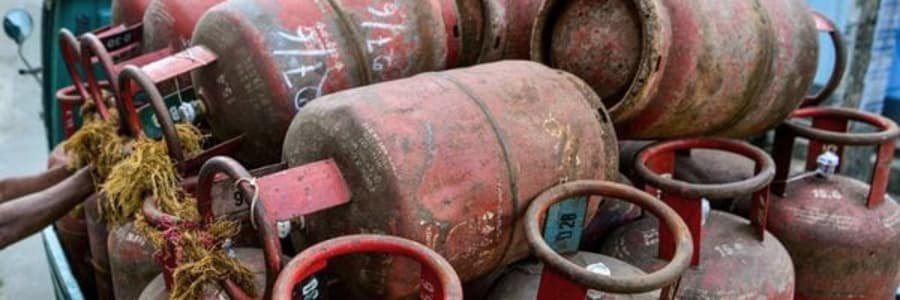
Photo: via mint
India raised prices on commercial cooking gas and jet fuel starting Sunday. This happens as global oil prices stay high, and it will likely push up costs for restaurants, hotels, and airlines.
How big are the November 1 commercial LPG and ATF price hikes?
On November 1, oil marketing companies raised a 19-kg commercial LPG cylinder by ₹10 to ₹2,820, and aviation turbine fuel (ATF) by ₹1.37 per litre to ₹138.50. The hikes are small in isolation, but they mark the third straight monthly commercial LPG increase and the fourth for ATF, continuing a steady climb reflecting high international crude prices.
Why do households get shielded but businesses face the full price?
Domestic LPG is partially regulated: the government caps prices, subsidizes PMUY beneficiaries (a scheme giving subsidized LPG to poor households), and compensates oil marketing companies for under-recoveries, ₹30,000 crore approved recently.
Who ultimately pays for the government shielding households from fuel costs?
The oil marketing companies (OMCs) absorb the gap between international prices and what households pay. In FY2025-26, losses on domestic LPG reached ₹40,000 crore, and the government approved ₹30,000 crore in compensation. However, this is not fully covered; reports show LPG under-recoveries narrowed to around ₹290 per cylinder by late 2026. When compensation falls short, OMCs carry the burden, which weighs on their earnings and can delay other investments. Our read: the taxpayer eventually funds this through the government's compensation, not the OMCs' shareholders alone.
Why are these hikes hitting right before festive demand peaks?
The hikes are timed to monthly international price reviews, not festive demand, but the timing still matters. Commercial LPG consumption already grew 11.2% year-on-year in October 2025, partly because of earlier price changes, and restaurants and hotels buy more fuel during the festive surge. A ₹10 rise on a ₹2,820 cylinder is small against that backdrop, so demand is unlikely to drop. ATF demand actually grew 2.1% in October 2025 after three months of decline, helped by festive travel. The real pressure is supply side: crude ended Q2FY27 near $120 a barrel, and West Asia now supplies 54% of India's imports, so commercial users absorb whatever the global market delivers.
Will these commercial price hikes finally force restaurants to shrink their menus or raise prices?
The festive-season demand surge is masking the real pressure on commercial users: LPG consumption in the non-domestic packed segment grew 11.2% in October 2025, but that was because the cylinder was already cheaper than a year earlier. The November hike reverses three straight declines that had made commercial LPG attractive relative to natural gas, which is what drove bulk LPG consumption up 38.7%. As commercial LPG prices now climb toward earlier record levels, that price advantage shrinks. Our read: restaurants and hotels will pass this cost to customers through menu price increases rather than absorb it, because demand during festivals is strong enough to sustain it.
Could the squeeze push restaurants and hotels to switch fuels entirely?
Yes, but only partially. Bulk LPG consumption already jumped 38.7% in October 2025 precisely because LPG was priced substantially below natural gas. That price gap is now shrinking with the latest hikes, so the incentive to switch back to natural gas grows. Most commercial kitchens use LPG cylinders for flexibility, though, and switching requires new equipment and supply contracts. Our read: commercial users will absorb the price rise before they switch, since the cost gap is still small relative to reconfiguring kitchens.
Will the fuel price spike push restaurants to shed staff?
Not yet, on the evidence. The festive surge is keeping commercial LPG demand strong: non-domestic packed segment consumption grew 11.2% in October 2025 because the cylinder was already cheaper than a year earlier, and bulk LPG consumption jumped 38.7% as LPG stayed well below natural gas prices. A ₹10 rise on a ₹2,820 cylinder is a 0.4% increase, small compared with the price swings that have already been absorbed without closures. Our read: restaurants will pass the cost onto menus while demand holds, and only a sustained spike well above current levels would force them to cut staff.
Will the festive surge hide the fact that commercial users are cutting back on LPG?
The festive demand is real, but the underlying trend is already visible. Bulk LPG consumption jumped 38.7% in October 2025 only because LPG was substantially cheaper than natural gas; the non-domestic packed segment grew just 11.2% on a price that was lower than a year earlier. With the November hike starting to close that gap, the October numbers overstate underlying demand strength. Our read: festive demand masks the moment commercial users begin trimming usage, and the next months' consumption data will reveal it.
What decides whether airlines can keep passing these costs on?
Airlines are squeezed between ATF at 35–40% of operating costs and falling demand, domestic traffic dropped 6.34% in August 2026. IndiGo has raised fuel surcharges three times this year, but Crisil (a credit rating agency) warns higher fares may cut demand further. The government capped domestic ATF hikes at 25% from April 2026; whether that cap holds is the deciding factor.
Can the government keep absorbing these fuel losses?
The cost is rising. The approved ₹30,000 crore covers a portion of the ₹40,000 crore losses for FY2025-26, leaving a gap. Earlier, in FY2022-23, compensation was ₹22,000 crore. Meanwhile, the government already spends ₹12,000 crore annually on PMUY subsidies alone. With crude prices ending Q2FY27 at around $120 per barrel, losses could widen again. Our read: the government will keep shielding households through elections, but the mounting bill means it will push more of the burden onto commercial users, as seen in these hikes, rather than cutting subsidies.
Could the airlines simply stop flying less profitable routes?
That is already happening in effect. Domestic air traffic fell 6.34% in August 2026, and Crisil put IndiGo's rating on watch with developing implications, noting higher fares may cut demand further. Airlines are raising fuel surcharges, with IndiGo's domestic charges now up to ₹1,300 per ticket, rather than absorbing costs. The government capped domestic ATF hikes at 25% from April 2026, which cushions the spike, but that cap does not help if crude keeps climbing. Our read: airlines will trim capacity on thin routes before they cut fares, because yield discipline beats volume when fuel is the biggest cost.
How do the G7's emergency oil releases change the picture for India's fuel bills?
The G7 agreed on October 2 to release 100 million barrels from diesel and oil reserves over four months, and to coordinate refinery maintenance to avoid simultaneous capacity losses. This measure targets diesel markets specifically, where India's consumption has been nearly flat. For India, the direct impact is limited: crude prices fell only 1% after the announcement, to about $90 a barrel, and OPEC+ members declined to raise production in November. The bigger factor remains India's dependence on West Asia, which now supplies 54% of its imports, so any disruption in that region outweighs the G7's reserve release.
How much of the restaurant bill is actually fuel?
The evidence does not break out fuel's share of a restaurant's costs, but it shows the pattern. Commercial LPG is market-priced, so each hike passes straight through, while domestic LPG stays shielded. The latest increase, ₹10 on a ₹2,820 cylinder, is 0.4%, far smaller than the ₹1,373 surge between February and June that peaked at ₹3,113.50. Since bulk LPG users switched because LPG was substantially cheaper than natural gas, the gap narrowing matters more than the absolute price. Our read: fuel is a single line item, and its movement, not its share, drives menu pricing decisions.
What has been happening to commercial LPG and ATF prices over months?
Commercial LPG and jet fuel prices have climbed steadily for months. A 19-kg LPG cylinder rose ₹9.50 in September and ₹62.50 in October, after a surge of ₹1,373 between February and June, followed by two big cuts. Jet fuel rose ₹5 in August, ₹6.28 in September, and ₹16 in October. The hikes reflect high international crude prices from the West Asia conflict.
Why is India discussing a fuel stabilisation fund now?
ATF prices have risen for four straight months, and fuel is up to 40% of airline costs. In June, the government approved a one-time ₹10,000 crore fund to cap domestic ATF prices against a benchmark, but airlines barely used it because of attached conditions, and it lapsed. With IndiGo hiking fuel surcharges again, the minister now says talks are on to revive a similar mechanism. Our read: the cap on ATF hikes is the real issue, and the fund is the government's way to keep airlines flying without breaking the cap.
Who pays the cost of shielding households from LPG price spikes?
The government caps domestic LPG prices while international prices rise, so oil marketing companies (OMCs) absorb the gap. In FY2025-26, that gap cost them ₹40,000 crore, and the government approved ₹30,000 crore in compensation, plus ₹12,000 crore for PMUY subsidies. By contrast, commercial LPG is market-priced, so restaurants and hotels pay the full increase. Our read: the fiscal burden of shielding households is growing precisely because global LPG prices stay high, and the government is choosing to protect voters over its own finances.
Why would oil companies go along with a fuel cap that costs them money?
State-owned oil marketing companies bear the gap between global prices and the capped domestic price. In FY2025-26, domestic LPG under-recoveries alone hit ₹40,000 crore, and the government approved ₹30,000 crore in compensation and ₹12,000 crore for PMUY subsidies. For ATF, the 25% cap cushioned airlines, and Emkay notes ATF margins improved after regular price hikes from July. Our read: oil companies accept the cap because compensation and regular price revisions keep their losses finite, and the alternative is political backlash.
What keeps the fuel price cap from just becoming a subsidy to airlines?
The cap is not a subsidy because it only limits how much ATF prices can rise in a month; it does not freeze them, and airlines still absorb the full difference between the capped price and what a free market would charge. The government's ₹10,000 crore stabilisation fund, which would have cushioned that gap, lapsed after airlines declined its conditions. Airline losses remain real: IndiGo's rating was placed on watch, and Crisil warns higher fares could cut demand, which already fell 6.34% in August. Our read: the cap protects passengers from the worst, but leaves airlines holding the risk, which is why the industry is now pushing for a cost-plus pricing formula that would shift that risk to oil companies.
What would the airlines' proposed cost-plus pricing actually change?
Under cost-plus pricing, the risk of fuel price swings would shift from airlines to oil marketing companies, effectively making the fuel cost a pass-through rather than a cost airlines must absorb or pass on to passengers. The Federation of Indian Airlines has proposed this to the government. Currently, airlines bear the gap between the capped price and the free-market price, and the lapsed ₹10,000 crore stabilisation fund shows they rejected conditions attached to that cushion. Our read: airlines want to make fuel a utility cost, so their profitability no longer depends on oil price swings.
Can the fuel cap hold if oil stays high and demand keeps falling?
The 25% cap only slows, not stops, price rises, and monthly ATF hikes have compounded through November. Airlines like IndiGo are absorbing the gap: Crisil kept its rating on Watch Developing, noting the cap cushioned the post-conflict spike but fuel still runs 35-40% of costs. Meanwhile demand fell 6.34% in August, and October consumption recovered just 2.1% after three months of decline. Our read: the cap holds as long as crude stays below about $80, because above that the political cost to airlines and passengers outweighs the fiscal relief to oil companies.
What happens to airlines if the fuel price cap is lifted?
Since April 2026, a government cap has limited domestic ATF hikes to 25%, cushioning airlines from the full spike. If that cap were removed, IndiGo's fuel bill would rise further; it already calls current ATF costs among the highest in a decade. Crisil notes IndiGo has passed on costs through surcharges, but higher fares risk cutting demand, which fell 6.34% in August. Our read: without the cap, airlines would have to choose between thinner margins and fewer passengers.
Why does a fuel price cap leave airlines still paying more?
The government's 25% cap on domestic ATF hikes cushions airlines from the worst of the spike, but it does not stop prices rising. Monthly hikes have compounded: ₹5 in August, ₹6.28 in September, ₹16 in October, and now ₹1.37 in November. IndiGo still raised surcharges, and Crisil notes the cap only cushions, not freezes, costs. Our read: the cap is a political shield that slows, not stops, the pass-through to passengers, and it will stay as long as crude stays high.
Can airline fuel costs fall if oil prices ease on their own?
Brent crude fell below $80 per barrel after the US-Iran ceasefire, from peaks above $110, and ATF prices still rose because the conflict had pushed them higher. Crisil notes the government cap has cushioned airlines, but monthly hikes continue: ₹5 in August, ₹6.28 in September, ₹16 in October. Emkay says lower crude prices narrowed OMC losses, but that has not yet translated into lower ATF prices for airlines. Our read: prices will only fall when crude stays low long enough to reverse monthly revisions, not on a single drop.
Why do commercial LPG and ATF price hikes matter beyond restaurants?
Airlines feel it most: jet fuel is up to 40% of operating costs, so sustained ATF increases squeeze margins, especially as domestic air traffic fell 6.34% year-on-year in August 2026.
Why is the government capping ATF hikes instead of absorbing the cost?
The government already tried absorbing ATF costs. In June it approved up to ₹10,000 crore for a voluntary price stabilisation fund, but airlines did not participate because of attached conditions, and the fund lapsed. So from April 2026 it capped domestic ATF hikes at 25% instead, shifting the remaining burden onto airlines. Our read: the cap is the cheaper option politically, since absorbing costs fully would repeat the ₹30,000 crore LPG-style payout for a sector that can raise fares.
What happens if the 25% ATF cap breaks?
If the cap breaks, airlines face the full pass-through of international crude prices, which hit ₹110 a barrel during the West Asia conflict and have since eased below $80. ATF is 35-40% of IndiGo's operating costs, and Crisil already has its rating on watch. IndiGo has raised surcharges three times, but domestic traffic already fell 6.34% in August, so higher fares risk cutting demand further. Our read: the cap will hold as long as crude stays below $90; if it rises again, airlines absorb the squeeze, not passengers.
Source: livemint.com