economy · 2026-11-02
Cooking gas for shops and flights gets costlier
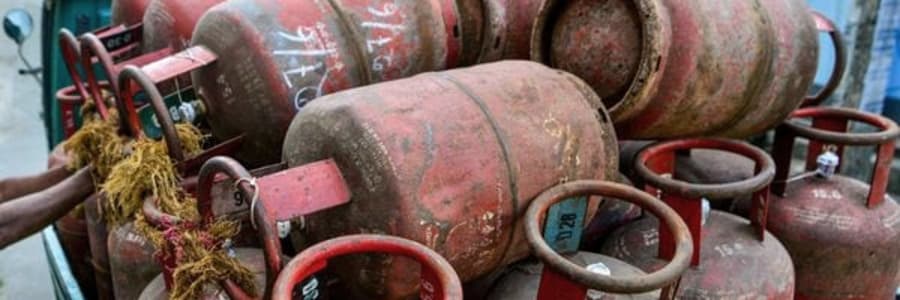
Photo: via mint
India raised commercial cooking gas and jet fuel prices on November 1. This hits restaurants, hotels and airlines, and comes as global oil prices stay high.
Are we still in a fuel crisis or not?
Partly. The wartime supply crisis ended in June, when the government lifted restrictions on commercial LPG and restored full supply to hotels and restaurants. But the price crisis continues: oil marketing companies review prices monthly against global benchmarks and the rupee rate. The West Asia conflict keeps crude prices high, so on November 1 commercial LPG rose to ₹2,820 and jet fuel to ₹138.50 per litre.
Why does the government shield households but not businesses?
Domestic LPG stayed frozen at ₹942 while commercial and jet fuel rose. Households are a political priority, over 33 crore connections, many from the Ujjwala scheme, a government programme providing free LPG connections to poor households. The government absorbs the loss, around ₹650 per domestic cylinder. Businesses are expected to absorb global prices. Our read: shielding households while passing costs to commerce is the lasting pattern, not an emergency measure.
What does this monthly hike actually mean for a restaurant's gas bill?
A typical four-burner restaurant range running eight hours a day uses about 16 kg of LPG daily, nearly one 19-kg cylinder. That adds up to roughly 480 kg a month, costing between ₹70,000 and ₹75,000 at current commercial rates. A ₹10 hike on a 19-kg cylinder therefore adds only about ₹250 a month for this size kitchen, a small fraction of the bill. Our read: the headline hike is symbolic; the real burden on restaurants is the accumulated increase since February, not this month's increment.
Who actually pays for these monthly commercial fuel hikes?
The cost lands differently on each business. For a typical four-burner restaurant using roughly 480 kg a month, the ₹10 hike adds only about ₹250 to a bill of ₹70,000 to ₹75,000, a negligible share. The heavier weight is on airlines, where jet fuel accounts for up to 40% of operating costs, and the fourth consecutive monthly hike adds pressure on already thin margins. Our read: the immediate hike is symbolic; the real burden is the accumulated increase since February, which is what pushes restaurants to raise menu prices and airlines to trim routes.
How much protection do India's oil reserves really offer?
India's strategic reserve holds 5.33 million tonnes, enough for about 9.5 days of consumption. Refiners add 64.5 days, so total cover is roughly 74 days. That is far below the IEA's recommended 90 days, the International Energy Agency's standard for oil-importing nations, and near the Strait of Hormuz disruptions, a real constraint. Watch whether the proposed expansions at Chandikhol and Padur, two planned storage sites, actually get built.
Can restaurants do anything to cut how much gas they burn?
Yes, according to commercial kitchen guides. Savings come from regular servicing of burners and equipment, using SR-grade LPG that burns cleaner, batch cooking, matching flame height to the pot, and choosing the right cylinder size. Well-machined burners with correct jet sizing hold efficiency for years, while poorly built ranges waste gas as joints wear. Training staff on flame control and leak prevention also reduces consumption. A guided estimate claims a typical kitchen can meaningfully lower monthly bills this way.
Were supply restrictions a separate thing?
Yes. The supply restrictions were a separate, earlier action. When the West Asia conflict disrupted shipping through the Strait of Hormuz, a narrow waterway for oil tankers, the government prioritised households for LPG. In June, Oil Secretary Neeraj Mittal (India's top petroleum official) wrote to states removing those restrictions, restoring 100% supply to hotels and restaurants, and 50% to bulk industrial buyers. The November price hike is a different, monthly review tied to global crude costs.
What does the price gap between domestic and commercial LPG mean for the black market?
The gap is large: a domestic 14.2-kg cylinder costs ₹942 while a commercial 19-kg one costs ₹2,820, and the difference widens as commercial prices rise while household prices stay frozen. This creates a powerful incentive for distributors to divert subsidised domestic cylinders into the commercial market. Evidence shows such rackets operate across cities, using ghost households and fake registrations to inflate quotas. The profit per diverted cylinder is substantial, and enforcement is difficult because the last-mile delivery network is too vast to monitor. Our read: every price hike on commercial LPG while domestic stays frozen deepens the black-market incentive, not weakens it.
Why is the fuel-price cushion so small for businesses?
The cushion is small because India's oil reserves cover only about 74 days versus the 90-day international minimum, and West Asia supplies over half of its crude imports. So when the Strait of Hormuz tightens, prices move quickly into domestic reviews. Commercial LPG and ATF prices are set monthly against international benchmarks, so restaurants and airlines absorb global volatility in near real time, while households get shielded through the government absorbing around ₹650 per cylinder. Our read: businesses remain the buffer that keeps the household shield affordable.
Why can't airlines just switch to cheaper fuel or hedge against these spikes?
Airlines could lock in jet fuel prices for up to three years through a stabilisation scheme offered by oil companies, but that option is not automatic and carriers must choose it. Fuel hedging, where airlines buy futures contracts to fix costs, is also available, yet many carriers avoid it because the gap between crude and refined fuel is hard to predict, and even hedged airlines cover only part of their needs. The evidence shows airlines facing immediate pressure from the fourth consecutive monthly ATF hike, with fuel accounting for up to 40% of operating costs. Our read: Indian airlines are absorbing the full spike unless they opt into the new stabilisation scheme, which few are likely to do quickly.
Who ends up paying for the government's cushion for households?
The bill lands on three groups at once. The state-run oil companies absorb roughly ₹650 per domestic cylinder in under-recoveries, which ultimately shows up in the government's books. Businesses pay directly through monthly commercial LPG and jet fuel price revisions that track international benchmarks. And consumers pay twice: restaurants raise menu prices where they can, while airlines pass on fuel costs through fares or cut routes, as seen when global carriers pruned schedules after the same kind of spike. Our read: the household subsidy is funded by taxing commerce and passengers, not by the budget alone.
Could the black market undercut the festive-season price hike?
Yes. A medium restaurant's monthly commercial LPG bill runs roughly ₹70,000 to ₹75,000, and the November hike adds about ₹160 to it. But diversion rackets sell domestic cylinders below the official commercial rate, so small eateries can undercut the hike entirely by buying diverted fuel. Evidence shows distributors inflate quotas with ghost households and fake registrations, and enforcement is weak because the last-mile delivery network is too vast to monitor. Our read: the festive demand surge actually rewards diversion, since higher official prices widen the profit margin on each diverted cylinder.
Who ultimately bears the cost of higher commercial LPG prices?
The cost flows through the same pipeline: oil marketing companies set commercial LPG prices to track international benchmarks monthly, so global crude volatility passes directly to restaurants and hotels within days. A medium four-burner kitchen uses roughly 480 kg monthly, about ₹70,000 to ₹75,000 at current prices, and the November hike adds nearly ₹160 to that bill. When businesses cannot raise menu prices, they absorb the hit by cutting margins. Our read: households are protected because the government shields them, and that shield is paid for by making businesses the shock absorbers.
Can restaurants pass these fuel costs onto diners?
Partly, but with limits. A medium-sized restaurant running four burners for eight hours uses about 480 kg of LPG monthly, costing around ₹70,000 to ₹75,000 at current commercial prices, and the November hike adds nearly ₹160 to that bill. Restaurants compete on price, especially during the festive season when demand is high, so they cannot simply raise menu prices without losing customers. Many instead cut margins or switch to cheaper, diverted domestic cylinders, which evidence shows small eateries prefer. Our read: the festive demand surge gives restaurants some room to raise prices, but sustained hikes will eventually squeeze their already thin margins.
What happens to airfares when jet fuel keeps climbing?
Airfares rise, but not evenly or immediately. Airlines globally respond by adding fuel surcharges or raising base fares, with long-haul routes hit hardest since they burn more fuel. Some carriers also cut less profitable routes or trim schedules, which reduces supply and pushes prices up further. In India, the recent ATF increase follows three previous monthly hikes, meaning the cumulative pressure is building. The stabilisation scheme could let some airlines avoid passing costs to passengers, but those that do not opt in will likely raise fares. Our read: expect fares to climb unevenly, with budget carriers and long-haul routes leading the increase.
Why do prices rise if supply is fine?
Supply and price are set by different things. Supply restrictions were wartime measures to ration scarce fuel. Prices are set by a monthly review of international benchmark prices and the rupee-dollar exchange rate. India imports nearly 91% of its crude, over 54% from West Asia, so the conflict keeps global prices high, raising costs here.
Who actually pays for these fuel price hikes?
Restaurants and airlines can't avoid the cost because fuel is essential to their operations. A medium restaurant running four burners for 8 hours a day burns roughly 16 kg of LPG daily, costing about ₹70,000 to ₹75,000 a month at current prices. Jet fuel is up to 40% of an airline's operating costs. Our read: the burden lands on customers, as restaurants raise menu prices and airlines raise fares or add surcharges to protect their thin margins.
Can restaurants actually save by switching to efficient equipment?
Yes. A well-built range with precisely machined burners burns gas more evenly and holds its efficiency for years, while a poorly built one starts wasting fuel within months as joints wear and burners warp under constant heat. Kitchens that service equipment, use SR-grade LPG, batch cook and train staff on proper flame control can cut consumption meaningfully. Our read: for most small eateries the cheaper fix is maintenance and cooking discipline, not replacing equipment, because the upfront cost of a commercial range is steep.
Could cheaper fuel even mean lower menu prices later?
It could, but only after a long delay. Fuel prices fell by ₹183.50 in July and ₹192 in August after peaking at ₹3,113.50 in June, yet the November hike still pushed commercial LPG to ₹2,820. Restaurants raised prices through the surge and have little reason to reverse them when fuel dips, especially with festive demand and thin margins. Our read: menu prices are sticky upward; a return to June's peak is more likely than a rollback to lower prices.
Can airlines protect themselves from these price swings?
Yes, some can. Oil companies have rolled out a price stabilisation regime that lets airlines lock in fuel rates for up to three years, avoiding sudden spikes in jet fuel costs. Carriers that use it get better cost visibility for budgeting and fare planning, which is especially useful for low-cost and high-frequency operators. But airlines that stay out pay full market rates and absorb a 10% ATF increase almost entirely. Our read: the regime shifts volatility from airlines to fuel sellers, who can price the risk in, so only carriers with steady volume get attractive locked rates.
If a restaurant sells a 19 kg cylinder's worth of meals, how much must it raise prices per plate to cover a ₹10 hike?
A medium restaurant running four burners for 8 hours uses about 16 kg of LPG daily, close to one 19 kg cylinder, costing ₹70,000 to ₹75,000 a month. The November hike adds ₹10 per cylinder, a trivial fraction of that bill. Our read: a ₹10 increase on a cylinder that powers hundreds of plates is too small to show up in menu prices at all; the recent ₹1,373 per cylinder surge between February and June is what forced real menu changes. A single ₹10 hike barely moves a restaurant's cost per plate.
How did restaurants cope when commercial gas was rationed?
During the crisis, the government restricted commercial LPG supply, giving hotels and restaurants 100% of pre-crisis levels but capping large bulk buyers at 50%. This squeezed catering businesses, which can burn 30-40 kg of gas at a single large event. Some turned to the black market, where diverted domestic cylinders sold below official commercial rates. Our read: the rationing pushed many small eateries into an informal supply chain that remains active, because the price gap persists even after restrictions were lifted.
Can businesses pass the higher fuel bill to customers?
Mostly yes, but not instantly. Airlines have begun adding fuel surcharges on certain routes, and fare increases typically follow sustained fuel price rises. Restaurants face a trickier choice: raising prices during the festive season could drive away customers, but absorbing costs squeezes already tight margins. Those with efficient equipment or better buying arrangements can delay passing costs on. Our read: the pass-through is uneven, hitting small eateries and budget carriers hardest.
How do restaurants weigh the cost of better equipment against fuel savings?
A well-built range with precisely machined burners stays efficient for years, while a cheap one wastes fuel within months as joints wear and burners warp. But a commercial range is a steep upfront purchase, so most small eateries delay it. Maintenance, SR-grade LPG, batch cooking and staff flame control cut consumption without the capital cost. Our read: for most small eateries the cheaper fix is maintenance and cooking discipline, not replacing equipment, because the upfront cost is decisive.
What would make fuel price pass-through faster?
Pass-through speed depends on whether sellers compete on price or absorb costs to keep customers. Airlines with locked-in fuel rates can plan fares better, but those without absorb a 10% ATF rise almost entirely before adjusting tickets. Restaurants similarly delay hikes during festive demand to avoid losing diners. Our read: the pass-through accelerates only when high fuel prices persist long enough that margins can no longer absorb them, as seen after the ₹1,373 surge between February and June.
Source: livemint.com