business · 2026-07-09
Cult.fit Files for a ₹4K Cr IPO
5f4c2a21-b17a-4e1a-acbc-fe7e3cf130e2
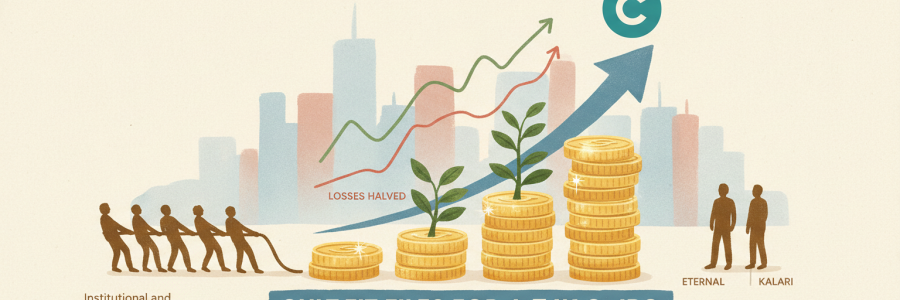
Cult.fit filed its DRHP with SEBI for a ₹4K Cr IPO, combining a ₹950 Cr fresh issue with an OFS of ~17.9 Cr shares from 22 institutional and 13 individual sellers.Revenue grew 42% to ₹1,720.6 Cr in FY26 while net losses halved to ₹251.8 Cr, signaling the company is listing while still loss-making but on a clear path toward breakeven.Temasek, Accel, Chiratae Ventures, Tata Digital, and cofounder Mukesh Bansal are selling shares, while Deepinder Goyal's Eternal and Kalaari Capital are holding.
Who is selling how many shares in the OFS?
Chiratae Ventures is the largest seller at 2.81 Cr shares across two entities, followed by Temasek (2.47 Cr shares via MacRitchie Investments), LifeFit Group (1.96 Cr), cofounder Mukesh Bansal (1.6 Cr), Tata Digital (1.59 Cr), and Accel (65.3L shares). Of 35 total shareholders, most are participating.
How large is Chiratae's return on its 2018 bet?
Chiratae first backed Cult.fit in 2018 when valuations were a fraction of today's. Its ~6% stake is being fully exited via 2.81 Cr shares. While the exact entry price isn't disclosed, early Series B rounds in Indian fitness startups were typically at $200-400 Mn valuations. At a ₹4K Cr IPO, Chiratae likely sees a multi-fold return.
What does the ₹950 Cr fresh issue fund?
Cult.fit earmarked ₹950 Cr for four uses: setting up new fitness centres and exclusive brand outlets, covering costs at existing centres, repaying and prepaying borrowings, and funding marketing. As of Mar 2026, it runs 708 centres across 77 cities, with 218 company-owned. The fresh capital prioritizes expanding that owned-centre count.
How does OFS pricing typically work in IPOs?
In an OFS, existing shareholders sell at the IPO price set via book-building. Institutional investors bid within a price band, and the final price reflects demand. Unlike a fresh issue, OFS proceeds go to selling shareholders, not the company. For example, when Zomato listed, early backers like Info Edge sold shares via OFS at the discovered price.
Why list while still losing ₹252 Cr a year?
Cult.fit's net loss shrank 48% YoY to ₹251.8 Cr on revenue of ₹1,720.6 Cr, a 42% jump. The trajectory lets the company pitch investors a breakeven timeline. Many Indian startups, like Zomato in 2021, listed pre-profit and used IPO capital to accelerate toward profitability. Fresh issue proceeds of ₹950 Cr fund new fitness centres and debt repayment.
Can Cult.fit break even at 708 centres?
Cult.fit's 218 company-owned centres generate higher per-unit revenue but carry fixed costs like rent and staff. The 288 franchise centres earn royalty income at higher margins but lower absolute revenue. Breakeven hinges on the owned-centre ratio. Anytime Fitness India, a comparable chain, achieved profitability only after crossing ~300 owned locations.
How does the franchise model affect margins?
Franchise partners pay Cult.fit a fee and share revenue, reducing Cult.fit's capex per location. Of 708 centres, only 218 are company-owned. Franchise and marketplace centres contribute margin without balance-sheet risk. This asset-light mix resembles OYO's franchise model, where the franchisor earns ~15-25% of room revenue without owning the property.
What benchmarks do IPO investors use here?
IPO investors in loss-making consumer companies track three metrics: revenue growth rate (Cult.fit's 42% is strong), loss narrowing trajectory (48% reduction signals discipline), and unit economics per centre. For comparison, Zomato's IPO was priced at ~15x revenue. Cult.fit at ₹4K Cr would imply ~2.3x FY26 revenue, a modest multiple if growth sustains.
Which investors chose not to sell, and why?
Deepinder Goyal's Eternal and Kalaari Capital are not selling in the OFS. Typically, investors hold when they expect post-listing upside to exceed current valuations. Eternal, which invested strategically, may value the cross-sell synergy between food delivery and fitness. Kalaari, as an early-stage VC, may be betting on further growth from Cult.fit's 708-centre network.
Will Eternal's stake create a Zomato tie-up?
Eternal, Zomato's parent, invested in Cult.fit for cross-platform synergies, bundling food and fitness. By not selling in the OFS, Eternal signals ongoing strategic interest. A post-IPO tie-up could mirror Swiggy's health vertical, offering Cult.fit memberships within the Zomato app to its 20 Mn+ monthly transacting users.
How does Tata Digital's exit affect its strategy?
Tata Digital is selling ~1.59 Cr shares, trimming its position. Tata's super app strategy under Tata Neu has shifted toward owned brands like BigBasket and 1mg. Exiting fitness, a non-core vertical, frees capital for these priorities. The sale doesn't signal bearishness, it reflects Tata's portfolio pruning as Neu narrows focus.
Could Cult.fit's IPO reset fitness valuations?
Cult.fit's IPO at ₹4K Cr would be India's first pure-play fitness listing. It sets a valuation anchor for rivals like Gold's Gym India and JERAI Fitness. If Cult.fit trades above 3x revenue post-listing, private fitness chains could raise capital at higher multiples. Conversely, a weak debut could chill funding across the sector.
Source: inc42.com