business · 2026-10-21
Even Healthcare raises $50 million to build more Bengaluru hospitals
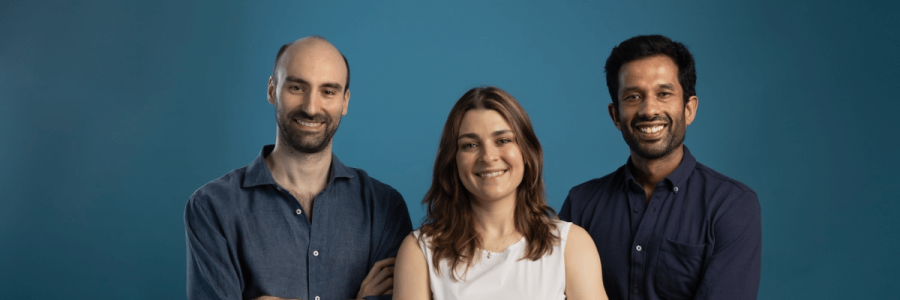
Photo: via Inc42 Media
Even Healthcare, a Bengaluru healthcare startup, raised $50 million to open more hospitals in the city. It now runs two hospitals and plans five more by 2027, aiming to make healthcare cheaper and more accessible for its members.
What is Even Healthcare?
Even Healthcare is a Bengaluru-based managed care company that combines a health plan with its own hospitals and doctors. Members pay a subscription for consultations, tests, and hospital care, with salaried doctors rewarded for keeping patients healthy rather than doing more procedures. It raised $50 million from Khosla Ventures and Alpha Wave to build more hospitals.
How can doctors earn less by doing fewer procedures?
Salaried doctors are evaluated on patient outcomes: recovery timelines, re-admissions, and post-surgery infections. Bonuses and pay are not tied to procedure counts or revenue. This flips the usual incentive, where hospitals profit from more procedures. Even's reported zero unplanned 30-day readmissions across 350 surgeries suggests the model can work.
How can salaried doctors be rewarded for patient health without gaming the metrics?
Even couples outcome-based pay with an AI quality system that reviews every case against clinical protocols in real time, and a public dashboard called Even Spotlight that tracks clinical outcomes and patient-reported metrics. This makes it hard for doctors to game the system by, say, selecting only easy cases, because the protocols and dashboard catch deviations. Its track record, including zero unplanned 30-day readmissions across 350 surgeries, suggests the checks are holding.
Why does Even need its own hospitals to manage care?
Hospitalisation is where the biggest costs and risks sit. Even's model rewards keeping people healthy, so it wants control over the entire stay, from admission to discharge, to enforce shorter stays and fewer readmissions. Its data shows average stays 40% shorter and readmissions below 1% versus an industry range of 8-15%. Without owning hospitals, Even would depend on third-party facilities whose financial incentives run the other way, undermining its entire value proposition.
Can the model survive a really sick patient?
The evidence shows Even's numbers are built on a young, low-risk member base: more than 5,000 OPD visits and 350 surgeries over a year, with zero readmissions. Its own claim of 2.5 lakh members across 10 cities, tripled in a year, suggests heavy growth marketing toward healthy subscribers. Our read: a hospital that only treats mild cases cannot prove it works until it has carried a heavy load of complex, chronic cases, and Even's impressive stats are not yet proof of that.
Who bears the cost when a member does get seriously ill?
Even admits a member's treatment is covered through insurance partners and its own hospitals, but the model is built on keeping members healthy and out of the hospital. Its claimed savings, like 200 avoided hospitalisations worth ₹15-16 crore, show the economics depend on avoiding severe cases. If a member needs expensive, complex care, the insurance partners bear the claim cost, not Even directly, since Even's revenue is subscription fees, not procedure charges. Our read: Even can keep its model profitable because the worst-case costs sit with insurers, not with it.
What happens if Even's hospitals can't handle a patient?
Even's integrated model relies on its own hospitals for most care, but it also partners with around 100 third-party hospitals in Bengaluru. Nearly all members living near an Even hospital choose Even, and the company reports readmission rates below 1% in insurance-partner programmes. When a member needs care beyond Even's capabilities, those partner hospitals handle it, with costs borne by insurance partners. Our read: Even's expansion into five new hospitals is designed to bring more complex care in-house, reducing its reliance on partners whose incentives may not align with its model.
What stops Even's hospitals from cherry-picking easy patients?
Even's 85-90% of nearby members choosing Even could let it select healthy subscribers, but its AI quality system reviews every case against clinical protocols in real time and a public dashboard tracks outcomes. That transparency makes cherry-picking visible. Still, the evidence shows its numbers rest on a young, low-risk base: 5,000 OPD visits and 350 surgeries with zero readmissions. Our read: the dashboard protects against gaming, but the real test comes when complex cases arrive at the new hospitals.
Why is the company betting everything on Bengaluru?
Even's margins depend on dense member clusters. With 85-90% of near-hospital members choosing Even, it is building a network within a 5km radius in Bengaluru before expanding elsewhere. This geographic focus lets one integrated payer-provider manage care end-to-end, lowering costs and keeping members loyal. The real test is whether this density model scales beyond one city.
How does Even differ from Apollo or Fortis?
Apollo and Fortis, two large hospital chains, charge per procedure, so they earn more when you get more treatment. Even charges a subscription and owns the doctors, hospitals and insurance, so its profit depends on keeping you healthy and paying. Its salaried doctors are judged on outcomes, not procedures, a model growing to seven Bengaluru hospitals by 2027.
What is managed care?
Managed care is one company acting as insurer, doctor, and hospital at once. Members pay a subscription for unlimited consultations and tests, plus cashless hospitalisation if they add insurance. Unlike traditional fee-for-service medicine, where providers earn more by doing more procedures, Even's doctors are salaried and judged on outcomes, so the company profits from keeping members healthy.
What breaks if Even tries to replicate this model in a bigger city?
The model's economics depend on dense member clusters: 85-90% of members living near an Even hospital choose Even, and the company is building a network within a 5km radius to sustain those margins. In a larger city, members would be spread out, making it harder to reach that density without many more hospitals. The two existing Bengaluru hospitals reached operational profitability in record time, but that was with a concentrated membership. Our read: Even's expansion beyond Bengaluru will require either much more capital per city or a fundamentally different patient-acquisition strategy, since the density that makes the model work won't come automatically.
Why does Even need its own hospitals instead of using partner hospitals?
Even's economics depend on keeping members healthy, not on doing more procedures. Its own hospitals let it control the full care pathway, from first consultation to post-discharge recovery, with salaried doctors judged on outcomes rather than revenue. Partner hospitals still operate on fee-for-service incentives, so they would push for more procedures and longer stays, which would inflate costs and undermine Even's model. The two owned hospitals reached operational profitability in record time, with readmissions below 1% and stays 40% shorter, evidence that owning the facility is what makes the model work.
Can Even's model survive in a city where people can't get to its hospitals?
Even's economics depend on density: 85-90% of members near one of its Bengaluru hospitals choose Even, and the company is building a network so an Even hospital is always within a 5km radius. In a bigger city, members would be spread out, so Even would need many more hospitals to hit that density, and each new hospital costs roughly ₹30-40 crore. The two existing hospitals reached operational profitability in record time, but that was with a concentrated membership. Our read: Even will stay in Bengaluru until it can show the density model works at city scale, because expanding too early would stretch its capital and break the economics that make the model work.
What happens to members who need care its hospitals don't offer?
Even also works with roughly 100 third-party hospitals for services its own facilities can't provide, so members are not limited to Even's walls. The company's claim of below 1% unplanned readmissions applies to programmes run with insurance partners, suggesting the care team follows patients even when they are treated elsewhere. The risk is that partner hospitals revert to fee-for-service incentives, which could raise costs or lengthen stays. Our read: Even will keep partners only for gaps, and will bring more specialities in-house as its hospital network grows, since control over care is what drives its margins.
Source: inc42.com