business · 2026-07-24
Fuel Costs Wipe Out Indigo's Q1 Profits
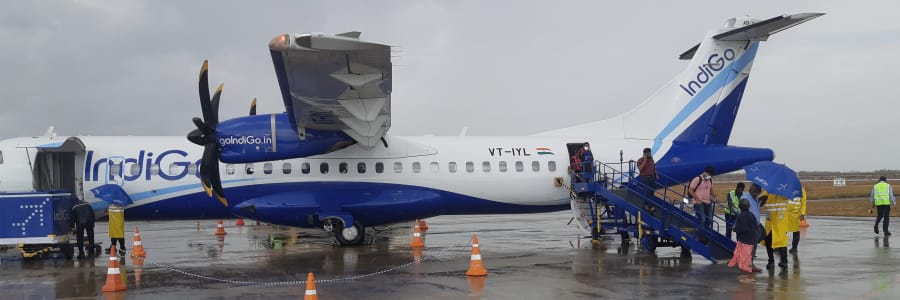
Photo: APN / Wikimedia (CC BY-SA 4.0)
IndiGo swung to a ₹238 crore net loss in Q1 FY27, versus ₹2,176 crore profit last year, due to fuel costs rising 86% to ₹10,833 croreRevenue rose 20% to ₹24,584 crore but total expenses jumped 34%, squeezing EBITDAR margin from 28% to 15.6%IndiGo's 432 planes serve 97 domestic and 46 global routes; cash reserves stay strong at ₹52,885 crore
How did fuel costs alone erase ₹2,400 crore?
Aircraft fuel expenses surged 86% to ₹10,833 crore from ₹5,833 crore a year earlier. While yield improved to ₹6.04 from ₹4.98 and RASK rose 16.5% to ₹5.66, CASK climbed faster to ₹5.71 from ₹4.31. The gap between revenue and cost per seat-kilometre flipped from positive to negative.
What is CASK and why does it matter?
CASK measures total operating cost divided by every seat flown one kilometre, filled or empty. It is the airline industry's unit cost metric. IndiGo's CASK of ₹5.71 now exceeds its RASK of ₹5.66, meaning it loses money on each seat-kilometre before financing costs. Airlines target CASK below RASK by at least the cost of debt and profit margin.
How does fuel hedging work at airlines?
Airlines buy fuel forward contracts or options to lock in prices months ahead. IndiGo reported a forex hedging loss of ₹149.9 crore, up from ₹23.7 crore a year ago, suggesting its hedges were unfavorably positioned as the rupee moved. Unhedged exposure to dollar-denominated fuel bills plus hedging losses created a double hit this quarter.
Why did load factor slip despite network?
IndiGo added six domestic and seven international destinations year-on-year, plus 97 partnership destinations. Available seat kilometres rose 3% but revenue passenger kilometres grew only 1.4%. The mismatch means new capacity outpaced demand absorption, especially on fresh international routes where brand recognition and traffic rights take time to mature.
Why didn't higher ticket prices cover the fuel?
IndiGo's CASK excluding fuel also rose to ₹3.22 from ₹2.93, meaning even non-fuel costs grew faster than revenue. Load factor slipped to 83.3% from 84.6%, so the airline spread fixed costs over fewer paying passengers per flight. Yield gains were insufficient to offset both fuel and operational cost inflation.
Could IndiGo have cut costs instead of absorbing?
IndiGo's employee costs rose 11.2% to ₹2,279 crore and supplementary rentals plus maintenance climbed 13.9% to ₹3,498 crore. These are sticky costs tied to pilot contracts, lease agreements, and mandatory maintenance intervals. Unlike fuel, they cannot be cut quickly without grounding aircraft or breaching agreements.
How do low-cost airlines normally survive fuel?
Historically, low-cost carriers like Southwest in the US built fuel hedging programs as a core competency, with dedicated treasury teams. IndiGo's hedging loss ballooning to ₹149.9 crore suggests its program underperformed. The structural defense is rapid fleet turnover to newer, more efficient aircraft, but IndiGo's 174 A320neo and 175 A321neo deliveries were already optimized for this.
What happens to fares if this continues?
If RASK fails to catch CASK, IndiGo will raise base fares or cut promotional inventory. The yield of ₹6.04 already rose 21% year-on-year, so further increases risk losing price-sensitive passengers to Air India Express or Akasa Air. A fare war during cost inflation would deepen losses across the sector.
Which routes or aircraft types face worst margin?
The 44 ATR turboprops on regional routes and six Boeing 787 damp-lease widebodies face acute pressure. ATRs burn less fuel per hour but generate lower absolute revenue per flight. The 787s, used for long-haul international expansion, carry high damp-lease rental costs that amplify losses when load factors dip below breakeven.
Why did debt jump ₹13,000 crore despite strong?
Total debt rose to ₹81,531 crore from ₹68,488 crore, with capitalised operating lease liability up to ₹53,756 crore from ₹46,782 crore. IndiGo follows the global norm of leasing rather than owning most aircraft. Each new delivery adds lease debt even when cash reserves look healthy, creating a leveraged balance sheet sensitive to interest rate cycles.
How does damp-leasing hurt in a downturn?
Damp-leasing means IndiGo rents aircraft with crew included, typically for short-term capacity needs. The six Boeing 787s on damp lease carry premium rental rates versus owned or dry-leased planes. In a downturn, these contracts cannot be returned quickly, so fixed costs persist while revenue falls, amplifying margin compression versus owned fleet airlines.
What does 83.3% load factor mean practically?
83.3% load factor means roughly 1 in 6 seats flew empty. For IndiGo's 43.5 billion available seat kilometres, that gap represents ~7.3 billion seat-kilometres of unused capacity. At ₹5.66 RASK, each percentage point of load factor equals roughly ₹240 crore of lost revenue per quarter, making the 1.3 percentage point year-on-year decline a ₹312 crore revenue hole.
Source: economictimes.indiatimes.com