politics · 2026-11-15
Ganga still dirty despite ₹43,060 crore spend
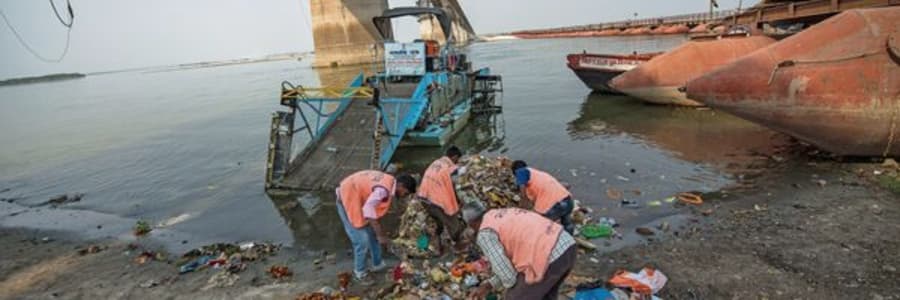
Photo: via mint
A Bloomberg investigation using satellite data and water tests found large stretches of the Ganga remain polluted after 10 years and ₹43,060 crore of government spending. The government says parts of the river have improved, but admits pollution continues.
What did satellite data show about the river's condition?
Only about half of the promised capacity exists. The programme targeted 7,000 million litres per day (MLD) of sewage treatment by December 2026; as of October 2025, plants provided 3,806 MLD. Even that overstated reality: a government audit in the Himalayan state of Uttarakhand found over a third of plants discharging sewage straight into the Ganga, and the 2023-24 report showed just 46 of 123 operational plants met ministry standards.
What did 10 years of satellite data show about pollution trends?
Satellite data covering nearly 2,000 km over 10 years found only about 10% of the river shows sustained improvement in water clarity. Roughly a quarter is becoming muddier even in dry months, and nearly 80% gets muddier after the monsoon. In about half the clearer stretches, algae increased in dry season, which can harm aquatic life.
What did independent water tests find around Kanpur?
Water tests around Kanpur, done by IIT Kharagpur scientists for Bloomberg, found every Ganga sample exceeded the government's bathing-water benchmark for biochemical oxygen demand, at about 1.5 times the permissible level, and more than twice the stricter drinking-source benchmark. Samples were taken in monsoon, when dilution cuts contaminants five to 20 times.
How much higher are dry-season pollutant levels expected?
Dry-season concentrations could be several times higher than monsoon readings, says Abhijit Mukherjee, who did the Bloomberg-commissioned tests around Kanpur. Monsoon flows dilute contaminants five to 20 times, so dry-season levels could be higher. No precise multiplier is given. Other studies differ on seasonal patterns, so this estimate applies specifically to the Kanpur measurements.
Why did the government reject the satellite findings?
The government said a river flowing nearly 2,500 km through five states cannot be judged from satellite observations and water samples from just 12 locations. It noted conditions differ between Himalayan stretches, cities and plains. It pointed to improved water quality in some stretches, higher sewage-treatment capacity and lower industrial pollution, while admitting pollution persists in parts of Uttar Pradesh.
Which pollutants still exceed safe levels in the Ganga?
Fecal coliform, chromium and organic pollutants are documented. In January 2025, the Central Pollution Control Board estimated fecal coliform levels at nearly 20 times the permissible level. Kanpur tanneries discharge chromium exceeding recommended levels by over 70 times. A wastewater channel near Kanpur had chemical oxygen demand of 148 mg/L, called severe organic pollution, and groundwater showed fluoride and nitrate above limits.
Did any stretches of the Ganga actually improve?
Yes, some stretches improved. Government data shows Uttarakhand’s Haridwar–Sultanpur stretch was removed from the polluted list, and West Bengal’s Triveni–Diamond Harbour improved. Uttar Pradesh saw partial gains. But satellite data found only about 10% of the river sustained improvement in water clarity, and nearly 80% gets muddier after the monsoon.
How much of the sewage treatment capacity actually works?
Only about half of the promised capacity exists. The programme targeted 7,000 MLD of sewage treatment by December 2026; as of October 2025, plants provided 3,806 MLD. Even that overstated reality: a government audit in the Himalayan state of Uttarakhand found over a third of plants discharging sewage straight into the Ganga, and the 2023-24 report showed just 46 of 123 operational plants met ministry standards.
What is the total sewage treatment capacity built so far?
Official figures vary by date: 173 STPs were operational as of January 2026, with 8 more completed, per the Ministry of Jal Shakti. A February 2026 parliamentary reply said 138 of 218 projects, with 3,977 MLD capacity, were completed and operational. An August 2026 report said 76 projects added 3,200 MLD in the last five years.
What share of this capacity operates reliably?
No single current share is published. NMCG's 2023-24 report shows 123 of 146 STPs operational, but only 1,688.12 MLD of 2,325.73 MLD capacity was utilized; 46 complied with standards, 77 did not, and 23 were non-operational. A 2025 CAG audit in Uttarakhand found over a third discharged sewage directly into the Ganga. Our read: reliability is low.
Why do many sewage treatment plants remain non-functional?
No single official cause is given. A CAG-linked report points to design flaws: projects lack Urban River Management Plans and are effectively long-term work contracts, not true PPPs, so concessionaires have no incentive for better service. The Samajwadi Party cites incomplete projects and non-compliant plants like Kanpur's Bingawan. The government acknowledges inadequate capacity and weak enforcement.
Why does pollution persist despite the spending?
Three gaps explain it. Sewage: the basin makes about 12 billion litres of sewage daily, but completed treatment plants handle only about a third. Money: only 69% of allocated funds were spent up to 2024-25, with delays in project approvals. And operation: a government audit found over a third of treatment plants discharging sewage directly into the Ganga, so built capacity often does not clean.
Why has only 69% of the allocated funds been spent?
PRS Legislative Research found funds were underutilised every year except 2020-21 and 2021-22, with only 69% spent up to 2024-25. The Public Accounts Committee attributed this to delays in approving detailed project reports, slow implementation, and poor record maintenance. It also noted large spending on advertising without proportional ground impact.
How does slow spending affect the river's cleanup progress?
Slow spending directly delays sewage treatment, the main cause of pollution. A 2026 investigation says only a little over half of the allocated ₹43,060 crore was spent, due partly to bureaucratic delays, a hybrid financing model, and slow execution by local bodies. Cities along the main stem still discharge about 3 billion litres daily against capacity of about 1 billion.
What specific bottlenecks slow sewage plant construction?
NMCG lists delays in getting land for STPs, road-cutting permits, and NoCs from forest and revenue departments, plus frequent site changes, COVID-19, and abnormal floods. The mid-term report notes sewerage projects have long cycles and face procedural delays in contracting. A CAG audit found many plants discharge untreated sewage despite funding.
Why do many operational STPs fail to meet discharge standards?
Mainly because of poor operations and maintenance, shock loads from septage dumping where sewerage networks are low, and design parameters that excuse the concessionaire when influent is worse than assumed. The 2023-24 NMCG report shows most non-compliance is on fecal coliform, with 77 of 123 operational STPs not meeting MoEF&CC standards.
Source: livemint.com