world · 2026-06-30
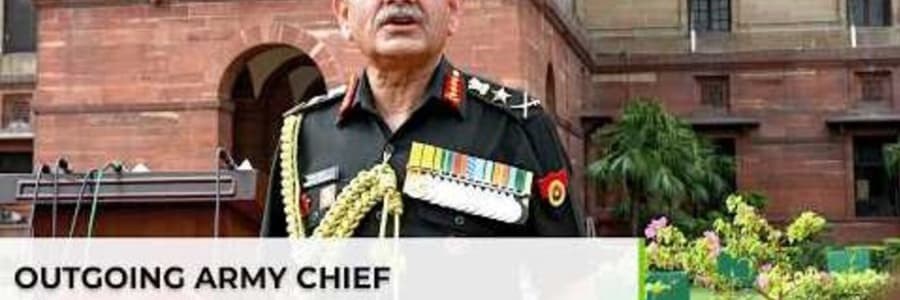
Gen Dhiraj Seth Is India's New Army Chief
deb5e7a8-8356-426f-829c-e0209c43b147
Gen Dhiraj Seth took over as 31st Army Chief on Jun 30, replacing Gen Upendra Dwivedi who retired after four decades of service.The transition comes as India prioritizes border preparedness and military modernisation, following Operations Snow Leopard and Sindoor under Dwivedi's tenure.Serving personnel, veterans, and military families face a leadership shift as Seth, an Armoured Corps officer commissioned in 1986, sets new strategic priorities.
What is Gen Seth's command background?
Gen Seth graduated from NDA Khadakwasla and was commissioned into the Armoured Corps in Dec 1986. Over nearly 40 years, he held roles spanning operational command, strategic planning, and capability development. The Defence Ministry noted his experience in both field operations and higher military leadership, a profile similar to predecessors who led from armoured and infantry backgrounds.
Why does the Armoured Corps background matter?
Armoured Corps officers command tank and mechanised infantry formations, giving them expertise in mobile warfare on plains and deserts. India's western border with Pakistan is prime tank country. Gen Bipin Rawat also came from an infantry background suited to mountain warfare. Seth's armoured background signals continued attention to mechanised capability alongside ongoing mountain readiness.
What key appointments did Seth hold recently?
The Defence Ministry said Seth held assignments in operational command, strategic planning, and institutional responsibilities, though specific postings were not detailed in the announcement. Typically, Army chiefs serve as corps commanders and Army commanders before elevation. For example, Gen Dwivedi commanded the Northern Command overseeing the LAC before becoming chief.
How is an Army chief's tenure length decided?
India's Army chief serves until age 62 or for a fixed tenure, whichever comes first. There is no fixed term length like a US Joint Chiefs chairman's four years. Gen Dwivedi served roughly two years. The govt retains authority to grant extensions, as it did with Gen Rawat in 2019, making each chief's tenure partly a political decision.
How did Ops Snow Leopard and Sindoor shape this?
Gen Dwivedi cited Operations Snow Leopard and Sindoor as proof the Army maintained high operational readiness during his two-year tenure. These operations demonstrated border preparedness and rapid deployment capability. The new chief inherits an Army that has already been tested in real missions, raising the bar for what continuity and modernisation must deliver under Seth's watch.
What exactly was Operation Snow Leopard?
Operation Snow Leopard was a military operation executed during Gen Dwivedi's tenure. While full operational details remain classified, it was referenced alongside Operation Sindoor as evidence of the Army's readiness and professionalism. India's recent border tensions with China along the LAC in Ladakh provide context for heightened operational activity in high-altitude sectors.
Could modernisation plans change under Seth?
Modernisation priorities can shift meaningfully with each chief. For example, Gen Rawat pushed theaterisation and joint commands, while Gen Manoj Pande focused on tech integration. Seth's Armoured Corps roots may accelerate mechanised warfare upgrades and drone procurement. However, long-cycle programs like the Future Ready Combat Vehicle continue regardless of individual chiefs.
How does the chief selection process work?
India follows seniority-based succession. The senior-most lieutenant general typically becomes chief, though the govt can supersede this. In 2019, Gen Rawat was appointed over two senior officers, sparking debate. The Defence Ministry recommends, and the Appointments Committee of the Cabinet, chaired by the PM, approves. Supersession remains rare but politically consequential.
Who beyond the Army feels this leadership shift?
Defence industry partners like HAL, BEL, and private firms such as Tata Advanced Systems depend on the Army chief's modernisation priorities for procurement orders. Veterans' welfare policies, military family support programs, and border-region civilian communities in Ladakh and Arunachal Pradesh are all shaped by the incoming chief's strategic focus areas.
Which defence firms win from this transition?
Major Indian defence firms track chief transitions closely. HAL supplies helicopters, BEL provides electronic warfare systems, and private players like Adani Defence and L&T bid for artillery and vehicle contracts. A new chief can accelerate or deprioritize specific procurement timelines. For instance, if Seth favors armoured vehicle upgrades, firms like Tata Advanced Systems stand to benefit.
How do military families experience a new chief?
Military families, numbering over 1.3Mn active-duty households, experience leadership shifts through welfare policy changes. Each chief influences housing allotment rules, canteen subsidies, and veterans' pension advocacy. Gen Dwivedi expanded family support during his tenure. Families in remote postings in Siachen or northeast India watch closely for signals on rotation policies and hardship allowances.
Could Seth's priorities reshape border posture?
Seth inherits active border management along the LAC with China, where disengagement at friction points like Depsang and Demchok remains ongoing. His Armoured Corps expertise could strengthen India's mechanised posture along the western border with Pakistan. Deployment decisions for the 1.4Mn-strong Army across multiple fronts will reflect his strategic calculus within the first year.
Source: livemint.com