world · 2026-06-20
India Eyes Russia's Rare Earths After China Ban
6f267fcb-20e8-496f-b80f-7859f3ee64ab
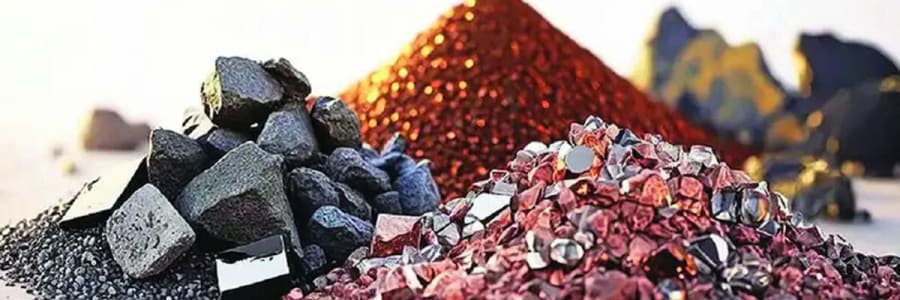
India is in talks with Rosneft to study rare earth deposits in Siberia's Tomtor region, seeking alternatives after China restricted exportsRare earth magnets are critical for EV motors and electronics. India lacks commercial-scale refining, relying entirely on importsRosatom's Giredmet signed an MoU with India's Nexon Geochem in May for rare earth processing R&D, building on a Dec summit commitment
Why is India turning to Russia for minerals?
China supplied most of India's rare earth magnets. When Beijing imposed export controls, India faced acute shortages for EV motors and defence electronics. Russia holds some of the world's largest reserves, primarily in Siberia. Rosneft acquired the Tomtor deposit last year, opening a potential new supply line outside China's grip.
What exactly is Rosneft's Tomtor deposit?
Tomtor in eastern Siberia contains exceptionally high-grade niobium and rare earth ore. Rosneft acquired it in 2025. The deposit's concentration levels are ~10x richer than many Australian mines, making extraction potentially cheaper. India wants to study mineral composition before committing to joint development or offtake agreements.
Why can't India refine rare earths at home?
Rare earth refining requires complex chemical separation of 17 closely related elements. India's IREL extracts monazite sand but stops at crude concentrate. Building a full separation plant like Lynas in Malaysia takes ~5 years and $500Mn+. India lacks both the processing IP and the scale to justify standalone investment currently.
How does this differ from the US minerals pact?
The US pact signed in 2025 focuses on joint supply chain mapping and investment frameworks. The Russia track is more hands-on. Rosatom's Giredmet is sharing processing technology with India's Nexon Geochem via an MoU. The US deal is strategic alignment. The Russia deal targets actual refining know-how transfer.
What happens if China keeps blocking supply?
India has no commercial-scale rare earth refining. If China maintains restrictions, EV makers like Tata Motors face costlier magnet imports, delaying affordable EV targets. Japan's TDK is setting up a magnet unit in Andhra Pradesh, but domestic refining capacity remains years away. Defence electronics would also face component delays.
Which Indian industries get hit hardest?
EV motor manufacturers are most exposed. Permanent magnets using neodymium are essential for efficient motors. Wind turbine makers and defence electronics producers also depend on rare earths. Tata Motors and Mahindra's EV plans both require stable magnet supply. A single EV motor uses ~1-2 kg of rare earth magnets.
Could China retaliate against this move?
China has previously punished countries diversifying mineral supply. In 2010, Beijing cut rare earth exports to Japan during a territorial dispute. However, India already buys ~$60Bn/year in Russian crude, giving Moscow economic incentive to cooperate. China may tighten controls further but risks pushing more buyers toward alternatives.
Will EVs get more expensive in India?
Short-term, yes. Rare earth magnet costs rose ~20% after China's export curbs. For a ₹15L EV, magnet costs are a small fraction, but supply uncertainty delays production schedules. If the Russia pipeline delivers within 3-4 years, costs stabilize. Until then, companies like Tata Motors may absorb margins or pass costs through.
How much rare earth does Russia actually hold?
Russia holds roughly 10% of global rare earth reserves, concentrated in Siberia and the Murmansk region. For context, China controls ~60% of global reserves and ~90% of refining. The Tomtor deposit alone is among the world's richest, with ore grades far exceeding typical mines in Australia or the US.
How big is Russia's rare earth output today?
Russia's actual rare earth production is small, roughly 2,700 tonnes/year versus China's ~240K tonnes. The gap between reserves and output is vast. Russia never invested in processing infrastructure during the Soviet era's decline. The Tomtor project aims to change this, targeting ~10K tonnes/year within a decade.
What does the Giredmet-Nexon MoU cover?
The May 2025 MoU between Giredmet and Nexon Geochem focuses on developing separation and refining technologies for rare earth raw materials. Giredmet, part of Rosatom's scientific arm, brings nuclear-grade chemical processing expertise. Nexon provides the Indian market channel. The goal is joint IP for processing, not just raw ore supply.
Are other countries also courting Russia?
Yes. Turkey signed a rare earth cooperation deal with Russia in early 2026. Kazakhstan is expanding its own reserves with Russian technical help. However, Western sanctions complicate financing for some partners. India's position is unique. Its large crude oil trade with Russia gives it negotiating leverage that smaller buyers lack.
Source: economictimes.indiatimes.com