politics · 2026-07-02
India May Restrict WhatsApp Usernames
35cd03ca-69da-4435-b8e5-f7282daae85e
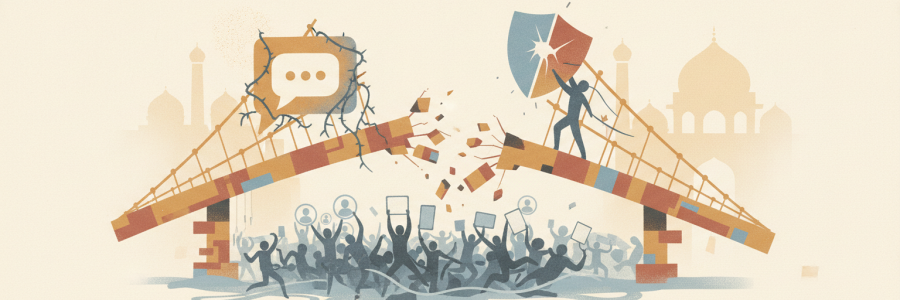
India's govt is studying legal options to restrict WhatsApp's upcoming username feature, citing impersonation and identity fraud risks.Without safeguards, similar-looking handles could let bad actors impersonate public figures or businesses, opening new fraud avenues at scale.WhatsApp's 500Mn+ Indian users, fintech founders like Paytm's Sharma and MobiKwik's Singh, and businesses relying on verified identity face direct exposure.
What specific fraud risks worry the govt?
Officials worry that usernames let anyone create handles resembling real people or brands. Paytm's Vijay Shekhar Sharma noted that verified usernames will coexist with unverified lookalikes. MobiKwik CEO Bipin Preet Singh found most variations of his name already taken during reservation, raising the question of what imposters could do with them.
How do username reservations work now?
WhatsApp opened early username reservations, letting users claim handles before public launch later in 2026. Users pick a unique username tied to their account, but phone numbers remain the backend identifier. The system mirrors Instagram's handle model, but WhatsApp lacks Instagram's established blue-tick verification infrastructure for ordinary users.
Why can't WhatsApp just verify all handles?
Verifying 500Mn+ Indian users would require identity document checks at scale, something WhatsApp has avoided to preserve its encryption-first, minimal-data positioning. Platforms like X charge for verification (X Premium costs ~₹650/month). Building a free, universal verification layer would require partnerships with govt ID systems like Aadhaar, raising separate privacy concerns.
Has India blocked a platform feature before?
Yes. In 2024, India's IT Ministry pushed back on WhatsApp's updated privacy policy that would have shared user data with Meta's other platforms. India also banned 321 apps, mostly Chinese, under Section 69A of the IT Act. The govt has used intermediary liability rules to compel platforms to alter features, such as mandating traceability of message origins.
Could India actually block a WhatsApp feature?
India is examining whether existing IT laws cover this or if a new law is needed. The govt could mandate safeguards before rollout, similar to how it required WhatsApp to appoint a grievance officer under 2021 IT Rules. Officials say they are open to fresh legislation specifically targeting digital impersonation if current frameworks fall short.
What legal tools does the govt have here?
India's IT Act Section 69A allows blocking content or features threatening sovereignty or public order. The 2021 IT Intermediary Guidelines let the govt mandate due diligence measures. For WhatsApp usernames, officials could classify impersonation-enabling features as non-compliant, requiring design changes before Indian rollout, similar to how GDPR forced feature redesigns in Europe.
Could this delay Meta's cross-platform plans?
Meta's strategy links WhatsApp, Instagram, and Facebook via unified usernames for cross-platform messaging. If India mandates restrictions, Meta must either build an India-specific version or delay integration globally to avoid fragmenting its codebase. India accounts for roughly 1 in 4 WhatsApp users worldwide, making it too large a market to simply carve out.
Would a username ban push users elsewhere?
Unlikely in the short term. WhatsApp's dominance in India rests on network effects, not features. Signal and Telegram gained users during WhatsApp's 2021 privacy policy backlash, but retention was poor. Signal saw Indian downloads spike 12x in Jan 2021, then drop back within weeks. Users return because their contacts remain on WhatsApp, making switching costs structurally high.
Who beyond users stands to lose from this?
Fintech companies like Paytm and MobiKwik fear fraud targeting their customers. Small businesses using WhatsApp Business for orders could face impersonation by lookalike accounts. Meta itself risks regulatory friction in its largest market by user count, potentially delaying deeper integration of usernames across Instagram and Facebook.
How would small businesses be affected?
Over 15Mn small businesses in India use WhatsApp Business for orders and customer support. A fraudulent lookalike account, say "Kirana_Store_Official" mimicking a real shop, could intercept payments or misdirect customers. Without verification, buyers have no way to distinguish real from fake, especially in tier-2 and tier-3 cities where digital literacy is lower.
Are fintech apps themselves exposed to fraud?
Yes. UPI-linked apps like Paytm and PhonePe already face impersonation via fake customer-care numbers. Adding WhatsApp usernames creates another attack surface. If a scammer registers "PaytmSupport" as a username and initiates chats, users may share OTPs or banking details. RBI data shows digital fraud complaints rose 49% YoY in FY25, reaching over 30K cases.
Does Meta have leverage to push back?
Meta generates ~$400Mn annually from India through ads, and WhatsApp Pay competes with UPI apps for transaction share. However, India's IT Ministry has historically prevailed in such standoffs. When Twitter (now X) resisted India's takedown orders in 2022, the govt threatened loss of safe-harbour protections. Meta, with deeper commercial stakes, is likely to negotiate rather than resist.
Source: economictimes.indiatimes.com