world · 2026-07-01
India Picks Delegation for Khamenei Rites
88af2e23-ddb8-445b-95c1-a7ac0626db82
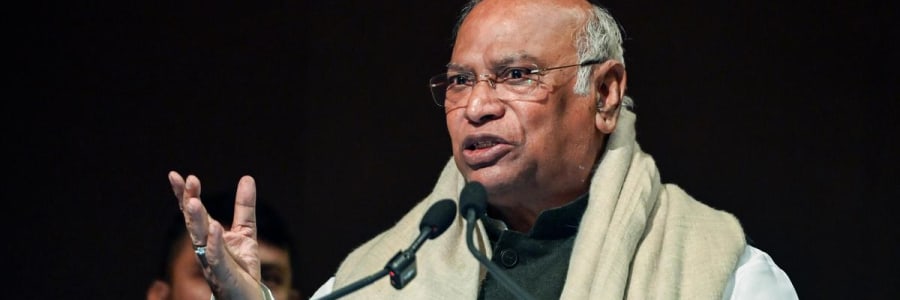
Iran invited Congress leaders Kharge, Khurshid, and Khera to Khamenei's funeral, alongside an official Indian govt delegation.India sending both govt and opposition figures signals it wants to maintain strong ties with Tehran despite broader geopolitical pressures.Bihar Governor Ata Hasnain and MoS Pabitra Margherita lead the official delegation, while PM Modi heads to Indonesia, Australia, and New Zealand.
Why did Iran invite opposition leaders separately?
Iran maintains ties with multiple Indian political parties, not just the ruling govt. By inviting Congress president Kharge and former EAM Khurshid, Tehran cultivates bipartisan goodwill. Khurshid, as former External Affairs Minister, has prior diplomatic rapport with Iran. This mirrors how Iran invited leaders across parties during Raisi's funeral in 2024.
Has India sent governors to funerals before?
India often calibrates delegation rank to signal diplomatic warmth without overcommitting. For Raisi's funeral in 2024, India sent a cabinet minister. Governors occupy a unique protocol niche, representing the President of India in their state. Ata Hasnain's military background adds strategic weight without the political baggage of a senior cabinet pick.
Why Mashhad for burial, not Tehran?
Mashhad hosts Imam Reza's shrine, Shia Islam's holiest site in Iran. Burying Khamenei there places him alongside revered religious figures, elevating his legacy. Tehran is the political capital, Qom the seminary city. Choosing Mashhad over either signals that Iran's establishment wants Khamenei remembered as a spiritual authority, not just a political leader.
What role does Khurshid's Iran history play?
Khurshid served as External Affairs Minister from 2012-14, a period when India navigated US sanctions while maintaining Iranian oil imports. He visited Tehran and built personal relationships with Iranian officials. His inclusion signals continuity of India-Iran diplomatic rapport beyond any single ruling party, something Tehran values in its long-term strategic calculus.
What does this delegation choice signal to the US?
India balances its Iran relationship against the US-led sanctions regime. Sending a mid-level govt delegation, led by Bihar Governor Ata Hasnain rather than PM Modi, avoids elevating the visit to summit-level optics. Modi's scheduled trip to Indonesia, Australia, and New Zealand from Jul 6-11 provides diplomatic cover for not attending personally.
Could India have sent a higher-level delegate?
India could have sent the External Affairs Minister or Vice President, signaling stronger alignment. By choosing a governor and MoS, Delhi keeps the visit respectful but below summit-grade. For comparison, Pakistan and China are likely sending top-tier leaders. India's mid-tier pick mirrors its balancing act between Tehran and Washington on sanctions.
How does this affect India's Chabahar port deal?
India signed a 10-year Chabahar port deal in May 2024, its only direct trade route bypassing Pakistan to reach Afghanistan and Central Asia. Khamenei's death creates a succession period where Iran's foreign policy commitments could be revisited. India's show of respect through the delegation helps protect this $370Mn infrastructure investment during a politically sensitive transition.
Does Iran's leadership transition change oil ties?
Iran supplies roughly 2-3% of India's crude imports, down sharply from ~10% before 2019 US sanctions. The leadership transition could open space for renegotiation if sanctions ease under new Iranian leadership. Indian refiners like MRPL and BPCL previously processed Iranian crude. Any policy shift in Tehran on nuclear negotiations would directly affect whether Indian oil imports from Iran can expand again.
Who in India's govt shaped delegation composition?
MEA likely coordinated delegation composition. Governor Ata Hasnain, a retired Lt. General with deep understanding of West Asian security, adds strategic credibility. MoS Margherita handles day-to-day external affairs. The dual-track approach, govt officials plus opposition figures, lets India show respect without committing the PM's political capital.
Why were ceremonies spread across three cities?
The three cities serve distinct symbolic functions. Tehran hosts state ceremonies as the political capital. Qom, Iran's religious seminary center, holds mourning rituals reflecting Khamenei's clerical rank. Mashhad, home to Imam Reza's shrine, hosts the burial itself. Spreading events over Jul 3-9 maximizes diplomatic exposure, allowing different foreign delegations to attend at different stages.
How does Iran's succession process work?
Iran's Supreme Leader is chosen by the Assembly of Experts, an 88-member elected body of senior clerics. After Khamenei's assassination, this body convenes to select a successor. Unlike a presidential election, the process is opaque and driven by factional politics among conservative and reformist clerics. The Guardian Council pre-screens candidates, narrowing choices before the Assembly votes.
What is India's broader West Asia strategy here?
India maintains simultaneous ties with Iran, Saudi Arabia, UAE, and Israel, a rare quadrilateral balancing act in West Asia. The Khamenei funeral delegation fits this pattern. India attended Saudi Crown Prince MBS's investment summits while also deepening Chabahar with Iran. The structural logic is energy security plus trade corridor diversification, ensuring no single West Asian partner becomes a chokepoint.
Source: thehindu.com