world · 2026-03-29
India Revives Old Shield Against Drones
f93f65ec-4750-4c92-a252-044a3fd331c3
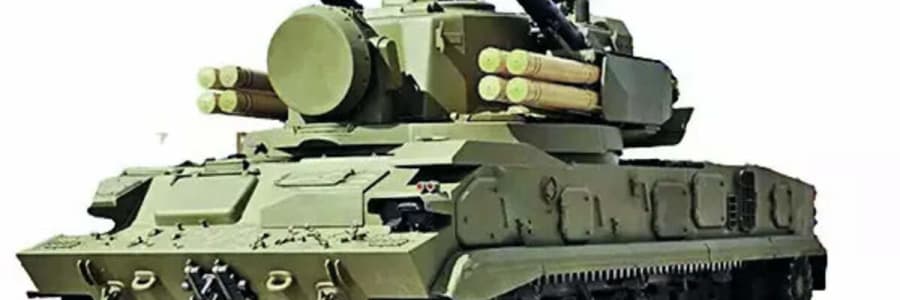
India signed a ₹445 crore deal with Russia for upgraded Tunguska air defence missiles to counter rising drone threatsThe Tunguska system combines surface-to-air missiles with twin 30mm guns, targeting low-flying drones that slip past systems like the S-400The mobile platform moves with armoured units, protecting critical assets like S-400 radars from cheap drone swarms
Why can't the S-400 handle cheap drones?
The S-400 is built to intercept large, fast targets like fighter jets and ballistic missiles. Low-cost drones fly slowly at low altitudes, slipping under its radar coverage. Using expensive S-400 interceptors against cheap drones is also economically wasteful. [A single S-400 missile costs far more than a $500 drone.]
How does Tunguska's twin-gun system work?
Tunguska pairs two 30mm autocannons with short-range missiles, creating a dense fire wall. The guns fire up to 5,000 rounds per minute combined, ideal for engaging small targets at close range. [Think of it as a last-ditch shield around high-value assets like radar stations.]
Why are drone swarms so hard to stop?
Drone swarms overwhelm defences through sheer numbers. Even if 9 out of 10 drones are destroyed, the surviving few can inflict damage. Each drone costs a fraction of an interceptor missile. [In the Russia-Ukraine war, cheap FPV drones costing under $500 regularly penetrate layered defences.]
What makes Tunguska mobile enough for war?
Tunguska is a tracked vehicle that moves at highway speeds alongside tanks and armoured columns. It can detect, track, and fire while moving. [During exercises, Tunguska units have repositioned within minutes to shield advancing T-90 tank formations from aerial threats.]
What does this deal mean for India's defence?
This ₹445 crore deal plugs a critical gap in India's layered air defence. It means India now has a close-in system specifically designed for drone swarms. It also deepens India's reliance on Russian defence platforms [like the existing S-400 and BrahMos partnerships].
Does India become more dependent on Russia?
This deal adds to India's existing Russian defence ecosystem. Switching platforms entirely would require billions in retraining and new infrastructure. However, India is also diversifying. [Deals with Israel for MRSAM and with the US for MQ-9B drones show India hedging its bets.]
How does this affect India's own drone plans?
India is simultaneously building its own drone industry and counter-drone capabilities. This Russian purchase may serve as a stopgap while domestic systems mature. [Indian startups like Ideaforge and Adani's drone unit are developing indigenous counter-drone solutions for the armed forces.]
Could this shift India's border strategy?
Absolutely. Low-cost drone threats are acute along both the Pakistan and China borders. Mobile systems like Tunguska can protect forward positions. [India's northern Ladakh deployments, where S-400 batteries are stationed, could get Tunguska units as close-in protection screens.]
How common are legacy system revivals globally?
Reviving legacy systems for modern threats is increasingly common. Several countries are retrofitting Cold War era platforms. [The US upgraded its 1980s-era Avenger system with Stinger missiles for counter-drone roles.] Globally, at least 5 out of 10 major militaries are repurposing older air defence systems.
Which armies are reviving old air defences?
Multiple nations are retrofitting legacy systems. [Germany reactivated its Gepard anti-aircraft tanks and sent them to Ukraine specifically for drone defence.] The UK is also upgrading Rapier systems. At least 6 out of 10 NATO members have revisited older short-range air defence platforms since 2022.
What do drone wars teach about cost ratios?
The Ukraine conflict revealed a stark cost asymmetry. Defenders spend thousands per interceptor against drones costing hundreds. [Ukraine reportedly spends $250,000 per Patriot interceptor against Iranian-designed Shahed drones costing roughly $20,000 each.] This ratio drives demand for cheaper gun-based systems.
How does India's layered defence compare?
India now fields multiple layers. Long-range S-400s cover high-altitude threats, medium-range MRSAM handles mid-tier targets, and Tunguska addresses close-in drone threats. [Compared to China's layered HQ-9, HQ-16, and PGZ-07 combination, India's coverage is now similarly structured but still maturing.]
Source: economictimes.indiatimes.com