politics · 2026-06-25
India Says Passport Isn't Citizenship Proof
12ea28ac-cfea-4820-949f-0f08577baca6
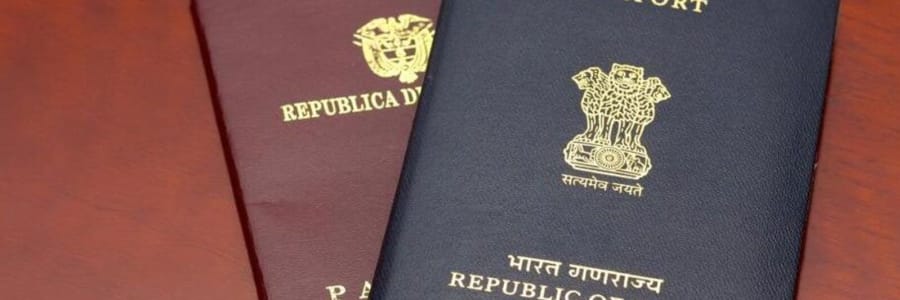
MEA declared passports are travel documents, not proof of citizenship, during the 14th Passport Seva Divas on Wednesday.This distinction matters because the Supreme Court recently ruled Aadhaar isn't conclusive citizenship proof either, leaving no single document that proves citizenship.1.5Cr passport holders and applicants face uncertainty, while visa-free access for Indians rose from 16 countries in 2019 to 27 now.
What exactly does the MEA's distinction mean?
The MEA clarified that passports are issued after due diligence using documents from multiple govt agencies, but they certify identity for travel, not nationality. This matters because India has no single standalone citizenship document. For example, even the 1.39Cr passports issued in 2025 don't legally prove the holder's citizenship status.
What documents can actually prove citizenship?
Under the Citizenship Act 1955, birth certificates issued after 1987 that list parents' nationality, or citizenship certificates from the Home Ministry, serve as proof. But most Indians lack these. For instance, only a fraction of births before 2000 were registered with parental nationality details, creating a documentation gap for millions.
Has any country faced a similar document gap?
The UK faced a similar crisis during the 2018 Windrush scandal, where long-term Caribbean-origin residents couldn't prove legal status despite decades of residency. Without a single citizenship register, the govt deported people who had lived in Britain for 50+ years. India's situation differs because it has 140Cr people and no universal citizenship registry.
How do chip-based e-passports differ here?
The new chip-based e-passports store biometric data and meet ICAO standards, improving security against forgery. But the chip verifies identity, not citizenship status. For example, the MEA's PSP V2.0 system cross-checks applicants against police and govt databases, but these checks confirm criminal history and address, not nationality.
Why does this matter after the SC Aadhaar ruling?
The Supreme Court recently said Aadhaar only proves identity, not citizenship, during hearings on voter roll revision. Now the MEA says the same about passports. Together, these rulings mean India's two most widely held govt documents, Aadhaar (140Cr holders) and passports, both fall short as citizenship proof. This creates a legal vacuum.
Could this gap affect NRC-like exercises?
During Assam's NRC exercise, applicants needed legacy documents like pre-1971 voter rolls to prove ancestry. Passports and Aadhaar were not accepted as citizenship proof. If a nationwide NRC were attempted, the same gap would apply. With 1.39Cr passports issued in one year alone, millions could face documentation challenges.
What happens if citizenship is contested abroad?
If an Indian's citizenship is questioned abroad, consular officers can issue emergency travel documents but cannot independently certify citizenship. For example, Indians detained during immigration checks in the UAE or UK must rely on the Home Ministry to verify status, a process that can take weeks while the person remains in limbo.
Does voter enrollment imply citizenship?
Voter ID cards are issued based on self-declaration of citizenship, not independent verification. The Supreme Court's recent SIR hearing made this explicit, noting that voter rolls don't constitute citizenship proof. In practice, India's Election Commission enrolls residents who declare Indian nationality, but this declaration is never cross-verified against a citizenship register because none exists.
Who faces real consequences from this gap?
The 1.5Cr Indians who received passport services in 2025 could face complications if citizenship is challenged. NRI communities are especially vulnerable. For example, during NRC exercises in Assam, roughly 19L people were excluded despite holding Aadhaar and voter IDs, showing how document gaps translate into real exclusion.
Who among India's diaspora is most exposed?
An estimated 1.35Cr Indians hold Overseas Citizen of India cards, which grant visa-free travel but explicitly exclude citizenship rights like voting. Gulf-based workers on employment visas are especially vulnerable. For example, Indian workers in Saudi Arabia who lose employer sponsorship cannot use their passport to assert citizenship-based protections.
How do mobility agreements affect this issue?
India has mobility agreements primarily with European nations covering students, academics, and workers. These agreements treat passports as travel facilitators, not citizenship guarantors. For instance, the India-France migration pact streamlines visa processing but relies on both govts exchanging identity data. It also creates return mechanisms for illegal migrants, where citizenship verification becomes critical.
What would a citizenship register require?
Building a universal citizenship register would require linking birth records, parental nationality data, and residency history for 140Cr people. Assam's NRC alone cost ~₹1.6K Cr and took 4 years for just 3.3Cr residents. Scaling nationally would demand digitizing decades of local records, many of which exist only on paper in village panchayat offices.
Source: livemint.com