world · 2026-03-22
Iran Now Controls Who Sails Hormuz
bb6ffebd-160a-40e3-a9dc-895c71882e77
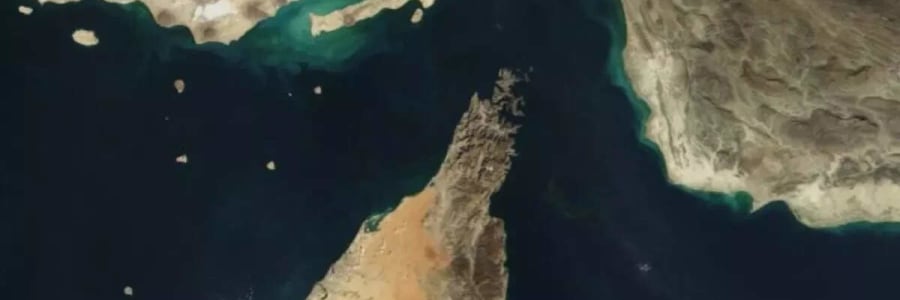
Iranian Navy guided an Indian LPG tanker through Hormuz on a pre-approved route after diplomatic coordination by New DelhiIran is building a traffic control system in the strait, verifying ship flag, crew nationality, and ports before granting passageAnalysts say the system gives Tehran direct leverage over global energy prices by selectively permitting or threatening vessels
What does India having to get 'pre-approval' from Iran to move its own tankers tell you about the power dynamics at play?
India imports over 50% of its LPG needs, and much of it transits Hormuz. Needing Iranian permission means Tehran holds a quiet veto over Indian energy security. Delhi's diplomatic engagement to secure passage [pre-approved routing for 2 Indian ships] signals India is negotiating from a position of dependency, not strength.
Why would India engage diplomatically with Iran rather than rely on US Navy escorts already present in the region?
US escorts could provoke Iranian retaliation against Indian-flagged ships. Delhi chose bilateral diplomacy [direct engagement resulting in radio-guided passage] to avoid being caught in US-Iran crossfire. India's non-aligned posture lets it negotiate independently, something a NATO-aligned country couldn't easily do.
What leverage does India actually hold in negotiations with Tehran to keep this corridor open?
India is one of Iran's few remaining oil customers and a major buyer of Iranian goods despite sanctions. Tehran values this economic relationship [India purchased Iranian crude via rupee-payment mechanisms]. Cutting off Indian ships would push Delhi firmly toward Washington, which Tehran wants to avoid.
How does this pre-approval system differ from a traditional naval blockade in international law?
A blockade under international law triggers collective self-defense rights. Iran's system is subtler. By calling it 'traffic management' and allowing passage [verified ships transiting on agreed courses], Iran avoids the legal threshold of blockade while achieving similar coercive effect. It exploits a gray zone.
How does Iran selectively escorting friendly ships function as an economic weapon, beyond the obvious military threat?
Iran doesn't need to fire a shot. By creating a permit system, it splits the global shipping community into compliant and non-compliant vessels. Insurers reprice risk for unapproved ships [higher war-risk premiums on tankers without Iranian clearance], which raises freight costs and energy prices globally, benefiting Iran's own crude sales.
What specific mechanism lets Iran convert selective escort into higher global oil prices?
Unapproved vessels face ambiguous threat levels. Commodity traders price in disruption risk [Brent crude futures rose on Hormuz tension reports], pushing global benchmarks higher. Iran, still exporting oil through its own channels, earns more per barrel without reducing output. It monetizes fear.
How do insurance and freight markets react differently to a permit system versus an outright blockade?
Insurers can't classify a permit system as a defined war event, creating pricing chaos. War-risk premiums spike for non-cleared vessels [Lloyd's market reportedly adjusting Hormuz transit surcharges] but approved ships face lower costs. This fragments the shipping market rather than shutting it down entirely.
Why would this system benefit Iran's own crude exports rather than hurt them?
Iran's own tankers and allied vessels [ships from countries maintaining diplomatic ties with Tehran] transit freely, keeping Iran's export revenue flowing. Meanwhile, competitors' shipping costs rise. Iran effectively subsidizes its own trade while taxing everyone else's, a strategic advantage no outright blockade would provide.
What makes India uniquely exposed to disruption at Hormuz compared to other major LPG importers?
India is the world's largest LPG importer, buying roughly 20 million tonnes annually. Unlike Japan or South Korea, India lacks strategic LPG reserves and has limited pipeline alternatives. A Hormuz disruption hits Indian households directly [over 310 million subsidized Ujjwala scheme connections depend on affordable LPG supply].
How much of India's total LPG consumption flows through Hormuz specifically?
Roughly 60% of India's LPG imports originate from Persian Gulf producers [Saudi Arabia, Qatar, UAE]. Nearly all of that transits Hormuz. That means about one-third of India's total LPG consumption depends on uninterrupted passage through a chokepoint Iran now effectively controls.
What would a sustained Hormuz disruption do to India's Ujjwala scheme and cooking fuel subsidies?
The government subsidizes LPG for over 310 million Ujjwala connections. Higher import costs would either inflate the subsidy bill [estimated at over Rs 12,000 crore annually] or force price hikes on consumers. Either outcome is politically costly, especially ahead of state elections.
What alternative supply routes or sources could India realistically activate?
India could increase purchases from non-Gulf sources [US LPG exports via longer Atlantic routes] or boost domestic production. But US-origin LPG costs more in freight, and India's domestic output covers only about 50% of demand. Realistically, no short-term substitute matches Gulf volumes at comparable prices.
Source: economictimes.indiatimes.com