world · 2026-06-28
Japan PM's First India Visit Set for Jul 1
0f39f99f-bacf-4821-be1a-3634937af402
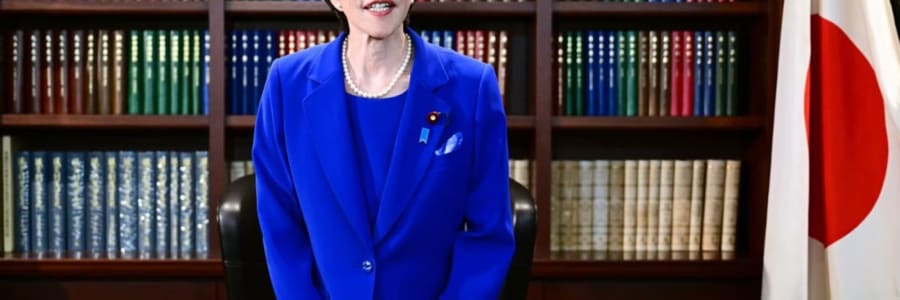
Japanese PM Sanae Takaichi visits India Jul 1-3 for the 16th annual summit, with a large business delegation. New Delhi was chosen over Guwahati after logistical issues.The summit serves as a strategic counterweight to China's growing regional dominance, building on Quad ties and recent Modi-Takaichi talks at the G7.Assam loses hosting visibility, but its CM confirmed Japan will deepen collaboration in semiconductors, electronics, and entrepreneurship with the state.
Why was Guwahati dropped for New Delhi?
Guwahati was initially considered to spotlight northeast India's development, but was dropped due to logistical issues. Hosting a summit requires secure venues, motorcade routes, and telecom infrastructure. New Delhi's Hyderabad House, which hosted Modi-Ishiba talks in past summits, offers tested protocol readiness.
Has India ever hosted a summit outside Delhi?
Yes. India has hosted bilateral summits in Varanasi, Ahmedabad, and Mamallapuram. Modi hosted China's Xi Jinping in Mamallapuram in 2019. These non-Delhi venues showcase cultural heritage and signal regional development priorities. Guwahati would have been the first northeast Indian city to host a Japan summit.
What logistical gaps does Guwahati face?
Guwahati's Lokpriya Gopinath Bordoloi airport handles limited VIP movements compared to Delhi's Palam technical area. Secure motorcade corridors, counter-surveillance infrastructure, and hotel capacity for 100+ delegation members require months of advance preparation. Delhi's SPG-hardened zones eliminate these gaps.
Could a northeast venue shift diplomatic optics?
Hosting in Guwahati would have signaled India's Act East Policy in action, physically linking Japan to northeast India's development corridor. The India-Myanmar-Thailand trilateral highway and the Kaladan project both pass through this region. A summit there would have positioned Assam as a gateway to Southeast Asia.
How does this summit counter China's reach?
India and Japan are both Quad members alongside the US and Australia, forming a bloc that checks China's influence in the Indo-Pacific. Japan is India's 5th largest FDI source. Defence agreements like the 2020 military logistics pact let forces use each other's bases, a direct counter to China's naval expansion.
What specific deals might this summit produce?
Previous summits produced concrete pacts. The 2025 Tokyo summit yielded a joint statement on next-generation security. This summit may advance Japan's involvement in India's semiconductor mission. Japan's Rapidus and India's Tata Electronics have explored chip packaging collaboration. Defence co-production of naval drones is another likely agenda item.
How has Japan's FDI in India trended recently?
Japan's cumulative FDI in India reached ~$39Bn by 2025, making it the 5th largest investor. Annual flows have grown ~15% since 2020. Suzuki alone invested ~₹10K Cr in its Gujarat EV battery plant. Japanese ODA loans fund Delhi Metro and Mumbai-Ahmedabad bullet train, creating a unique aid-plus-investment model.
Does the Quad face coordination challenges?
The Quad lacks a formal treaty structure, unlike NATO. Decisions require consensus among four democracies with differing China trade exposure. Australia exports ~35% of goods to China, creating tension with hawkish stances. Coordination works best on maritime security and tech supply chains, less so on trade restrictions.
What does Assam still gain from this visit?
Assam CM Himanta Biswa Sarma confirmed that Japanese Ambassador Ono Keiichi called to reaffirm sector-specific collaboration. Japan's interest in Assam spans electronics, semiconductors, and entrepreneurship. For example, Japanese firms have previously explored setting up electronics assembly units in Assam's Jagiroad industrial cluster.
Which Japanese firms eye Assam specifically?
Japan's JETRO has mapped Assam for tea processing automation and bamboo-based industrial materials. Suzuki explored two-wheeler assembly near Guwahati. Japanese firms see Assam's labor costs at roughly 60% of Gujarat's, making it attractive for low-value electronics assembly if transport connectivity improves.
How do semiconductor talks fit Japan's plans?
Japan passed its own semiconductor revival law in 2022, investing ~$13Bn domestically. TSMC's Kumamoto fab is Japan's anchor project. India fits as a complementary node for chip packaging and testing, not fabrication. Japan wants to de-risk from Taiwan-concentrated supply chains. India's lower labor costs make back-end processing viable.
Could Takaichi's visit reshape Japan's Asia tilt?
Takaichi represents a more assertive Japanese foreign policy than predecessor Ishiba. Her defense spending stance aligns with India's interest in military tech transfers. Japan traditionally balanced China engagement with US alliance. A deeper India tilt would signal Japan diversifying its Asia partnerships beyond the US-China binary.
Source: indianexpress.com