economy · 2026-11-08
Karnataka's big green energy goal: 30 GW in 5 years
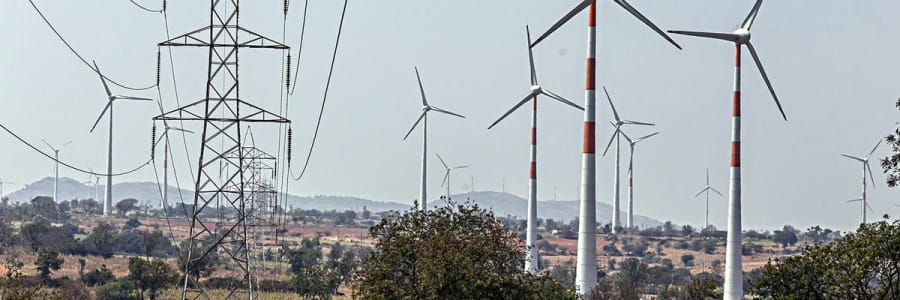
Photo: via The Hindu
Karnataka plans to add 30 gigawatts of renewable energy in five years, tripling its usual pace. That means new wind and solar projects, plus batteries, to keep power flowing.
Did Karnataka sign anything for its 30 GW plan?
No deals were signed. The 30 GW target was announced in a speech by Gaurav Gupta, Karnataka's Additional Chief Secretary of Energy, at a summit in New Delhi. However, one linked project has moved: the state awarded a 250 MW solar-plus-storage project at Ryapte to Pace Digitek (a solar developer), which will build solar panels and a battery system with 1,100 MWh of storage.
What makes the 30 GW goal possible?
Falling battery costs are the big enabler. Lithium-ion pack prices hit about $108 per kWh in 2025; stationary packs fell 45% to roughly $70. Solar-plus-storage became cheaper than new coal in India in late 2025. That shifts economics in Karnataka's favor, but thin margins, winning tariffs fell over 71% since 2022, mean the pace depends on developers staying solvent.
What could actually stop the plan?
The grid, not the panels. In 2026, 21 GW of renewables ran on temporary connections and 12 GW faced evacuation limits at peak solar hours; 6,900 GWh went un-evacuated. Karnataka's Ryapte project still needs tying into Pavagada's grid (the nearby solar park's transmission network). Our read: without transmission upgrades, added storage can't deliver evening power, no matter how many projects get tendered.
Is the 30 GW plan a wish list or a real project?
The 30 GW plan is a roadmap announced in a speech, not a signed project. But one real piece exists: Pace Digitek (a solar developer) won the 250 MW solar-plus-storage bid at Ryapte, tendered in May 2025, with 1,100 MWh of batteries to discharge in evenings. The ambition, however, rests on execution, grid delays and thin developer margins could stall it.
Who pays when battery projects fail to make money?
The developers do, and many are already exposed. Winning tariffs fell more than 71% between 2022 and 2025, while battery pack prices fell only 36%, so margins have thinned faster than costs. Nearly 75% of allocated two-hour capacity is classed as at risk, meaning developers may struggle to recover costs. Investors expect 15% to 20% returns, and financial closure delays of 9 to 18 months stretch budgets. Our read: the aggressive bids that won tenders, not the state, will absorb the shortfall if projects stall.
What would fix the imported battery risk?
The federal viability gap funding subsidy is one pressure valve, covering roughly 15% to 20% of a project's upfront capital expenditure at 18.7 lakh rupees per MWh. It makes imported batteries cheaper to deploy, but it does not shorten the supply chain or protect against a Chinese price swing. Domestic manufacturing would take years to scale, so the subsidy cushions developers' budgets without removing the single-country reliance.
So what does the proposed federal subsidy actually buy?
It buys time, not independence. The viability gap funding subsidy covers 15% to 20% of a project's upfront capital expenditure, roughly 1.8 million rupees per megawatt-hour. That directly lowers the cost of deploying imported batteries, helping developers sign contracts despite thin margins. But the subsidy leaves the core risk untouched: India's battery imports, 84% of which come from China, still face the same exposure to price swings and shipping delays. The subsidy cushions budgets, not supply chains. Our read: the subsidy is designed to keep projects moving while domestic manufacturing scales, not to solve the import problem itself.
What happens to the 30 GW target if batteries stay imported?
The target leans on imported batteries, and that reliance is growing. Lithium-ion imports rose from $3.0 billion in FY2025 to $4.7 billion in FY2026, a 56% jump, with China supplying 84% in FY2026. A shipping delay or price swing tied to one country can reach Indian project budgets quickly. Tenders are multiplying, up 86% in H1 2026, but auctioned capacity fell 18%, suggesting developers are wary. Our read: a supply shock, not demand, is the bigger threat to the five-year pace.
Why does the timing of Karnataka's solar plan matter?
Timing is everything because of how solar works. Panels stop producing at sunset, just as evening demand peaks. Karnataka's Ryapte solar-plus-storage project tackles this: its battery stores at least 80% of solar output and discharges mainly between 4 pm and 10 pm. That shifts solar power to when people actually need it, not just when the sun shines.
Who pays if a battery project fails to deliver on time?
The developer does, under the Build-Own-Operate model for Karnataka's Ryapte project: it builds, owns and runs the plant, so cost overruns and delays land on it. Across India, nearly 75% of allocated two-hour storage capacity is classed as "at risk," with winning tariffs falling 71% since 2022 while battery costs fell only 36%. Our read: developers who bid aggressively to win are the ones absorbing the squeeze, not the state or consumers.
If developers are squeezed, could they just walk away from winning bids?
They can, and the system already shows the strain. Nearly 75% of allocated two-hour storage capacity is classed as at risk, and investors typically expect a 15% to 20% internal rate of return that thin margins cannot deliver. Delays of 9 to 18 months from financial closure and procurement stretch projects further. India's storage auctions also show tenders growing 86% while signed capacity fell 18%, meaning fewer contracts are closing. Our read: the next squeeze point is renegotiation or default, not a public bailout, because the Build-Own-Operate model keeps the loss on the developer.
Who backs the developer if it can't finish the project?
The developer under a Build-Own-Operate model absorbs losses, but lenders sit behind it. Projects need financial closure, and delays of 9 to 18 months stretch budgets while investors expect a 15% to 20% internal rate of return. Federal viability gap funding covers 15% to 20% of upfront capital for storage, easing the developer's burden. Our read: banks and equity investors, not the state, carry the residual risk when a project fails, because the riskier the developer's bid, the higher its cost of capital.
If a developer walks away, can the project be re-tendered fast enough to meet the 30 GW goal?
Re-tendering is possible, but the clock works against it. Karnataka's Ryapte tender took nine months from floating to award, and across India tenders are growing 86% while signed capacity fell 18%, meaning auctions are already outpacing closures. Delays of 9 to 18 months from financial closure stretch projects further. Our read: a failed bid means the state loses at least a year, which makes the five-year, 30 GW target hostage to developers who can actually finish, not just win.
Why do developers keep bidding if the numbers don't work?
Because the alternatives are worse. Renewable developers in India face a market where tenders grew 86% in the first half of 2026, but signed capacity fell 18%, so losing a bid means losing revenue entirely. Battery prices keep falling, with stationary packs down 45% from 2024, which gives bidders hope costs will catch up with tariffs. Federal viability gap funding covers 15% to 20% of project capital, lowering the upfront risk. Our read: developers bid on the chance that future cost declines rescue their margins, not on current profitability.
What happens to the equipment if a developer defaults?
The developer owns the project under the Build-Own-Operate model, so the equipment stays with it or its lenders, not the state. The state provided land on lease at Ryapte, which it can take back, but the solar panels and batteries belong to the developer. Lenders holding financial closure could seize and resell the assets to recover their exposure. Our read: a default strands the equipment with whoever financed it, and the state is left with an empty plot and a lost year, not a ready-to-run plant.
Does the state have any cushion if low tariffs trigger defaults?
Not directly. Under the Build-Own-Operate model, the state is not on the hook for project losses, and consumers are shielded from cost overruns. But the state does have a tool: federal viability gap funding covers roughly 15% to 20% of upfront capital for storage projects, which can lower the developer's risk enough to keep bids alive. Karnataka's Ryapte tender offers land on lease and grid access at Pavagada, reducing two of the biggest cost unknowns. Our read: the state leans on federal subsidies and low land costs to keep tariffs competitive, but it cannot stop a developer from walking away if margins vanish.
What keeps the state from just paying more for power?
The tender fixes the price through competitive bidding, so the state cannot top up a developer's tariff later without breaking its own auction. Karnataka's Ryapte project on its Build-Own-Operate model gives land on lease and grid access at Pavagada, but the tariff stays locked. Federal viability gap funding is a separate tool that covers 15% to 20% of upfront capital. Our read: the state would need a new tender or revised policy to pay more, which would penalize the developers who bid honestly.
Source: thehindu.com