business · 2026-07-04
LME Lists Adani Copper as Approved Brand
8afdf3a1-739a-480e-a33b-85d5713ffd94
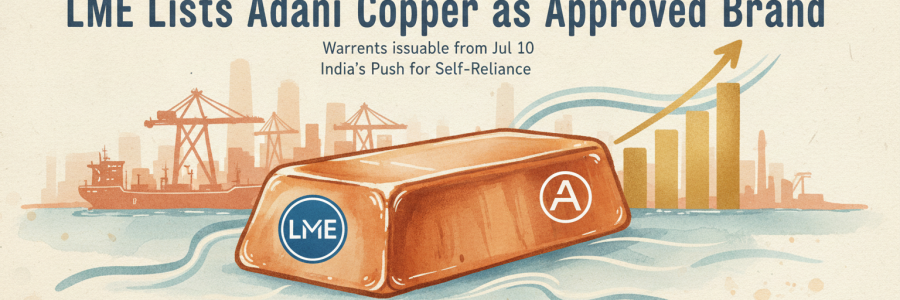
London Metal Exchange approved Adani Copper for delivery against its copper contracts, with warrants issuable from Jul 10.This makes Kutch Copper the first major Indian smelter brand on LME in years, validating India's push to cut refined copper imports.Adani Enterprises gains global pricing credibility, while Indian manufacturers and wire makers could access domestically smelted, globally benchmarked copper.
What does LME brand approval actually allow?
LME brand listing means Adani Copper cathodes can be delivered against LME futures contracts. Buyers worldwide accept LME-listed brands as quality-verified. For Kutch Copper, with 500K metric ton annual capacity, this opens direct access to global trading desks. Previously, unbranded Indian copper traded at discounts to LME benchmarks.
How does LME verify a smelter's quality?
LME requires smelters to submit cathode samples for independent lab testing against BS EN 1978 purity standards, requiring 99.99% copper content. The exchange also audits production processes and traceability. Hindalco's Birla Copper, for instance, went through similar metallurgical testing before its own listing years ago.
Why did Adani's approval take nearly a year?
LME registration involves multi-stage review: sample testing, production audits, and market consultations where existing members can raise objections. Adani applied in Aug 2025. Geopolitical scrutiny of Adani Group post-Hindenburg likely added procedural caution. For comparison, some Chinese smelters have waited 18+ months for approval.
What brands were LME-listed from India before?
Hindalco's Birla Copper has been LME-listed for years and operates a 500K ton smelter in Gujarat. Sterlite Copper (Vedanta) was previously listed but lost capacity after its Tuticorin plant closed in 2018. Adani's listing effectively restores India's second major LME-grade domestic source.
Could this cut India's copper import bill?
India imported ~238K tons of refined copper in 2025, down 18% from the prior year. Kutch Copper's 500K ton capacity exceeds India's entire import volume. With LME listing, domestic buyers no longer need to pay import premiums for quality assurance. Japan, India's top copper supplier, could see reduced demand from Indian buyers.
How large is the import premium Adani undercuts?
Indian buyers typically pay $80 to $150 per ton above LME benchmark as import premium, covering shipping, insurance, and quality verification. On 238K tons of imports, that is roughly $19Mn to $36Mn annually in avoidable premiums. Kutch Copper's LME listing eliminates the quality-verification component of that premium.
Does India's copper demand justify 500K tons?
India consumed ~1.4Mn tons of refined copper in 2025. Domestic smelting covered roughly 800K tons before Kutch Copper's ramp-up. With demand growing 8 to 10% annually driven by EVs, renewables, and grid expansion, India needs ~140K additional tons each year. Kutch Copper's full capacity fills ~3.5 years of incremental demand growth.
What happens to Japan's copper exports here?
Japan supplied the largest share of India's 238K ton copper imports. Major exporters include Pan Pacific Copper and Mitsubishi Materials. As Kutch Copper ramps up, Japanese smelters may redirect to Southeast Asian buyers. However, specialty copper grades for semiconductors may remain Japan's niche even as commodity-grade imports decline.
Which Indian buyers benefit most from this?
Wire and cable manufacturers like Polycab and KEI Industries are major copper consumers. They currently pay import premiums on LME-grade copper. Domestically smelted LME-approved copper cuts logistics costs and import duties. Electronics and EV component makers in Gujarat's industrial clusters also gain a nearby certified source.
Will Polycab save meaningfully on input costs?
Polycab's annual copper consumption is ~300K tons. Even a $50/ton saving from eliminated import premiums translates to ~$15Mn annually. However, copper is roughly 70% of wire manufacturing cost, so the percentage impact on final product pricing is modest, around 1 to 2%. The bigger gain is supply chain reliability.
How do cable makers currently source copper?
Large cable makers like KEI Industries typically buy copper cathodes via commodity traders or directly from smelters, then melt and draw them into wire. They hedge price risk on LME or MCX. Having an LME-listed domestic source means they can take physical delivery locally while still using LME contracts for price hedging, cutting logistics time from weeks to days.
Could cheaper copper shift EV cost curves?
Copper constitutes 5 to 8% of an EV's total cost, concentrated in motors, wiring, and battery connectors. A typical EV uses ~80 kg of copper versus ~23 kg in a petrol car. Domestic LME-grade supply reduces procurement friction, but the copper cost saving alone, roughly ₹4K to ₹8K per vehicle, won't meaningfully shift sticker prices.
Source: economictimes.indiatimes.com