world · 2025-05-22
Modi Calls All-Party Meet on West Asia
ed24b276-9a42-44be-9cf1-82efe99c4538
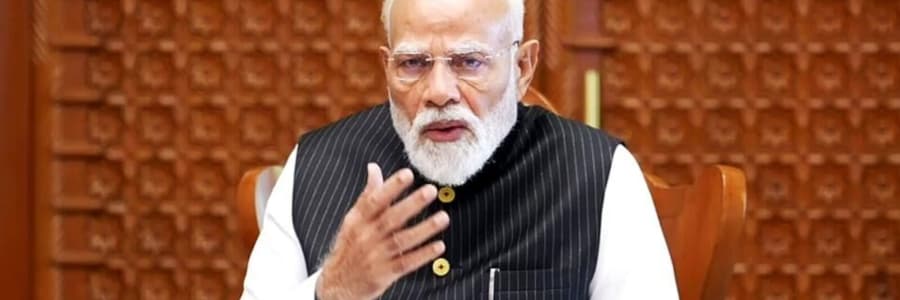
All-party meeting called by Modi govt to discuss India's stance on escalating West Asia conflictAgenda covers India's diplomatic position as Iran-US tensions intensify and regional instability growsLeaders across party lines invited to build consensus on India's foreign policy response
Why does India need consensus on West Asia?
India depends heavily on West Asia for energy and has millions of diaspora workers there. Building cross-party consensus helps Delhi present a unified diplomatic front. [For example, around 9 million Indians live in Gulf countries], making evacuation planning and citizen safety a bipartisan concern.
Why is bipartisan support key for Modi?
Opposition backing strengthens India's negotiating credibility abroad. A divided Parliament weakens diplomatic leverage. [For example, during the Russia-Ukraine war], India's abstention at the UN drew less domestic criticism partly because of informal cross-party alignment on non-alignment.
How does diaspora safety factor in?
Around [9 million Indians in Gulf states] work in sectors like construction and hospitality. Any regional escalation triggers evacuation protocols. India's Operation Kaveri in Sudan and Vande Bharat during COVID showed how diaspora crises demand rapid, politically backed responses.
What role does India play in mediation?
India maintains ties with both Iran and the US, plus Gulf allies like UAE and Saudi Arabia. [Modi's personal diplomacy with leaders on both sides] positions India as a potential back-channel mediator, though Delhi typically avoids overt mediation roles.
How could this conflict hit India's economy?
India imports over 60% of its crude oil, much of it from West Asia. Escalation could spike oil prices and widen the trade deficit. [For instance, Brent crude above $90 per barrel] would raise India's import bill significantly, fueling inflation and pressuring the rupee.
Which sectors face the biggest oil shock?
Aviation and logistics are most exposed. [Airlines like IndiGo] see jet fuel as 40% of operating costs. Fertilizer and petrochemical firms also face margin pressure. Consumer goods companies pass costs downstream, contributing to food and transport inflation.
Could higher oil derail RBI rate cuts?
Yes. RBI factors in oil-driven inflation when setting rates. [In 2022, crude price spikes after Russia's Ukraine invasion] forced RBI to pause cuts and hike rates by 250 basis points. A similar scenario now could delay the current easing cycle.
How do rupee and markets react to wars?
During past conflicts, [the Sensex dropped 3 to 5% in initial sessions] before recovering. The rupee tends to weaken as foreign investors pull money. However, India's forex reserves near $650 billion provide a larger buffer than in earlier crises.
What past all-party meets shaped policy?
India has historically used all-party meets before major geopolitical shifts. [The 2019 Balakot strikes and the 2020 Galwan standoff] both saw such consultations. Out of major foreign policy crises in the last decade, most prompted similar consensus-building exercises.
How many all-party meets happened recently?
In the last decade, [at least 5 major all-party consultations] occurred on foreign policy. These included discussions on Doklam, Balakot, Galwan, and the Russia-Ukraine conflict. The frequency has increased under the Modi government compared to the UPA era.
Did past meets actually change policy?
They shape tone more than substance. [After the Pulwama attack in 2019], cross-party support emboldened the government's military response. These meets rarely change strategy but provide political cover and reduce the risk of domestic criticism during crises.
What happens if opposition boycotts?
A boycott signals political friction and weakens India's unified image. [In 2023, some opposition parties skipped a Kashmir-related briefing], which the ruling party used to question their patriotism. The government typically frames attendance as a national duty to discourage boycotts.
Source: livemint.com