world · 2026-06-17
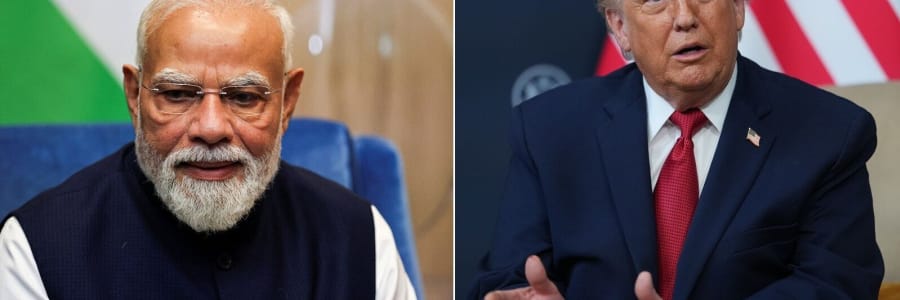
Modi Meets Trump at G7. What's at Stake?
ba949c57-1f2f-4d19-b457-3f7034a3ebf3
Modi-Trump bilateral set for G7 sidelines in Evian, France, amid ongoing trade and defence talksKey issues likely include tariff negotiations, defence deals, and immigration policy affecting Indian professionalsMeeting comes as both nations navigate shifting global alliances and Indo-Pacific strategy
Why does this G7 sideline meet matter?
G7 sideline bilaterals let leaders negotiate without full summit formality. Modi and Trump can discuss sensitive issues like tariffs and defence procurement more candidly. [India's pending trade deal framework] has stalled, making face-to-face engagement a key mechanism to break deadlocks.
What specific deals are on the table?
Defence procurement is a key item. [India's pending order for MQ-9B drones] worth ~$3Bn has been under discussion. Trade reciprocity on tariffs and market access for agriculture and tech products are also likely agenda items.
Why do sideline meets outperform summits?
Formal summits involve joint statements requiring consensus from all members. Bilateral sideline meets allow leaders to make specific commitments. [The 2023 Modi-Biden sideline at G20] produced the iCET tech partnership, something a plenary session could not have delivered.
How does France as host shape the agenda?
France under Macron has pushed for Indo-Pacific engagement. As G7 host, France can facilitate India's role in discussions on [critical minerals supply chains and AI governance], topics where Paris and Delhi share strategic interests.
How could trade talks affect Indian firms?
Indian IT and pharma exporters face potential tariff changes from the US. A positive outcome could stabilize export revenue, while a tough stance could raise costs. [TCS and Infosys] derive ~25% of revenue from US clients, making any visa or trade shift significant for their margins.
Which Indian sectors face the most risk?
Auto components and steel face the highest tariff risk. [Indian steel exports to the US worth ~$1.5Bn] could face higher duties. Pharma is also exposed, as generic drug pricing remains a friction point in bilateral trade negotiations.
Could immigration policy shift for Indians?
H-1B visa policy is a recurring bilateral issue. [~75% of H-1B visas go to Indian nationals], making any cap or fee change significant. A positive signal from Trump could ease uncertainty for Indian tech workers and their employers.
What happens if talks stall again?
Stalled talks could push India toward deeper ties with the EU and ASEAN instead. [India's recent free trade agreement with the UK] shows Delhi is diversifying trade partnerships. Prolonged US friction could accelerate this pivot away from Washington-centric trade dependency.
What signals is India sending at the G7?
India attending G7 as a guest signals its growing diplomatic weight. [India's 2025 GDP crossed $4Tn], making it hard to exclude from global economic governance. Modi's presence alongside both Western and non-Western leaders reinforces India's multi-alignment strategy.
How has India's G7 guest role evolved?
India has been invited to 5 out of the last 7 G7 summits as a guest. Each appearance has expanded India's role. [At the 2023 Hiroshima G7], India joined discussions on AI regulation and supply chain resilience for the first time.
What do past Modi-Trump meets tell us?
Past bilaterals have produced mixed results. [The 2020 Ahmedabad summit] was heavy on optics but light on deliverables. The 2025 White House meeting yielded a semiconductor MoU. The pattern suggests outcomes depend on pre-negotiated frameworks rather than summit chemistry.
How does India compare to other G7 guests?
Among non-G7 invitees, India brings the largest economy. [Brazil and South Africa], also frequent guests, lack India's scale in tech and services trade. This gives India more leverage in shaping guest-nation proposals on climate finance and digital governance.
Source: livemint.com