economy · 2026-03-24
No funds received yet from solar PLI scheme
dd9d2963-beea-428c-9048-9ac59a595619
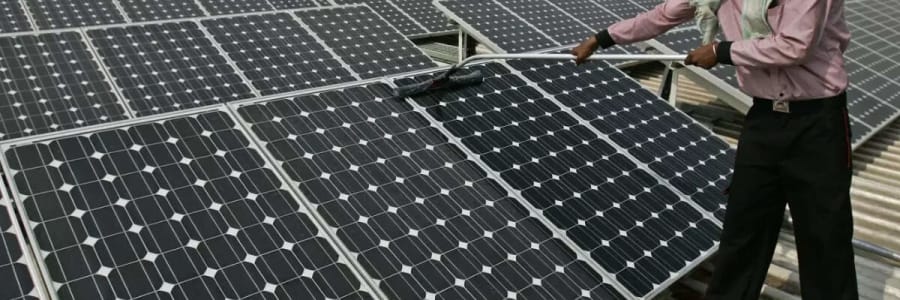
Zero funds released under INR 24K Cr PLI scheme for solar equipment makers till Feb 2025. Scheme requires a one-year post-commissioning period before payouts; no project has completed that window yet.Letters of award issued for ~48K MW of solar PV module manufacturing capacity.So far, ~30 GW of module capacity, 10.5 GW of cell capacity, and 2 GW of ingot-wafer capacity set up under the scheme.
Why haven't manufacturers received money yet?
The scheme pays incentives only after a project runs for one full year post-commissioning. No awarded project has hit that milestone yet. [For example, even projects already set up must operate for 12 months before seeing any PLI funds.] So the delay is structural, not a failure.
What is the one-year post-commissioning rule and why does it exist?
The rule ensures manufacturers actually produce at scale before getting paid. It prevents companies from building plants and collecting funds without real output. [For example, a factory commissioned in mid-2025 would only qualify for PLI in mid-2026.] It's a performance safeguard.
How many of the 48,337 MW awarded projects are actually commissioned?
Several projects are at various stages. Around 30 GW of module capacity is set up, but the full 48,337 MW awarded is not all commissioned yet. [For example, only about 4 GW of integrated capacity out of the total awarded has been specifically noted as operational.]
When can manufacturers realistically expect their first payouts?
If projects commissioned in early-to-mid 2025 complete their one-year window, payouts could begin in 2026. [For example, Minister Pralhad Joshi confirmed the timeline depends on each project's individual commissioning date.] Staggered payouts are likely rather than a single release.
What manufacturing capacity has actually been built so far?
Significant capacity is already in place. Around 30 GW of module capacity, 10.5 GW of cell capacity, and 2 GW of ingot-wafer capacity have been built. [For example, 3.4 GW out of the total is fully integrated thin-film solar PV module manufacturing capacity.]
What types of solar components are being manufactured under this scheme?
The scheme covers the entire solar value chain. Manufacturers are building capacity for modules, cells, and ingot-wafers. [For example, 10.5 GW of cell manufacturing capacity has been set up, crucial for reducing reliance on imported Chinese cells.]
How does 30 GW of module capacity compare to India's actual solar demand?
India installed roughly 25 GW of solar capacity in the last fiscal year. With 30 GW of domestic module capacity now set up, the country is approaching self-sufficiency in modules. [For example, domestic capacity could theoretically cover a full year's installation demand.]
What role does thin-film technology play in India's solar manufacturing push?
Thin-film technology uses less material and works better in low-light conditions. [Around 3.4 GW of fully integrated thin-film solar PV module manufacturing capacity has been built under this scheme.] It diversifies India's solar tech base beyond conventional crystalline silicon panels.
How does this scheme fit into India's larger solar ambitions?
India wants to reduce dependence on imported solar components, especially from China. The PLI scheme targets the full value chain, from ingots to modules. [Starting June 2028, India will mandate locally made solar ingots and wafers for clean energy projects.]
Why is India mandating locally made ingots and wafers starting 2028?
India currently imports most ingots and wafers, primarily from China. The 2028 mandate pushes manufacturers to build upstream capacity domestically. [For example, only about 2 GW of ingot-wafer capacity exists now, far below what's needed to supply 30 GW of module production.]
How does this PLI scheme compare to similar incentive programs in other countries?
The US Inflation Reduction Act offers uncapped solar manufacturing tax credits, while India's PLI is a fixed Rs 24,000 crore pool. [For example, US credits can reach $0.07 per watt for cells, making American incentives potentially larger per unit than India's scheme.]
What happens if manufacturers fail to meet production targets after receiving funds?
The PLI scheme includes performance benchmarks tied to efficiency and output levels. Manufacturers who fall short risk losing their incentive eligibility. [For example, the scheme specifically targets "high efficiency" modules, meaning low-quality production would not qualify for payouts.]
Source: economictimes.indiatimes.com