business · 2026-06-25
Shedge Replaces Injured Reddy for UK Tour
f276abd6-f623-4a5f-8abe-2dce50f7c708
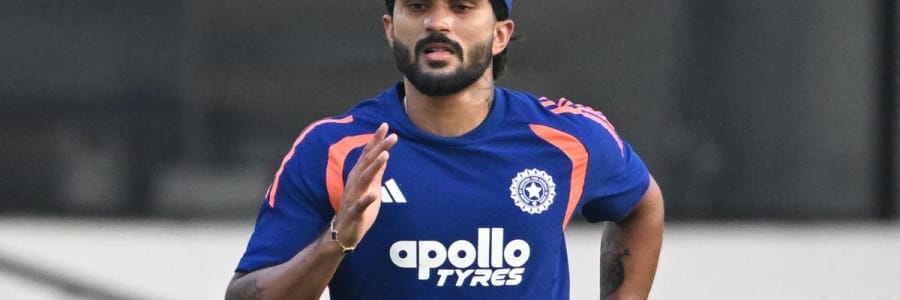
Suryansh Shedge replaces Nitish Reddy in India's T20I squads for Ireland and England after Reddy's left quadriceps injury from the Afghanistan ODI series.India loses two seam-bowling all-rounders simultaneously. Hardik Pandya is also unfit to bowl full spells, leaving the balance of the T20I squad fragile.Shedge, 23, gets a debut chance. Reddy faces 4+ weeks of rehab. Captain Shreyas Iyer must reconfigure the middle order and fifth-bowler role.
What earned Shedge this call-up specifically?
Shedge scored 147 runs in 5 matches for India A in a recent tri-series in Sri Lanka, batting middle order and bowling 23 overs. He also hit 131 runs at a strike rate of 251.92 for Mumbai in their Syed Mushtaq Ali Trophy win in 2024-25. His dual skills made him a direct like-for-like pick.
How did Shedge perform in the SMAT final?
Mumbai won the 2024-25 Syed Mushtaq Ali Trophy with Shedge as a lower middle-order finisher. His strike rate of 251.92 across the tournament marked him as an explosive hitter in death overs. T20 domestic tournaments serve as India's primary scouting ground for white-ball squads.
What role did he play in the Sri Lanka series?
In Sri Lanka, Shedge batted at No. 5 or 6 for India A and bowled medium pace across all 5 matches. Selectors use India A tri-series as auditions. Players like Tilak Varma and Yashasvi Jaiswal similarly earned senior call-ups after strong India A performances in recent years.
Is Shedge comparable to Reddy's skill set?
Reddy bats top 5 in Tests and bowls 135+ kmph seam. Shedge is a middle-order batter who bowls medium pace around 125 kmph. Structurally, Indian cricket lacks seam-bowling all-rounders. Hardik Pandya, Reddy, and Shedge represent three tiers of pace capability, and India's balance depends on which tier is available.
Could India's pace push have caused the injury?
Reddy increased bowling pace from late 120 kmph to mid 130 kmph after training with independent fast bowling coach Steffan Jones. Many believe his body couldn't adjust to the sudden speed uptick. He reported quadriceps discomfort after the third Afghanistan ODI on Jun 20. His MRI showed fiber disruption, not just soreness.
How long is Reddy's typical recovery timeline?
The BCCI set a minimum 4-week rehab period before Reddy can begin Return To Play protocols. The timeline could extend further. For comparison, Jasprit Bumrah's back stress fracture in 2023 kept him out for months. Quadriceps fiber disruption typically requires 6 to 8 weeks before match-intensity bowling resumes.
Did Steffan Jones's coaching change his action?
Jones, an independent fast bowling coach, helped Reddy add ~10 kmph to his pace. Increasing speed demands a longer, more forceful front-foot landing. This generates higher ground reaction forces through the quadriceps. Bowlers like Shaun Tait and Brett Lee historically dealt with similar injury patterns when pushing for extreme pace.
Why are quad injuries so common for pacers?
Fast bowlers generate 5 to 8 times their bodyweight in force through the front leg at delivery stride. The quadriceps absorbs this load eccentrically. When a bowler suddenly adds pace, the muscle faces loads it hasn't adapted to. Cricket's dense scheduling, like back-to-back ODIs and T20Is, leaves insufficient recovery time between high-intensity spells.
Who fills Pandya and Reddy's bowling overs?
With both Pandya and Reddy unavailable, India's fifth-bowler role falls to part-timers like Shivam Dube or Tilak Varma. Shedge bowled medium pace in Sri Lanka but is unproven internationally. Captain Shreyas Iyer may need Axar Patel or Washington Sundar to stretch beyond their usual spin quotas.
Can Dube or Varma bowl 4 overs reliably?
Shivam Dube bowls medium pace but rarely completes 4 overs in T20Is. His economy rate exceeds 10 runs per over internationally. Tilak Varma bowls occasional off-spin, not seam. Neither replicates a genuine fifth seamer. Captains typically use them for 1 to 2 overs in low-pressure phases, not as full bowling options.
How does this affect India's UK tour strategy?
Without a seam-bowling all-rounder, India likely fields 4 specialist bowlers plus a part-timer. In English conditions, where seam movement is significant, this weakens depth. Captain Iyer may prefer 3 seamers (Arshdeep, Harshit Rana, Prasidh Krishna) plus 2 spinners, relying on batting depth instead of bowling flexibility.
Does India have other seam all-rounders ready?
India's seam all-rounder pipeline is thin. Venkatesh Iyer was tried but dropped. Vijay Shankar never sustained form. Structurally, Indian domestic cricket produces more spin all-rounders because pitches favor spin. Fast-bowling all-rounders require sustained pace programs. Only NCA-trained players like Reddy have emerged recently, making each injury costlier to the squad balance.
Source: thehindu.com