world · 2026-03-22
Skylight Attack Survivors Reach Mumbai
040d0d6e-78bf-40fe-a67c-bfb3b8fc5d0c
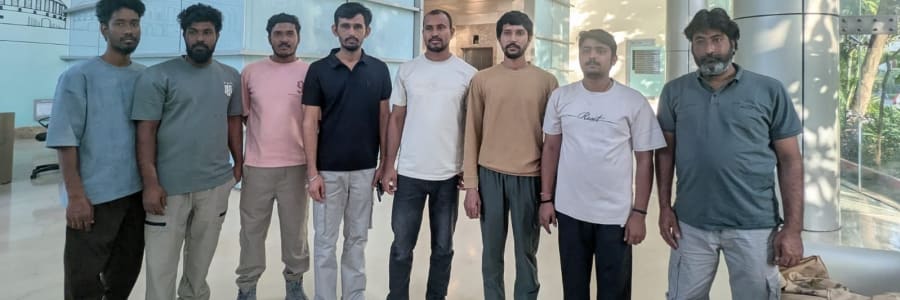
Eight Indian seafarers survived the Skylight missile attack in the Strait of Hormuz and reached Mumbai on WednesdayThe survivors were farmers' sons, mechanics, and first-generation dreamers whose families depended on maritime incomeThey visited the DG Shipping office three days after landing, navigating bureaucratic processes to resume disrupted lives
What does this attack reveal about India's systemic failure to protect its seafarers in conflict-zone shipping lanes?
India has roughly 240,000 active seafarers, many deployed on foreign-flagged vessels with limited government oversight in conflict zones. The Skylight attack exposed gaps in real-time monitoring and evacuation protocols. [DG Shipping's post-arrival processing in Mumbai] suggests reactive, not preventive, infrastructure for crew safety.
What specific gaps in India's maritime policy did the Skylight attack expose?
India lacks mandatory conflict-zone risk assessments for crew deployment. Unlike the UK's [Maritime Trade Operations center], India has no dedicated real-time advisory system that tracks crew nationality across foreign-flagged ships operating near active hostilities.
How do foreign-flagged vessels complicate India's ability to protect its own nationals at sea?
When Indian nationals crew ships flagged in [Panama or Liberia], the flag state bears primary responsibility. India's diplomatic leverage is limited because it has no jurisdiction over the vessel, creating a protection gap for its own citizens.
What would a credible early-warning system for Indian seafarers in conflict zones look like?
A functional system would integrate [AIS vessel-tracking data] with conflict intelligence feeds, alerting DG Shipping when Indian-crewed vessels enter high-risk corridors. Pre-deployment briefings and mandatory insurance top-ups for conflict routes would add preventive layers.
Why are first-generation rural Indians disproportionately the ones crewing ships through the world's most dangerous waters?
Maritime jobs offer 3 to 5 times rural wages, pulling young men from farming families into global shipping. Recruitment pipelines in states like [Maharashtra and Kerala] funnel workers with limited bargaining power onto routes through conflict zones, where risk premiums rarely reach the crew themselves.
How do maritime recruitment agencies in India price risk for dangerous routes?
Most agencies offer flat wages regardless of route risk. Conflict-zone bonuses, when they exist, are modest. [A typical bonus might be $200 to $500 per transit] through Hormuz, a fraction of the risk premium the shipowner collects through elevated freight rates.
What role do caste and class play in determining who ends up on high-risk shipping routes?
Lower-caste and economically marginalized men from [rural Maharashtra and coastal Odisha] disproportionately fill engine-room and deck roles. Higher-ranking officer positions, which carry more route-negotiation power, skew toward urban, upper-caste candidates with expensive maritime academy degrees.
Why haven't Indian seafarer unions pushed harder for conflict-zone protections?
Indian seafarer unions like [the National Union of Seafarers of India] have limited leverage because most members work on foreign-flagged ships governed by foreign labor law. Collective bargaining breaks down when the employer, flag state, and crew nationality are all different jurisdictions.
How does a Hormuz disruption ripple through India's economy beyond just oil prices?
India imports over 85% of its crude oil, and roughly 20% of that transits the Strait of Hormuz. Disruptions spike shipping insurance costs, which cascade into [higher LPG and diesel prices domestically]. Freight rate volatility also hits India's own export competitiveness in chemicals and textiles.
What share of India's energy imports actually passes through Hormuz versus alternative routes?
About 20% of India's crude imports transit Hormuz, but the figure rises to over 60% when you include imports from [Iraq, Saudi Arabia, Kuwait, and the UAE combined]. Diversification toward [Russian crude via northern routes] has partially reduced but not eliminated this chokepoint risk.
How quickly do Hormuz disruptions translate into Indian retail fuel prices?
Indian fuel prices are partly regulated, so the government absorbs initial shocks through [oil marketing companies like IOC and BPCL]. But sustained disruptions over 2 to 3 weeks force retail price hikes, as the excise duty buffer narrows and OMC losses mount.
What strategic alternatives is India building to reduce Hormuz dependency?
India is expanding its [Strategic Petroleum Reserve to 22 days of imports] and investing in the [Chabahar port corridor] to diversify access. Long-term LNG contracts with [the U.S. and Australia] also reduce gas dependency on Gulf transit routes through Hormuz.
Source: indianexpress.com