politics · 2026-03-06
Tarique Rahman to be Bangladesh PM
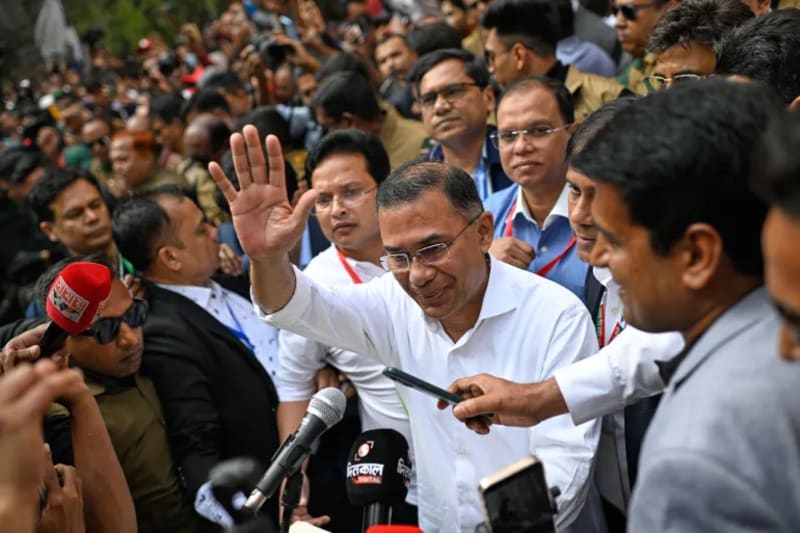
Bangladesh held elections on February 12. The Bangladesh Nationalist Party (BNP) won 209 seats out of 300.Tarique Rahman is set to become Prime Minister. He's the son of BNP founder Ziaur Rahman and spent 17 years in London exile.This is the first competitive election since 2008. Sheikh Hasina's Awami League, which ruled for 16 years, was banned from participating.Nobel laureate Muhammad Yunus ran an interim government since August 2024, after student protests forced Hasina to flee to India.
Wait, how could Bangladesh not have fair elections since 2008?
Sheikh Hasina's government controlled the system. In 2011, they removed the requirement for neutral caretaker governments during elections.Opposition leaders were jailed (Khaleda Zia got 17 years in 2018 on corruption charges). The 2014 election saw the BNP boycott after their demands for neutral oversight were rejected. In 2018, election day reports showed polling booths stuffed with ballots the night before.Courts fell in line. In 2024, a High Court judge reinstated job quotas that Hasina had abolished in 2018 - convenient timing that sparked protests.
What gives the Awami League so much power historically?
Three things. Sheikh Mujibur Rahman (Hasina's father) led the 1971 independence war. That legacy gave the Awami League legitimacy.Hasina built a security network. The police, Rapid Action Battalion (known for extrajudicial killings), and student wing Bangladesh Chhatra League attacked protesters.India maintained close ties with Hasina throughout. When Western governments criticized her January 2024 election as unfair, she stayed in power. India needed her for counterterrorism cooperation and keeping China out.
You said the military refused to fire - isn't that the opposite of how Pakistan's military operates?
Exactly backward. Pakistan's military runs things, politicians are puppets. Bangladesh had strong civilian control, weak military interference.The Awami League built power through bureaucratic control—controlling who gets government jobs, contracts, permits—not through tanks.When crisis hit, Bangladesh's generals made a different calculation. They saw protests spreading to every city. Shooting students would make them the villains. They chose institutional survival over the regime.
Have people tried toppling the Awami League before and failed?
Yes, multiple times. In 2013, protests erupted when Jamaat-e-Islami leaders were executed for 1971 war crimes. Security forces crushed them.In 2018, students won the first quota reform. Hasina abolished quotas. But in 2024, courts brought them back—showing even "victories" were reversible.Each failure taught lessons. By 2024, students weren't negotiating. They wanted Hasina gone. They built cross-class support (garment workers, rickshaw pullers joined). They prepared for violence.
What should I know about the new PM and his party?
Rahman is 60, never held office before. His father founded the BNP in 1978 and was president until assassination in 1981. His mother Khaleda Zia served as PM three times, died December 2025.He fled to London in 2008 facing corruption charges, which were overturned after Hasina's fall.His pitch: "Bangladesh First" - he wants to balance relationships with India, China, Pakistan instead of exclusively relying on Delhi. Promises job creation through family aid cards and diversifying exports beyond garments.
How will relations with India likely play out?
Messy. PM Modi called Rahman, congratulated him. BNP says they'll invite Modi to the swearing-in ceremony.But Bangladesh's public is angry at India. During the protests, India sheltered Hasina while students died. Rahman needs India for water-sharing deals (Teesta River), border security cooperation.His tightrope: stay friendly enough for practical cooperation, distant enough to avoid looking like India's puppet. Dhaka wants Hasina extradited for trial. India won't do it.
What's the approach to China and other major powers?
China is Bangladesh's largest trading partner. Rahman wants deeper investment without political conditions attached.Pakistan: The interim government already resumed direct flights, military visits. Some analysts think Bangladesh could buy Pakistan's JF-17 fighter jets.US: Washington called Hasina's 2024 election unfair. They prefer this democratic transition to autocracy. Expect closer ties, especially on economic development.
Does Muhammad Yunus stay involved or exit completely?
Yunus will hand over power peacefully. His job was holding credible elections—he delivered.His reform package passed in a referendum held alongside the election. Got 65% support. Includes restoring caretaker governments, creating a second legislative chamber, limiting PM terms to 10 years.Yunus will likely return to microfinance and development work. His legacy: preventing chaos, delivering Bangladesh's first legitimate election in 16 years.
How did Gen-Z protests succeed in toppling Sheikh Hasina?
The protests weren't spontaneous. Students had been organizing since 2018 (when two teens were killed by a bus, sparking road safety protests) and 2019 (when a student was killed for criticizing the government online).In June 2024, courts reinstated a job quota system. Students saw it as favoritism for ruling party families.The crackdown killed over 1,400 people. The tipping point: the military refused orders to fire on protesters. Hasina fled within weeks.
How come so many Gen-Z protests in South Asia?
Demographics and technology. Gen-Z across Nepal, Bangladesh, Sri Lanka grew up with smartphones. They saw economic growth (Bangladesh's GDP grew) but couldn't get jobs. Youth unemployment stayed high.They watched governments claim success while blocking opportunities. The job quota issue crystallized this: you can't get hired on merit, only through political connections.Social media let them organize faster than governments could shut them down. They learned from each other—Hong Kong's tactics, Thailand's protests. Governments built for controlling newspapers couldn't control TikTok.
Why did India give refuge to Sheikh Hasina?
Hasina's father led Bangladesh's independence, backed by India in 1971. When he was assassinated in 1975, India gave refuge to Hasina and her sister for six years.For 15 years, Hasina gave India what it wanted: crackdowns on insurgents in India's northeast, blocking Chinese naval access to Bangladesh ports, counterterrorism cooperation.India faces a tough choice. Extraditing Hasina (who faces death penalty) signals India abandons allies. Keeping her strains relations with Bangladesh's new government. Modi's government chose loyalty to an old ally over building new ties.
Will this new govt hold or are fractures emerging?
Mixed signals. BNP's 209 seats mean no coalition chaos. They can govern alone.But Rahman has never held office. He faces inflation, youth unemployment, climate disasters. The hard part starts now.Watch Jamaat-e-Islami, which won 68 seats and sits in opposition. Watch internal BNP discipline—they expelled 10,000 members for extortion in recent months. Rahman promised reforms. His party is built on patronage networks. That tension will define whether this holds.