politics · 2026-11-09
Telangana wins 550 acres after 32-year land fight
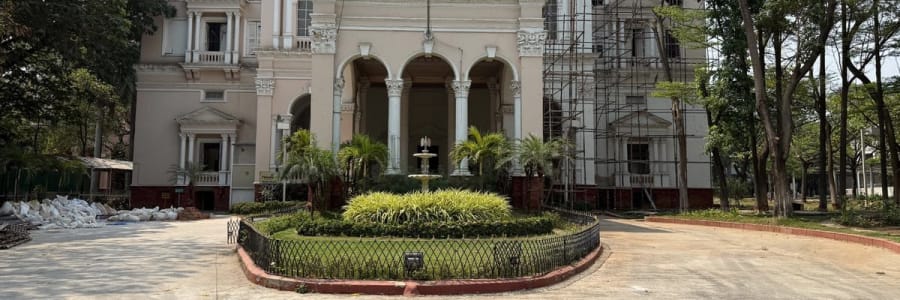
Photo: via The Hindu
The Supreme Court gave Telangana control of land worth over ₹55,000 crores. That is about one-sixth of the state's yearly budget, money it could use for public projects.
Who owned the 550 acres before Telangana got it back?
The land was originally a jagir, a revenue grant, given to Abu'l Fateh Khan's family by Nizam Ali Khan in 1784 to maintain soldiers for the royal army. A jagirdar collected revenue but never owned the land. In 1949, Hyderabad's government abolished all jagirs, so the land legally reverted to the state.
Why did a 1784 royal grant still matter in 2026?
The 1784 grant created a jagir, a right to collect revenue, not ownership. That distinction survived because Hyderabad's legal system kept the original deed on record. When India abolished jagirs in 1949, the land reverted to the state. The Supreme Court read the 1784 deed literally to defeat later private claims.
Why did the court overlook the 1951 entry naming a private owner?
The Supreme Court went back to the original 1784 deed and the definition of a Paigah jagir, which was a grant of revenue collection rights, not land ownership. Since the jagirdar never held title, the court ruled that the 1951 insertion of Raheemunissa Begum's name in the land records was invalid, despite being entered in Column No. 14. The court prioritized the legal character of the original grant over later administrative amendments ().
Does the ruling set a precedent for other disputed jagir lands?
The court's reasoning is tied to the specific 1784 Paigah deed, which it read literally to establish that a jagir grants revenue collection rights, not title. This logic could apply to other jagir disputes where the original grant defines the land's character. However, the 1949 Abolition of Jagirs Regulation already ended all such grants, so the ruling primarily clarifies how courts should interpret old deeds when records have been altered, as in the 1951 insertion. Our read: the precedent is narrow, focused on Paigah lands, and unlikely to open a floodgate of claims.
What happens to the land now that it belongs to the state?
The Supreme Court ruling gives Telangana full control of the 550.39-acre parcel in Miyapur, valued at upwards of ₹55,000 crores. The state can auction the land and use the proceeds for welfare measures, or follow activists' advice to create a corpus for education. The land sits in Rangareddy district, which has India's highest per-capita income at ₹11.46 lakh, making it prime real estate. Our read: Telangana will likely monetise the asset through auction given its budget needs, though the timing depends on market conditions.
Why did the Paigah family lose the land if they once held it legally?
The Paigahs' right was always tied to a condition: maintaining soldiers for the Nizam. When that obligation lapsed, the Nizam ordered inquiries, and a 1912 survey classified Miyapur land as "sarkari porombok," meaning government-owned vacant land (). Although the 1927 Reilly Commission briefly restored some land to the family, the Nizam's firman barred them from selling or pledging it (). The 1949 abolition then definitively reverted all jagir lands to the state, ending the Paigahs' claim (). Our read: the family's control was conditional service tenure, not private property.
Can other old land grants be reclaimed this way?
The 1949 Abolition of Jagirs Regulation already returned all jagir lands to the state, so this ruling does not create new claims. What it does is clarify how courts should read original deeds when later records have been altered, as with the 1951 insertion of Raheemunissa Begum's name. The precedent is tied to the specific 1784 Paigah deed, which the court read literally to distinguish revenue collection rights from ownership. Our read: the ruling is unlikely to open a floodgate of similar claims, since most such disputes would hinge on comparable documentary evidence and legal character.
Who ends up paying for the decades of disputed land records?
The state ultimately absorbs the cost, because the land's market value depends on clean records. The 1951 insertion of Raheemunissa Begum's name contradicted entries marking the land as government-owned, creating uncertainty that likely depressed the parcel's value for decades (). Now that the Supreme Court has read the 1784 deed literally to restore state control, Telangana can auction the land, valued at over ₹55,000 crores, or use it for welfare and education (). Our read: taxpayers effectively lose when bureaucratic errors cloud titles, and gain when courts untangle them.
What stops this from happening again with other old grants?
The Abolition of Jagirs Regulation of 1949, a law ending all such grants, meant no new jagirs can be created. But disputes still arise when old records are altered, as in 1951 when a private name was inserted. Clean land records and strict checks on amendments are what prevent a repeat.
Was the land a royal gift from the Nizams?
Yes. In 1784, Nizam Ali Khan granted land to Abu'l Fateh Khan to maintain soldiers for the Nizam. This was a jagir, a revenue grant for military service, not ownership. The deed specified the land was "for Paigah expenses and the maintenance of risala," meaning soldiers. So it was a royal gift, but with a duty attached, not a personal estate.
Who can still claim this kind of land?
The 1949 Abolition of Jagirs Regulation ended the jagir system, so no new grants can be created. But existing disputes survive when old records are altered, as in 1951 when a private name was inserted into the Miyapur land deed despite official entries marking it government land. The Supreme Court's 2026 ruling went back to the original 1784 deed to decide ownership. Our read: anyone holding a similar claim will now be judged strictly on the original grant's terms, not on later paperwork amendments, making it harder for private claimants to succeed.
What does the government actually get to do with the land?
The ruling gives Telangana full control of the 550-acre parcel in Miyapur, valued at over ₹55,000 crores, roughly one-sixth of the state's annual budget. The government can auction the land and use the proceeds for welfare measures, or follow activist Akunuri Murali's suggestion to create a corpus and invest the money in education. Either way, the land now belongs to the state, settled by the Supreme Court's reading of the original 1784 deed as a grant for military service, not private title.
What would stop the government from just selling it all at once?
Nothing in the ruling stops a sale, but the land's value of over ₹55,000 crores, about one-sixth of Telangana's annual budget, makes how it is used a political choice, not a legal one. The government can auction the parcel for welfare spending, or follow activist Akunuri Murali's suggestion to create a corpus and invest the proceeds in education. Our read: the government will spread the sale over years, because dumping 550 acres of prime Hyderabad land at once would flood the market and depress the price it can get for the rest.
Why did the court trust a 1784 deed over later official records?
The 1784 deed was the original grant that defined the land as a jagir, a right to collect revenue for maintaining soldiers, not a title of ownership. The Supreme Court read this definition literally to defeat later private claims, including a 1951 insertion of a private name in the land deed despite official entries marking the land as government-owned. Our read: the court treated the original grant as the only reliable record, because the later amendments were done by low-ranking bureaucrats and contradicted the deed's clear purpose.
What made the Paigah lands so vast in the first place?
The Paigah jagirs grew because they were tied to the Nizam's practice of dividing his kingdom: roughly one third went to his own treasury, one third to government expenses, and the remaining third was distributed as jagirs or feudal estates to trusted nobles. The Paigahs, being the most powerful nobles, held lands that by 1909 spanned 4,134 square miles, about the size of Lebanon. These were military fiefs, and the holder had the right to collect revenue, not outright ownership.
Why did the court trust an old deed over a government survey?
The 1912 government survey classified the Miyapur land as sarkari porombok, or vacant land belonging to the government. But in 1927, the Paigah Commission of Justice D'Arcy Reilly restored the same land to a Paigah descendant, and the Nizam's firman said Paigah amirs could not sell or pledge it. The Supreme Court went back to the 1784 deed's definition, holding that a jagir grants revenue rights, not title. Our read: the 1912 survey was overridden because it was a single administrative record, while the deed defined the land's legal nature for centuries.
How did the 550-acre parcel end up in dispute?
The land was originally a Paigah jagir, a grant to maintain troops for the Nizam, not ownership. By the early 1900s, the Paigah Army's role shrank, so the Nizam launched inquiries. A 1912 survey marked the parcel as government land, but a 1927 commission restored it to the Paigah family. In 1949, jagirs were abolished, reverting land to the state. However, a 1951 land deed wrongly inserted a private claimant's name, sparking the dispute.
Who actually owns land under a jagir grant?
A jagir gave the holder only the right to collect revenue, not the land itself. The Supreme Court's 2026 ruling stressed this: the 1784 grant was for Paigah expenses and maintaining soldiers, so it was a grant of revenue, not title. The Nizam even barred Paigah Amirs from selling or pledging the land. When jagirs were abolished in 1949, the land reverted to the state because the jagirdar never had ownership to pass on.
What happens to the land now that the state owns it?
The Telangana government can do two things with the 550-acre parcel in Rangareddy district, which has India's highest per-capita income at ₹11.46 lakh. It can auction the land, valued at over ₹55,000 crores, about one-sixth of the state's annual budget, and announce welfare measures. Alternatively, activists like Akunuri Murali suggest creating a corpus from the sale proceeds and investing it in education. Our read: the state will likely auction it, given the immediate revenue needs of a growing Hyderabad.
Can the state actually sell or use the land freely?
The Supreme Court's ruling gives Telangana control, but the land's history may still bind it. The 1784 grant was for Paigah expenses and soldiers, not ownership, so the state's title is clear. Yet, the Nizam's firman barred Paigah Amirs from selling or pledging the land, and jagir abolition in 1949 returned it to the state. Our read: the state can auction it, but must navigate any existing legal claims or public interest challenges before free use.
Why did the court trust a 1784 deed over newer records?
The Supreme Court read the meaning of a Paigah jagir from the original 1784 grant: it was "for Paigah expenses and the maintenance of risala (soldiers)," which the court said is an estate granted for maintaining an army, not ownership of the land itself. Later documents, like the 1951 pahanies that inserted Raheemunissa Begum's name as patta holder, contradicted the earlier classification of the land as "Poramboke" and "Sarkari" in the same deed. The court used the 1784 deed to correct those later errors. Our read: the ruling affirms that the original purpose of the grant, not later paperwork, defines what the land was for.
Does the state get any compensation for the decades it lost the land?
No, the Supreme Court ruling simply gives Telangana control of the land, effective immediately. The legal battle lasted 32 years, but the judgment does not provide for compensation from the parties who held or claimed the land during that period. The state's remedy is possession of the land itself, valued at over ₹55,000 crores, which it can now use or sell. Our read: the ruling closes the dispute without retroactive damages, so the state's gain is the land's future value, not a payout for past losses.
What made the Paigah jagirs so much bigger than other land grants?
The Paigah were a unique class of Shia Muslim nobles, second only to the Nizam, related by blood and marriage, and the only nobles allowed to maintain private armies. By 1909 their jagir lands covered 4,134 square miles, about the size of present-day Lebanon, across 1,273 villages. They received these enormous grants specifically to maintain household troops for the Nizam's service, making them states within the state rather than ordinary revenue collectors.
Source: thehindu.com