world · 2026-03-12
US and Israel are at war with Iran
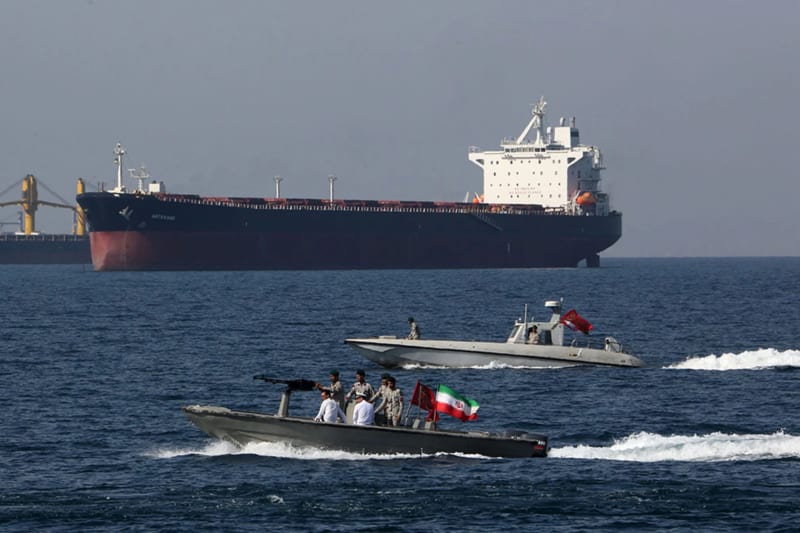
On February 28, the US and Israel launched coordinated strikes on Iran. They killed Supreme Leader Ayatollah Ali Khamenei (in power since 1989) and targeted nuclear facilities.Iran retaliated. They fired missiles at Israel, hit US military bases across the Gulf (in Kuwait, UAE, Bahrain, Qatar), and closed the Strait of Hormuz to oil tankers.The war is now in its sixth day. At least 787 people dead in Iran, 11 in Israel, 6 US soldiers killed. Trump says it will last four weeks.Oil prices jumped 13% to $82 per barrel. Global shipping through the Gulf has stopped.
How do the two sides match up militarily?
US and Israel have overwhelming air superiority. Two US aircraft carriers in the region (USS Abraham Lincoln and USS Gerald R. Ford), each carrying 60 aircraft. Israel's F-35 stealth fighters can strike anywhere in Iran.Iran can't win a conventional war. Their strategy: missiles and drones. They've fired over 400 ballistic missiles so far. The IRGC (Islamic Revolutionary Guard Corps) operates 230 fast attack boats designed for swarm tactics in narrow Gulf waters.Iran's real weapon is geography. They can close the Strait of Hormuz (20% of global oil passes through). They have proxy forces across Iraq, Yemen, Lebanon.
Will this be short or drag on for years?
Trump says four weeks. Military analysts are skeptical.Air campaigns can destroy infrastructure quickly. The US has conducted 2,000+ strikes already (as of March 1). Iran's air defenses are degraded. Nuclear facilities at Natanz took significant damage.But regime change requires boots on the ground. The US has 190,000 IRGC members to deal with, plus up to 1 million Basij militia who can be mobilized. Iran is mountainous, three times the size of Iraq. No US ground invasion is planned yet.
You said Iran uses fast boats and missiles. How does that actually work against aircraft carriers?
They can't sink a carrier. But they can make the Gulf extremely costly to operate in.The IRGC uses "swarm tactics." Dozens of small boats, each armed with anti-ship missiles, attack from multiple directions simultaneously. US ships can defend against this, but it ties up resources.Missiles are the bigger threat. Iran has fired ballistic missiles at US bases (178 intercepted by Kuwait alone, 169 by UAE). Some get through. A missile hit near Jerusalem on March 1 killed 9 people. Iran keeps firing because they have large underground stockpiles.
What are the highest-risk targets for the next attacks?
Energy infrastructure. Iran attacked oil tankers near Oman (at least 5 damaged, 2 crew killed). They hit the Burj Al Arab hotel in Dubai (believed to house US personnel).Israel will likely target Iran's remaining nuclear sites. The Natanz facility was hit, but Iran claims other sites are intact.Watch Hezbollah in Lebanon. They fired rockets at northern Israel on March 2 "avenging Khamenei's death." Israel responded with massive strikes on Beirut (40 dead). This could open a second front.
Why attack now? Nuclear programs have existed for decades.
Trump set a 10-day deadline on February 20 for Iran to abandon its nuclear program. Talks in Geneva failed on February 26.Timing matters. Iran was at its weakest point in years. In January 2026, security forces killed thousands during massive protests. Assad's government in Syria (Iran's key ally) fell in December 2024. Hezbollah in Lebanon was decimated by Israeli strikes in 2024.The nuclear program was accelerating. After Trump pulled out of the 2015 nuclear deal in 2018, Iran started enriching uranium again. US intelligence claimed Iran was close to weapons capability.
How significant is Khamenei's death really?
Massive. Khamenei wasn't just a leader, he was the entire system's foundation. He had final say on everything since 1989 (nuclear policy, military strategy, foreign relations).His wife also died from injuries in the same strike on March 2. There's no clear successor. Iran's constitution says the Assembly of Experts picks the next Supreme Leader, but that takes time.The IRGC declared 40 days of mourning and vowed "the heaviest offensive operations in the history of the armed forces." Expect escalation during the mourning period.
Who supports Iran and how are Middle East countries splitting?
The Gulf Arab states are caught in the middle. Saudi Arabia, UAE, Bahrain all host US bases. Iran is hitting them with missiles (Kuwait intercepted 178 ballistic missiles and 384 drones as of March 2).China and Russia held joint naval exercises with Iran in February in the Gulf of Oman. They're providing intelligence support but not joining the fight directly.Pakistan stayed neutral. Turkey condemned the strikes. European countries are split (France backed the operation, others called it illegal). India is trying to balance (more below).
Could we see full-blown World War 3 from this?
Unlikely but not impossible. The conflict is regional, not global.Russia and China support Iran but won't fight the US directly. European countries are divided (some called the strikes illegal, others backed them). No NATO Article 5 trigger.The risk: miscalculation. If Iran hits a US base and kills 50+ soldiers, Trump might escalate dramatically. If Hezbollah fully enters, Israel might invade Lebanon. If Iran blocks the Strait of Hormuz permanently, other countries' economies suffer and they get drawn in. Each escalation increases the risk.
What are the economic ripple effects beyond oil prices?
Oil jumped 13% to $82 per barrel, heading toward $100 if the Strait stays closed. But that's just the start.Shipping costs exploded. Tanker rates from Middle East to China hit $423,736 per day (up 94% from February 28). Insurance companies cancelled war risk coverage for the Gulf. Ships now reroute around Africa, adding weeks to delivery.Watch jet fuel (30% of Europe's supply transits the Strait), liquefied natural gas (20% of global LNG passes through), and container shipping (Dubai and Abu Dhabi airports closed, stranding thousands of passengers).
Where do oil tankers have to come from now?
Around Africa's Cape of Good Hope. The Strait of Hormuz is effectively closed (Iran threatened to set ships "ablaze" if they pass).This adds 3-4 weeks to transit times. A tanker from Saudi Arabia to China normally takes 12 days through Hormuz. The Africa route takes 40+ days. Costs multiply: fuel, crew wages, insurance.War risk insurance was removed for vessels entering the Persian Gulf starting March 5. Major insurers (Gard, Skuld, NorthStandard, London P&I Club) all cancelled coverage. Without insurance, tanker owners legally can't operate. At least 150 tankers are anchored outside the Strait waiting.
How hard is India getting hit on oil imports?
Quite hard. India imports 85% of its crude oil. About 60-65% normally comes through the Strait of Hormuz (from Saudi Arabia, UAE, Iraq, Kuwait).India's government said on March 3 that "any major disruption will have serious consequences for the Indian economy." They're scrambling to find alternative suppliers and routes.Immediate impacts: fuel prices will rise domestically. Inflation will spike (India already facing economic pressures). Remittances from Gulf Indians will drop (millions work in UAE, Saudi Arabia, Kuwait where the war is hitting). India's stock market fell 3% on March 1 on war fears.
How long can Iran's economy hold out under war and sanctions?
Not long. Iran's economy was already devastated before this war started.US sanctions since 2018 cut oil exports by over half. Inflation hit 40%+ in 2023. The currency (rial) collapsed. Basic goods became unaffordable for millions.Now oil exports have stopped completely (Strait of Hormuz closed). Reserves are being burned through. Iran exported oil at 3x normal rate in mid-February anticipating the war, but those stockpiles won't last months. The economy could collapse within weeks unless oil shipments resume.