business · 2026-07-09
US-Iran Deal Collapse Rattles FMCG
01dffcd4-331f-4cc7-b47b-048b08510cca
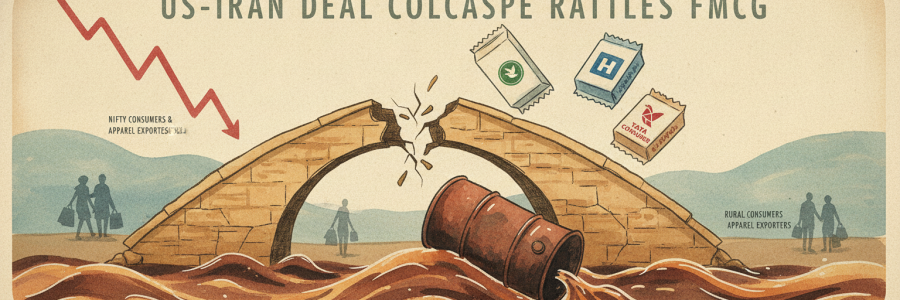
The US-Iran peace deal collapsed within a month. Trump declared it over and ended sanctions waivers on Iranian energy, pushing crude prices higher.Nifty FMCG Index fell 2.49% on Wednesday, with Dabur, HUL, and Tata Consumer dropping 3-4% each as higher oil threatens input costs and demand recovery.FMCG firms like HUL that planned volume-led growth now face renewed inflation risk. Rural consumers and apparel exporters also face fresh headwinds.
What crude-linked inputs hit FMCG hardest?
Crude oil feeds into plastic packaging, petroleum-based ingredients in soaps and creams, and transport fuel. Dabur, Emami, and Godrej Consumer all use crude-derived inputs heavily. In the Mar quarter, many had already raised prices or cut grammage on packaged food and personal care products to absorb earlier cost increases.
How much did crude rise after the deal fell?
Brent crude jumped on Wednesday after Trump's announcement, contributing to the Nifty50's 2.12% decline. The speed of the move reflects how thin the buffer was. Markets had priced in the Jun 18 ceasefire as durable, so reversal triggered a rapid repricing of risk across energy-sensitive sectors.
Which FMCG raw materials track crude closest?
Plastic packaging, made from petroleum-derived polymers like polyethylene, tracks crude almost directly. LAB (linear alkylbenzene), a key surfactant in detergents, is another. For example, Godrej Consumer's soap margins are heavily exposed to palm oil and LAB, both of which correlate with crude within a 2-3 month lag.
How quickly do crude spikes reach store shelves?
Typically 2-6 months, per consultant Arvind Singhal. Manufacturers first draw down existing inventory bought at older prices. Once that buffer is exhausted, procurement costs reset. Companies then choose between margin compression or grammage cuts. In India's price-sensitive rural market, even a ₹5 increase can shift consumers to cheaper local brands.
Could HUL's volume-growth plan survive this?
HUL told analysts earlier this year it would drive growth through higher volumes, not price hikes. A sustained crude spike forces a painful reversal: either absorb margin compression or raise prices and lose the volume gains. Deloitte's Financial Well-Being Index shows Indian consumers spending selectively, concentrating on essentials while keeping discretionary purchases subdued.
Why can't FMCG firms just hedge oil exposure?
Most Indian FMCG companies do not hedge crude derivatives the way airlines hedge jet fuel. Their exposure is indirect, spread across dozens of petroleum-derived inputs. Hedging each one is operationally complex. HUL, for instance, buys hundreds of raw materials, making a single crude hedge an imprecise tool that could create new mismatches.
What does erratic monsoon add to the problem?
Monsoon quality drives rural purchasing power, which accounts for ~35-40% of FMCG sales. Deficit rainfall cuts farm yields and incomes. Simultaneously, flooding in other regions disrupts supply chains. In 2026, some regions face both extremes. Dabur, which derives ~45% of revenue from rural India, is especially exposed to this double bind.
How do grammage cuts actually work for firms?
Companies shrink product quantity while holding the sticker price constant. A ₹10 soap bar drops from 100g to 90g. This preserves the price point rural consumers anchor on. Parle Products popularised this with its ₹5 biscuit packs. The trade-off: consumers eventually notice, eroding brand trust if sustained too long.
Who beyond FMCG firms faces the squeeze?
Apparel exporters already grappling with US tariffs now face shipping disruptions through the Strait of Hormuz, raising freight costs. Rural consumers are doubly exposed: erratic monsoons threaten farm incomes while higher fuel costs inflate fertiliser and transport prices. Petrol and diesel price pass-throughs could further compress household budgets.
Are apparel exporters rerouting around Hormuz?
Some exporters explored the Cape of Good Hope route during earlier Houthi disruptions, adding 10-14 days and ~$1M per voyage in extra fuel. For time-sensitive fashion shipments to US and EU buyers, this delay risks order cancellations. Tirupur's knitwear exporters, already absorbing US tariff hits, face margin compression from both sides.
Which rural consumer segments cut spending first?
Discretionary personal care goes first. Rural households prioritise food staples, cooking oil, and soap. Hair oil, skin cream, and packaged snacks get cut earliest. Emami, which derives ~55% of revenue from rural India through products like Boroplus and Navratna oil, saw this pattern during the 2022 inflation spike.
Could govt fuel subsidies shield consumers?
India's current fuel pricing is already partially deregulated. Oil marketing companies like IOC and BPCL absorb some cost, but sustained crude above $85/barrel forces either pump price hikes or fiscal strain. Govt could cut excise duty, as it did in Nov 2021 by ₹5-10/litre, but that reduces revenue available for infrastructure and welfare spending.
Source: livemint.com