economy · 2026-06-23
US Now Tops India's LPG Supply Basket
5c5a371e-1599-4e1b-91f5-df42b3613f59
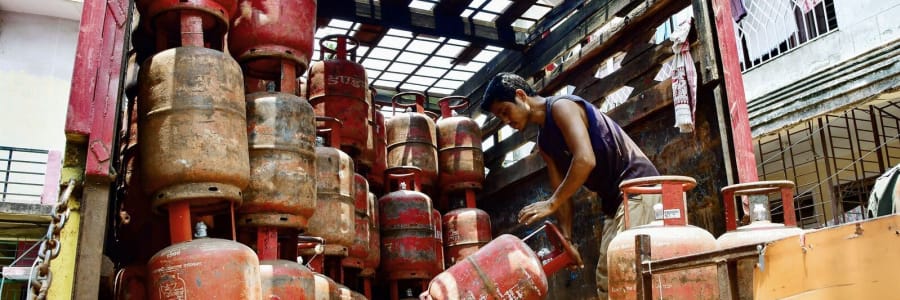
US supplied ~497K tonnes of LPG to India in Jun so far, up from 8% of imports in Feb to ~33% by Apr, replacing UAE as top supplier.India's total LPG imports fell 44% since Mar versus last year. Govt rationed cylinder bookings to 45-day rural intervals as Hormuz disruptions cut Gulf flows.Oil marketing companies, 330Mn+ household LPG users, and state refiners face higher freight costs from longer US shipping routes versus traditional Gulf supplies.
How fast did India pivot away from Gulf LPG?
Remarkably fast. In Feb, the US accounted for just 8% of India's LPG imports. By Apr, that jumped to ~33%. Since Mar, the US has shipped ~1.95Mn tonnes cumulatively. West Asian supplies dropped to less than half pre-war levels, with UAE falling from top supplier to ~613K tonnes over the same period.
What pre-war deal made the US pivot possible?
India signed a 2.2Mn-tonne/year LPG deal with US exporters in late 2025, covering ~10% of annual demand. Crisil noted this contract gave Indian buyers a committed volume base. Without it, the Mar surge to 435K tonnes from the US would have required even costlier spot purchases at panic premiums.
Which new suppliers beyond the US emerged?
India added Argentina, Chile, France, and the Netherlands to its LPG basket. Iran also re-entered, contributing 6% of imports in Apr. This scattering of sources is deliberate. Concentrated supply chains, where 9 in 10 imported tonnes came from one region, proved dangerously fragile when Hormuz closed.
How did West Asian market share collapse?
Pre-war, UAE, Saudi Arabia, Qatar, and Kuwait collectively supplied ~90% of India's imported LPG. Since Mar, UAE shipped ~613K tonnes and Saudi ~413K tonnes, together accounting for roughly 25% of the 4.1Mn tonnes imported. Former Planning Commission member Kirit Parikh noted Gulf producers need time to restore capacity to pre-war levels.
Could India have avoided rationing cylinders?
Likely not, given the scale of disruption. India imports ~65% of its 33Mn-tonne annual LPG demand. Pre-war, ~90% of imports came from West Asia. When Hormuz shipping collapsed, a 44% import drop forced emergency measures. Even the 2.2Mn-tonne US deal signed in late 2025 covered only ~10% of annual needs.
How large is the freight cost gap, US vs Gulf?
A US Gulf Coast to India voyage takes roughly 35-40 days versus 7-10 days from UAE's Jebel Ali. Kpler analyst Sumit Ritolia flagged longer-haul freight as a key cost driver. Shipping rates for very large gas carriers surged during the crisis, adding $30-50 per tonne on top of the commodity price.
Was the 2.2Mn-tonne deal at spot or fixed rates?
The deal, signed in late 2025, likely locked a base price linked to Mont Belvieu benchmark rates, the US LPG pricing hub. However, volumes above the contracted 2.2Mn tonnes were procured on spot markets at significant premiums. Indian buyers like IOC reportedly paid 5-8% above contract rates for emergency spot cargoes.
Could India have stored more LPG pre-war?
India's LPG storage infrastructure holds roughly 15-20 days of consumption, spread across terminals like IOC's Kandla and BPCL's Haldia. Building large-scale underground caverns, similar to India's strategic petroleum reserves at Visakhapatnam, takes 3-5 years. The structural lesson: buffer stocks sized for a 7-day Gulf route are inadequate when supply shifts to 40-day US routes.
Who pays the premium on US LPG shipments?
Ultimately, consumers and oil marketing companies like IOC, BPCL, and HPCL share the burden. US cargoes travel longer routes than Gulf shipments, raising freight costs. India's Apr-May FY27 import bill was $1.47Bn versus $1.96Bn last year, but that reflects lower volumes, not lower per-unit costs.
Will IOC and BPCL pass costs to consumers?
Historically, oil marketing companies absorb short-term shocks and delay price hikes. But IOC reported marketing margin compression in Q4 FY26. If US-sourced LPG remains dominant, per-cylinder costs could rise ₹30-50. Govt may hold retail prices steady pre-elections, shifting losses to OMC balance sheets, as happened during the 2022 Ukraine war.
How does rationing hit rural vs urban users?
Rural users face 45-day booking intervals versus 25 days in cities, effectively cutting rural refill frequency by ~40% compared to pre-war norms. For households in states like UP and Bihar, where LPG adoption under Ujjwala reached ~95Mn connections, this pushes families back toward firewood and dung cakes, reversing clean-cooking gains.
Do subsidy costs rise for the govt too?
Yes. The govt subsidizes LPG for Ujjwala beneficiaries at ~₹300/cylinder. Higher import costs widen the gap between market price and subsidized price. The FY27 petroleum subsidy budget was set at ~₹12K Cr, but Crisil estimates actual outgo could exceed ₹18K Cr if US-route freight premiums persist through the year.
Source: livemint.com