politics · 2026-11-24
Why did a Bisleri water sample fail safety tests?
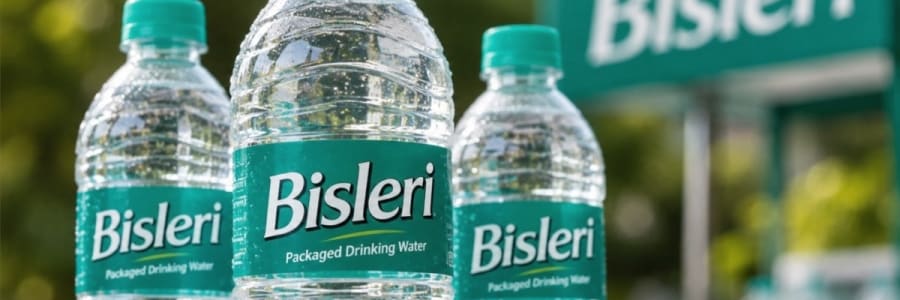
Photo: via Business Today
India's food regulator has approved legal action against Bisleri after two lab tests flagged contaminants in one water sample from its Goa plant. The company disputes the findings, but the case is now in court.
What did the two lab tests actually find?
The first test on the September 2025 sample from Bisleri's Goa plant found bromate at 12 micrograms per litre, over the 10-microgram limit. Bromate forms when ozone purification reacts with natural bromide. After Bisleri appealed, a referral lab found bromate within limits but flagged polynuclear aromatic hydrocarbons (PAHs), a separate contaminant group. A third FSSAI-approved test also cleared bromate.
What did the two official tests find in Bisleri's sample?
The first test on the September 2025 sample from Bisleri's Goa plant found bromate at 12 micrograms per litre, against the 10-microgram limit. After Bisleri appealed, a referral lab found bromate within limits but flagged polynuclear aromatic hydrocarbons (PAHs). Five of the six samples collected met all standards.
What did Bisleri's own independent lab test show?
Bisleri arranged for the same sample to be tested at an independent FSSAI-approved laboratory. According to Bisleri, that test found bromate within the prescribed limit. The company submitted these results to FSSAI's Western Regional Office with a letter dated February 2, 2026, but says it received no further communication and understood the matter closed.
Why did the two official tests flag different contaminants?
The two official tests flagged different contaminants without a published explanation. The first found excess bromate; the referral lab, after Bisleri's appeal, found bromate within limits but detected PAHs. Bisleri says the discrepancy raised questions, and an independent FSSAI-approved test also found bromate within limits. FSSAI's statement doesn't explain why results differed.
Why did FSSAI proceed despite the independent test?
Because the regulator's own rule is that a referral lab's declaration of a sample as unsafe is enough to prosecute, even when that lab's grounds differ from the first test. Bisleri's complaints about receiving no notice and its conflicting independent results are real, but they do not erase the second lab's finding. The FSSAI sanctioned prosecution on November 22, 2026, after the referral lab flagged PAHs, which it counts as a violation.
Why did FSSAI act on the referral lab over the independent test?
The referral lab upheld the unsafe classification, flagging PAHs, and FSSAI's official communication says these findings established violations under the FSS Act, 2006. Bisleri's independent test addressed only bromate, not PAHs. FSSAI has not publicly explained why it did not respond to Bisleri's February 2026 submission.
What PAH levels did the referral lab find?
The referral lab's PAH levels were not disclosed. FSSAI's announcement does not include individual PAH concentrations, the batch number, or the complete lab reports. Without those figures, the health risk from the flagged PAHs cannot be assessed from public information.
Why did the referral lab flag PAHs when the first test did not?
No published explanation exists for why the referral lab flagged PAHs while the first test did not. One report notes the official announcement does not disclose the specific PAH compounds or concentrations, which are important for assessing health implications. Bisleri says the difference between the two results raised questions that warranted clarification, but the reason remains unknown.
Did the independent lab result affect FSSAI's prosecution?
No. Even after Bisleri submitted an independent FSSAI-approved lab result showing bromate within limits, FSSAI sanctioned prosecution based on the referral lab's PAH finding. The regulator did not publicly address the independent result or respond to Bisleri's letter.
What does this prosecution mean for Bisleri?
It puts Bisleri in court, but does not convict it. The FSSAI sanction merely lets legal proceedings begin under the Food Safety and Standards Act, 2006; a court hears the evidence and Bisleri can contest the allegations and challenge the lab findings. If found guilty of distributing unsafe food, penalties under the Act range from six months' imprisonment and a fine up to ₹1 lakh to life imprisonment and a fine of at least ₹10 lakh if the food causes death.
What happens to Bisleri if convicted?
No published source spells out a conviction's exact penalties for Bisleri. The FSSAI has only allowed the case to go to court; Bisleri can contest the allegations and evidence. Until trial, it is not guilty for this sample, and no nationwide recall is linked to the finding. Legal consequences depend on the evidence and court findings.
What penalties does the FSS Act set for unsafe food?
Under Section 59 of the FSS Act, 2006, penalties for unsafe food range from up to six months' imprisonment and a fine up to ₹1 lakh if no injury occurs, to at least seven years' imprisonment or life and a minimum ₹10 lakh fine if it results in death. A court may also issue prohibition orders preventing a convicted operator from managing any food business.
What evidence must FSSAI show to prove the sample unsafe?
FSSAI must present the laboratory findings in court: the first test showed bromate at 12 micrograms per litre against the 10-microgram limit, and the referral lab flagged PAHs. The prosecution must establish the statutory ingredients, and these findings are not proof of guilt. Bisleri disputes the results, citing independent tests showing safe levels.
How will the prosecution against Bisleri proceed?
Sanctioning prosecution is just the first step; it permits legal proceedings but is not a conviction. FSSAI must establish the alleged violations in court, where Bisleri can contest the evidence and raise defences. The outcome depends on the allegations, evidence, and court findings. Bisleri says it has not received the notice and disputes the findings, so proceedings may be contested.
What are the legal consequences if Bisleri is convicted?
No published source states the exact penalties for a conviction in this case. Sanctioning prosecution is not a conviction, and consequences depend on court proceedings. Bisleri can present a defence, and the allegations will be examined legally. No specific fines or imprisonment terms for Bisleri are mentioned in public information.
Source: businesstoday.in