tech · 2026-11-22
Why does KL Rahul keep getting chances?
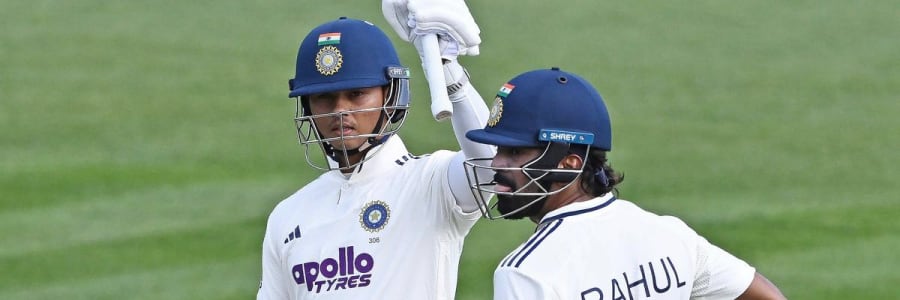
Photo: via The Hindu
India's openers put on 130 runs, their first century stand in 17 Tests, but they still trail New Zealand by 209. The match hangs in the balance, and India's chances may depend on how much Rahul's continued selection matters.
What was India's opening stand and how does it compare historically?
Jaiswal and Rahul put on 130 for the first wicket, India's first century opening stand in 17 Tests and their second-highest ever in New Zealand. Only the 149 by Manoj Prabhakar and Woorkeri Raman in Auckland in 1990 was better. Jaiswal made 85, Rahul 52 not out, before India closed at 159 for 1.
Is India actually in a strong position despite trailing by 209?
New Zealand still leads, with reports calling the match 'finely poised' and saying India 'wrested back some momentum' after being on the back foot. India's 130-run stand was their first century opening partnership in 30 innings. New Zealand's 368, built on Nicholls' 175 not out and Phillips' 118, keeps them ahead, but India's reply shifted momentum.
How often do Indian openers score fifties in New Zealand?
Very rarely. Indian openers have scored half-centuries in New Zealand only sporadically: the last instance of both visiting openers scoring fifties in an innings on New Zealand soil was in 2016, but that was Pakistan's pair, not India's. For India, this 130-run stand is their second-highest in New Zealand ever, and their first century opening stand since 1994, when Nayan Mongia and Navjyot Singh Sidhu put on 102 at Hamilton.
How does this stand compare with India's recent Test starts?
This 130-run stand is India's second-highest Test opening partnership in New Zealand, behind only Manoj Prabhakar and W.V. Raman's 149* in Auckland in 1990. It is India's first century opening stand in 17 Tests, the last being 201 in Perth in November 2024. Both openers scored fifties, a rare feat in New Zealand.
Why is the match not yet turned despite the stand?
India's 130-run stand pulled them back but did not turn the Test: they still trail New Zealand by 209. New Zealand had collapsed to 70 for 5, then recovered to 368, with Henry Nicholls making 175 not out and Glenn Phillips 118. India reached 159 for 1 by stumps, but Jaiswal fell 15 short of a century, leaving nine wickets in hand.
Why did India's bowlers fail to break New Zealand's lower order early?
India's bowlers struggled because their skill level lagged behind Bumrah's, the Kookaburra lost its shine after the 30th over, and the surface offered little help, per Times of India and Cricbuzz. Bumrah, who took 3 for 52, didn't seem at his best. The sixth-wicket stand of 173 ended only when Akash Deep moved one away to hit top of off stump.
How much did India's DRS errors cost them?
India's DRS errors were costly, but the exact runs lost are not clear. On day one, Gill reviewed an LBW that was not out and then chose not to review a clear edge off Rachin Ravindra, a New Zealand batter. On day two, he burned two more reviews on an LBW that was going over and a non-existent edge, leaving no reviews for a later edge off Kyle Jamieson.
How did DRS calls affect the match's momentum?
India burned all three reviews under Gill, two on Day 2 for an LBW going over and a non-existent edge, and one on Day 1 that showed a slight deflection. They also declined to review a clear edge off Ravindra, which replays showed would have been overturned. New Zealand also used theirs poorly, burning all three late on Day 3. These errors added to India's frustration after New Zealand recovered from 70/5 to 368.
Did the DRS errors change the match's outcome?
The errors did not decide the match, per reports. They added to India's frustration after New Zealand recovered from 70/5 to 368, mainly due to a 200-run stand between Nicholls and Phillips. The missed Ravindra edge let him bat on for 50 more balls before dismissal. New Zealand's recovery was largely due to that partnership, not the reviews.
Would India have bowled New Zealand out for fewer without the missed review?
No published estimate says so. Rediff reports the missed Ravindra review would almost certainly have been overturned, and he then faced 50 more balls before dismissal. New Zealand's 368 included a 200-run stand between Nicholls and Phillips, but it is not known how many runs Ravindra added or what the total might have been without him.
Source: thehindu.com