world · 2026-11-20
Why does the BJP honor Indira Gandhi?
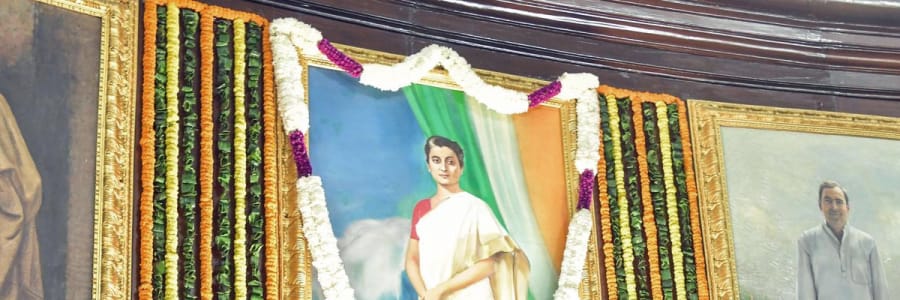
Photo: via The Hindu
PM Modi and Congress leaders both paid tribute to Indira Gandhi on her birth anniversary. But the tributes ignored her controversial Emergency rule and the 1984 riots, keeping her legacy a political tool, not a policy debate.
What did the leaders actually say in their tributes?
Modi's X post read simply: "Paying tribute to former Prime Minister Smt. Indira Gandhi Ji on her birth anniversary", no mention of contested chapters like the 1975 Emergency. Congress leaders praised her instead: Mallikarjun Kharge (Congress president) called her the "Iron Lady," Rahul Gandhi (former party chief) remembered her as "fearless, resilient, and full of love," Priyanka Gandhi wrote "Happy Birthday, tigress!", and D.K. Shivakumar (Karnataka deputy chief minister) cited her agriculture, banking, and space contributions.
How do Rahul Gandhi's personal memories shape his tribute?
Rahul Gandhi's tribute focused on family bonds rather than politics. He called her 'Dadi' and said she was 'formidable: fearless, resilient, and full of love.' He also shared a video of Sonia, Priyanka, and Miraya at 1 Safdarjung Road, her former residence, stressing that her strength lives on in the women of his family. This personal approach contrasts with the policy-focused tributes.
Which events built her 'Iron Lady' image?
Leaders cite several events: the 1971 Bangladesh Liberation War, India's 1974 nuclear test, bank nationalisation, and the 1975 integration of Sikkim. Tripura Congress chief Saha said these reflected her resolve on national security and boosted India's global stature. A book blurb notes her 1971 war leadership and 1974 nuclear test as key, but adds her legacy also raises 'serious questions about democracy and the concentration of power.'
How did the 1971 war shape her image?
Leaders and a book say the 1971 war was central to her 'Iron Lady' image. Tripura Congress chief Saha cited her leadership in the Bangladesh Liberation War as crucial to Bangladesh's independence and reshaping South Asia, reflecting her resolve and strengthening India's international standing. A book describes the war as 'defining moments of her leadership.' Analysts connect this decisiveness to her 'Iron Lady' title, though the title itself also stems from her overall tough governance.
Why is she called 'tigress' and 'Iron Lady'?
Congress leaders used the titles to honour her courage: Priyanka Gandhi called her a 'tigress' with 'there will never be another like you'; Kharge and Shivakumar called her 'Iron Lady.' A general-knowledge article ties the title to her firm governance, tough decisions, and being India's first woman PM. Her bank nationalisation, 'Garibi Hatao' initiative, and support for agriculture, space and nuclear programmes are cited as examples of her boldness.
Do tributes match her actual record?
Mostly, yes. The cited achievements, first woman PM, 1971 war, agriculture, banking, space and nuclear programmes, match her documented tenure from 1966-77 and 1980-84. Congress leaders like Kharge stress courage and sovereignty, while PM Modi's one-line tribute stays generic. No source disputes her record. But tributes omit contested chapters like the Emergency and anti-Sikh riots, so they are selective, not a full assessment.
Which of her actions are still debated?
Two episodes remain contested. The Emergency (1975-1977), when Indira Gandhi suspended civil liberties, jailed opposition leaders and censored the press, is called a dark phase in Indian democracy. Operation Blue Star (June 1984), the army assault on the Golden Temple complex in Amritsar, led to her assassination and the anti-Sikh riots that followed. Both are ignored in official tributes.
Which economic policies of hers are still debated?
Her bank nationalisation (14 major banks in 1969), Green Revolution, and poverty programs like 'Garibi Hatao' are debated: sources praise them for reducing inequality and achieving food self-sufficiency, but their effectiveness is contested. The abolition of Privy Purses (1971) and the shift to a socialist economy also draw criticism for their economic and political impact. Even the 1975 Emergency is noted for temporarily raising growth and cutting inflation, yet it remains a dark phase for democracy.
What constitutional changes came out of the Emergency?
During the Emergency (25 June 1975–21 March 1977), the government passed the 42nd Amendment (1976), called the 'Mini Constitution,' which added Socialist, Secular and Integrity to the Preamble, introduced Fundamental Duties, and limited judicial review. After the Emergency, the 44th Amendment (1978) added safeguards, replacing 'internal disturbance' with 'armed rebellion' as grounds for proclaiming an Emergency. These changes remain a defining part of India's constitutional history.
What did the Misra Commission conclude about the riots?
The Misra Commission, appointed by Rajiv Gandhi in April 1985, investigated the anti-Sikh riots for two years before releasing a report that did not name any individual culprits or indict any Congress Party leader. The public, especially Sikhs, claimed the commission covered up the truth. No leader was held accountable, leaving the riots' official narrative incomplete.
How did censorship affect the 1977 election outcome?
Censorship misled Indira Gandhi into misjudging her popularity, as she read heavily censored press praise. Journalists faced blackouts and expulsions, including Mark Tully and others given 24 hours to leave for refusing a 'censorship agreement.' The opposition's 'democracy or dictatorship' campaign resonated: the Janata Party won 298 seats to Congress's 154, a drop of 198. She lost Rae Bareli by over 55,000 votes.
How does her assassination complicate her legacy?
Her assassination on 31 October 1984, by bodyguards Beant Singh and Satwant Singh, followed Operation Blue Star (June 1984), an army assault on the Golden Temple that killed many pilgrims and damaged the Akal Takht. The killing triggered anti-Sikh riots, killing thousands and exposing state failures to protect citizens. Congress in 2026 still salutes her as a 'towering leader' of 'strength and service,' while analyses note the Emergency and concentration of power complicate her memory.
How do official and disputed death tolls shape memory of the riots?
Official government figures put the 1984 anti-Sikh riot death toll at 3,350, but other sources claim between 8,000 and over 16,000 Sikhs were killed. One account gives a government count of 1,200, with most observers considering it too low. The violence destroyed 40 historic gurdwaras. These disputed numbers, plus allegations of Congress orchestration, make her legacy contested: tributes stress strength, but the riots expose institutional failures.
Did censorship isolate her from public opinion?
Censorship likely isolated her. Journalist Coomi Kapoor says Gandhi resented press advice to step down after the Allahabad judgment, prompting blackout orders. Gandhi later told the BBC's Mark Tully that she 'never lost the support of the people, only the people were misled by rumours,' showing she misjudged opposition. Analysts note censorship suppressed dissent, but no source quantifies its role in the 1977 loss.
How do critics challenge the 'Iron Lady' label?
Critics see the 'Iron Lady' label as ignoring the Emergency's authoritarian features: press restrictions, opposition arrests, and forced sterilisations. One book asks whether her concentration of power weakened democratic institutions. A Wikipedia account notes critics accused her of 'machiavellianism' as early as 1969, with some seeing the Emergency as suppressing dissent. Congress defends it as necessary, but critics say it challenges the heroic label.
Why does the Emergency still dominate her legacy debate?
The Emergency (June 1975–March 1977) still dominates because it curtailed civil liberties, censored newspapers, jailed opposition leaders, and included forced sterilisation campaigns, making it one of India's gravest democratic crises, as one source puts it. Another calls it a 'controversial period' weakening democratic institutions. Congress defends it as necessary for discipline and economic stability, while critics see authoritarianism, keeping the debate alive from both sides.
Why do tributes ignore the Emergency and riots?
Both parties use the birth anniversary ritual to claim the parts of Indira Gandhi's legacy that suit them, leaving out what is contested. Congress praises her 1971 war leadership and bank nationalisation, while the BJP's one-line tribute from Modi avoids endorsing the Emergency and anti-Sikh riots. The tributes remain a political tool, not a policy debate.
Why does the BJP honor Indira Gandhi despite criticising her?
No official BJP statement explains this. Reports only quote PM Modi's one-line post and note that other tributes came from Congress leaders and the Lok Sabha Speaker. The contradiction with the BJP's criticism of her legacy remains unaddressed.
Why does Congress still defend the Emergency?
Congress's website says the Emergency was necessary to restore discipline, reduce inflation, and revive the economy, crediting its 20-Point Program for gains and calling it a safeguard for democracy. Critics call it a grave democratic crisis that curtailed liberties. Congress frames it as a tough but stabilizing response to chaos.
Source: thehindu.com