economy · 2026-03-25
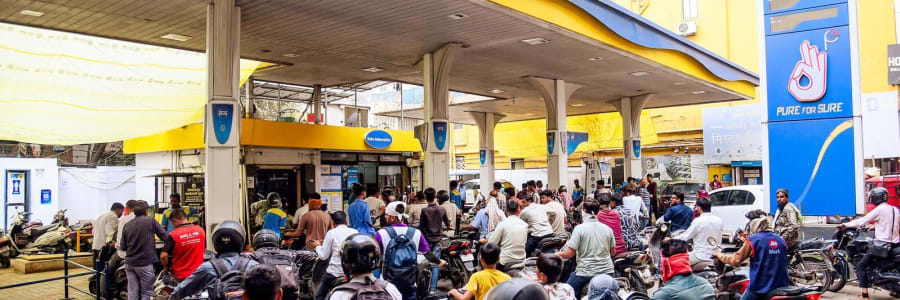
Why Indians Are Panic Buying Fuel
60da9ec4-62cd-43b4-ac2e-fb3b4cc9b074
Oil marketing companies assured citizens that fuel stocks are adequate across the countryPanic buying at petrol pumps prompted official statements that operations are running smoothlyOMCs like IOC, BPCL, and HPCL manage India's fuel supply chain and distribution network
What drives panic buying at fuel pumps?
Panic buying typically starts from rumors of shortages or price hikes, then feeds on itself. When drivers rush to fill tanks, queues form, reinforcing the fear. OMCs like [Indian Oil Corporation] had to publicly confirm stocks are normal to break the cycle.
Why do fuel shortage rumors spread so fast?
India's fuel market serves over 300 million vehicles. A single viral message can trigger herd behavior across cities. [WhatsApp forwards about price hikes] have historically caused runs on pumps, even when no policy change was announced.
How do OMCs coordinate during demand spikes?
OMCs use a hub-and-spoke distribution model. During surges, [IOC's pipeline network spanning 18,000 km] helps reroute supply. Regional depots increase tanker dispatch frequency to affected zones to normalize flow within days.
What role does social media play here?
Unverified posts on [platforms like X and WhatsApp] amplify fear faster than official channels can counter it. OMCs now issue real-time statements and use social media themselves to push accurate stock updates directly to consumers.
How does panic buying affect fuel prices?
When demand spikes suddenly, distribution networks strain. Tanker trucks can't refill stations fast enough, creating temporary local shortages even when overall supply is fine. [Petrol pumps in metro cities] may see longer wait times, and spot prices for logistics can rise.
Who gets hurt most by fuel panic buying?
Small businesses and daily-wage workers suffer disproportionately. [Auto-rickshaw drivers] who can't afford to queue for hours lose a full day's income. Meanwhile, those with larger vehicles hoard fuel, worsening the temporary crunch for others.
Do fuel prices actually rise from this?
India's retail fuel prices are government-regulated, so pump prices don't spike overnight. But if panic buying persists, [transport companies] may charge premiums for deliveries, creating indirect cost inflation even without an official price change.
How does this ripple into food prices?
Fuel costs directly affect freight charges. When [vegetable trucks from Maharashtra] face fuel access delays, perishable goods arrive late or spoil. This can raise local food prices by 5 to 10 percent in affected markets within just a few days.
What do fuel stock numbers actually show?
India's 3 major OMCs, [IOC, BPCL, and HPCL], collectively operate over 80,000 fuel stations. They maintain strategic reserves and regular supply pipelines. Their public assurance suggests inventory levels are within normal operating ranges despite the demand surge.
How much fuel does India consume daily?
India consumes roughly 5.5 million barrels of oil per day, making it the world's third-largest consumer. [Diesel alone accounts for about 40 percent] of total consumption, driven by trucking and agriculture, making supply stability critical.
How do India's fuel reserves compare globally?
India maintains strategic petroleum reserves at [facilities like Visakhapatnam and Mangalore], holding about 5 days of import cover. Compare this to the US strategic reserve covering roughly 25 days. India is expanding capacity but remains relatively thin.
What trends trigger recurring fuel panics?
Fuel panics tend to recur around [geopolitical tensions like India-Pakistan standoffs] or global oil disruptions. Seasonal demand peaks during harvest and festival travel also strain supply, making the system vulnerable to rumor-driven demand spikes.
Source: livemint.com