politics · 2026-11-20
Why were Bilkis Bano's attackers granted bail?
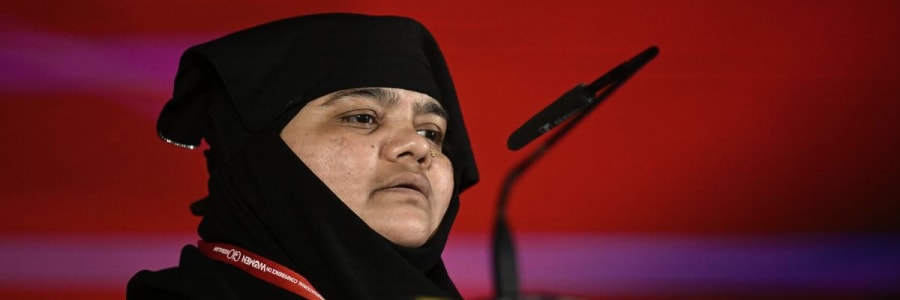
Photo: via The Hindu
India's Supreme Court granted bail to two men convicted in the Bilkis Bano gang-rape case, citing their 17 years in prison. But critics say that time is inflated, because it ignores years they spent out on parole and remission. This matters because it could weaken a landmark justice ruling and signal how courts weigh such cases.
What did the Supreme Court actually decide on October 28?
On October 28, 2026, a two-judge Supreme Court bench suspended the life sentences of Bipinchand Kanaiyalal Joshi and Pradip Ramanlal Modhiya, granting them bail while their appeals against the Bombay High Court's (the state's top court) 2017 conviction order are heard. The judges cited their 17-plus years in prison, Joshi's severe handicap, and questions of fact and law. Bilkis Bano was neither informed nor heard.
Why did the Supreme Court grant bail without hearing Bilkis Bano?
The court's October 28 order cited the men's 17-plus years in prison, one convict's severe handicap, and legal questions in their appeals. It did not summon Bilkis Bano's lawyers or serve her notice, a lapse her statement and legal analysts criticized. She learned of the decision through media reports and plans to challenge the bail.
Did the court overturn its earlier review before granting bail?
No. The 2024 judgment quashed the remission, not the convictions. On October 28, the court granted bail pending appeals, citing the same three grounds. The convicts' earlier Special Leave Petitions against the 2017 High Court conviction were dismissed in July and November 2017. The fresh appeals were entertained after leave was granted, which critics question for ignoring that history.
How can fresh appeals be heard after earlier petitions were dismissed?
An earlier SLP dismissal does not automatically bar a later challenge; its effect depends on the earlier order's nature and whether leave was granted. The October 28 order did not explain why fresh appeals were entertained despite the 2017 dismissals, leaving questions of finality and successive litigation. Critics note this could encourage the remaining nine convicts to seek similar relief.
Why did the court grant bail to these two convicts?
The Supreme Court granted bail to Bipinchand Kanaiyalal Joshi and Pradip Ramanlal Modhiya on October 28, 2026, saying they had served over 17 years in prison, one had a severe handicap, and their appeals raised questions of fact and law. Critics note the 17-year figure ignores time spent on parole, furlough and under the quashed 2022 remission.
How much did time served influence the bail decision?
The court's order named the 17-plus years as a principal ground, along with one convict's severe handicap and legal questions. But this figure was the convicts' lawyer's claim, not checked against official records. The CJP analysis notes it ignored time outside on parole and furlough and the 17 months free after the quashed remission, so it may overstate actual prison time.
Was Bilkis Bano heard before the bail order?
No. Bilkis Bano said she was not informed of the proceedings and learned of the decision through media reports. Her lawyer Shobha Gupta was neither summoned nor heard, and the court's short order does not mention her. Gupta called the decision shocking and said it was "not a straightforward procedure"; Bano plans to challenge the bail.
What legal grounds do the convicts' appeals raise?
The Supreme Court's order says only that the appeals raise "questions of fact and law," without specifying them. Critics note the fresh SLPs challenge the same May 2017 High Court judgment whose earlier SLPs were dismissed in July and November 2017. The order does not explain why new appeals were entertained or whether the grounds differ materially from earlier ones.
Did the court's 17-year figure reflect actual prison time?
No. The court adopted the convicts' lawyers' claim of 17-plus years without checking official records. Gujarat's 2022 affidavit showed Joshi spent 1,079 days outside on parole and furlough, and Modhiya 1,234 days. That is nearly three and more than three years respectively. They were also free for 17 more months after the quashed 2022 remission, until January 2024. The order never explains its calculation.
Source: thehindu.com